
The secondhand market was once defined by compromise — things people no longer wanted, available to those who could not afford them new. Vestiaire Collective changed that story. Not by making resale cheaper, but by making it feel aspirational. This is a case study in how trust, curation, and community can redefine a market category entirely.
In 2009, Fanny Moizant and Sophie Hersan founded Vestiaire Collective in Paris with a hypothesis that seemed, at the time, counterintuitive: that there was a market for pre-owned luxury fashion that was not defined by discount-seeking, but by desire. That the secondhand Chanel jacket or the vintage Hermès scarf could be aspirational objects — coveted for their rarity, their history, and their access to a world of quality that was otherwise out of reach.
Sixteen years later, the hypothesis has been validated at scale. The global secondhand luxury market was valued at $34.39 billion in 2023 and is projected to reach $60.55 billion by 2029 — growing at approximately 10% CAGR, significantly outpacing new luxury goods growth. In 2024 alone, secondhand luxury sales rose 7%, outperforming the broader luxury market. Vestiaire Collective sits at the centre of this expansion, operating across more than 70 countries with millions of active buyers and sellers.
But the market data tells only part of the story. The more interesting question is strategic: how did Vestiaire Collective succeed in transforming the cultural meaning of resale — from compromise to connoisseurship?
01 Trust as the foundational product.
The luxury resale market's central challenge is not inventory — it is trust. A secondhand Rolex or a pre-owned Chanel bag is worthless if the buyer cannot be certain it is authentic. The counterfeiting problem in luxury is well-documented and significant; without a credible solution to it, no resale marketplace can operate at the high end of the market.
Vestiaire Collective's authentication system — originally a team of expert authenticators who physically inspect items before transfer to the buyer — was the brand's first and most important strategic investment. It was not a feature; it was the product. Without it, the platform is a listing service. With it, it is a trusted marketplace for luxury goods.
$34.4B
Global secondhand luxury market value 2023, projected $60.6B by 2029
Research and Markets / BCG, 2024–2025
70+
Countries of operation — millions of buyers and sellers across global markets
Vestiaire Collective, 2025
+25%
GMV growth in most recent fiscal year, outpacing the broader luxury market
Vestiaire Collective / Eurazeo reporting, 2024
AI has progressively enhanced authentication, with ML models trained on millions of data points enabling automated image and metadata checks. In 2024, Vestiaire launched a Digital ID programme with EON, using blockchain to log product history and provide immutable authenticity records. The strategic logic is consistent: every investment in authentication is an investment in the fundamental trust product on which everything else depends.

02 Curation as brand positioning.
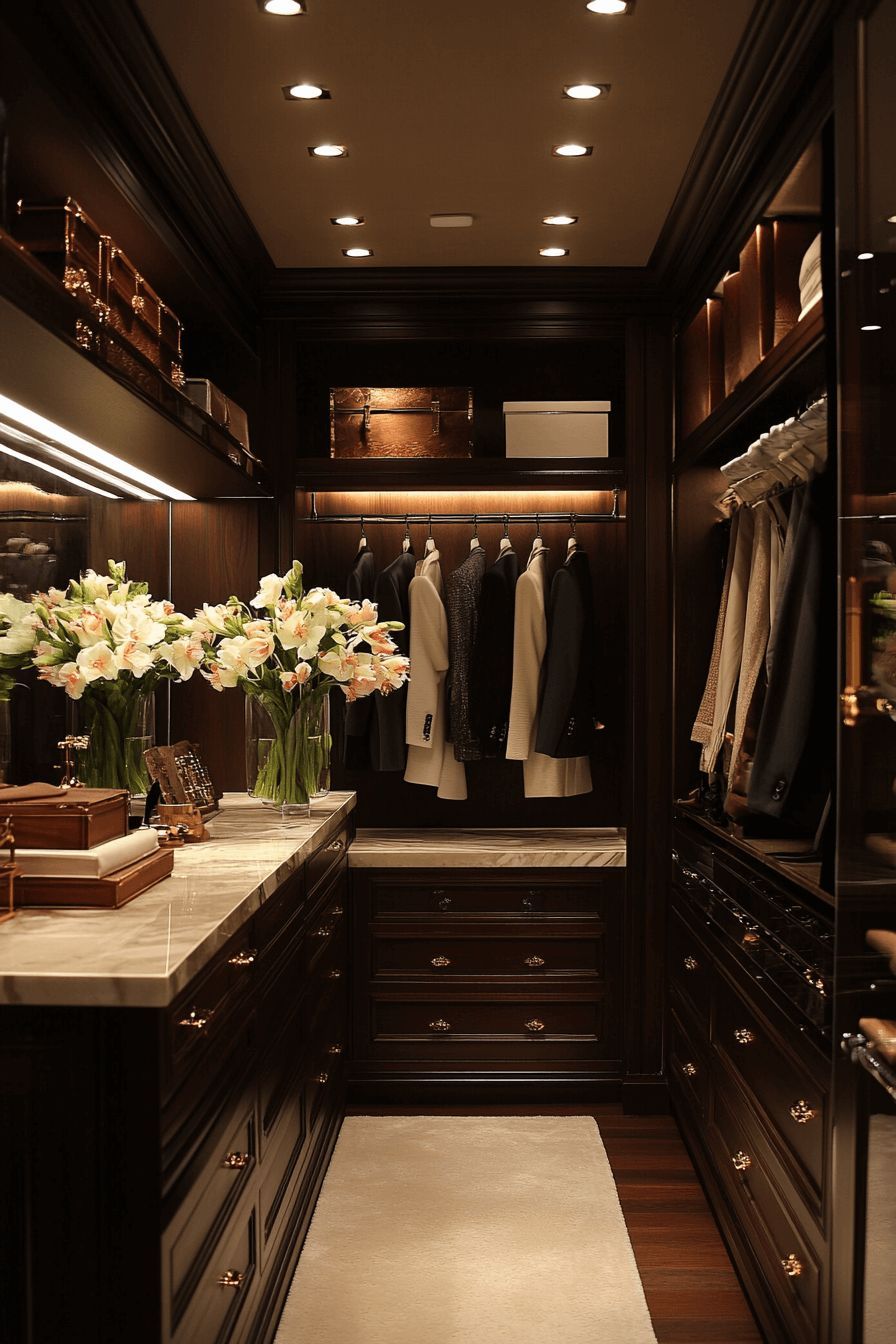
Vestiaire Collective is not a general secondhand marketplace. It is a curated marketplace — and the curation is a deliberate brand positioning choice, not simply an operational necessity.
In 2023, the platform made a significant move: banning fast-fashion labels and refocusing exclusively on authenticated, durable luxury and designer goods. The decision reduced inventory breadth but increased positioning clarity. It communicated unambiguously that Vestiaire Collective is a luxury platform — not a discount platform, not a mixed-tier marketplace, but a place where the standard for what is listed reflects the standard for what luxury means.
Vestiaire Collective shook the resale market by banning fast-fashion labels and refocusing on authenticated, durable luxury — signalling a shift from volume to value that aligns with the circular economy and the luxury consumer's expectations.— TCL Analysis
The Vestiaire Value Ranking — launched in 2025 as a quarterly resale buying guide — extends this curation logic into editorial territory. By analysing 400 brands across price accessibility, resale value evolution over five years, transaction volume, and consumer engagement metrics, Vestiaire produces something genuinely novel: a data-driven index of what is worth buying in the secondhand luxury market. It is, as one industry observer described it, "the Kelley Blue Book for luxury closets." This editorial positioning transforms the platform from a marketplace into a cultural authority on luxury value.
03 The four motivations that drive the market.
Academic research on secondhand luxury consumer behaviour has identified a consistent set of motivations that explain why consumers choose pre-owned luxury — and understanding these motivations explains why Vestiaire Collective's model works.
- 01
Eco-consciousness
Research by Gilal et al. (2024) in the International Journal of Consumer Studies confirms that environmental concern is a significant positive predictor of secondhand luxury purchasing intention — particularly among younger consumers. The Vestiaire × BCG 2025 report found 33% of European buyers and 28% of US buyers motivated primarily by sustainability.
- 02
Treasure hunting
The thrill of discovery — finding something rare, specific, or unavailable through conventional retail — is among the strongest motivators for luxury resale engagement. Research consistently identifies this as a hedonic motivation distinct from pure price-seeking, and it explains the emotional engagement of Vestiaire's community.
- 03
Need for uniqueness
Ki et al.'s 2024 study in the Journal of Retailing and Consumer Services found that the desire for quality over conspicuousness — preferring luxury's craft and scarcity over its logo — is a key driver of online secondhand luxury purchasing. Pre-owned luxury allows access to pieces that are genuinely rare, not mass-produced.
- 04
Affordability as access
The Vestiaire × BCG 2025 report found 87% of US buyers citing affordability as a key reason to buy pre-loved — but framed as aspirational access, not discount-seeking. The difference matters: the customer is not buying secondhand because they cannot afford luxury. They are buying secondhand because it gives them access to the specific luxury they want, at a price that reflects its pre-owned status.
04 Community as competitive moat.
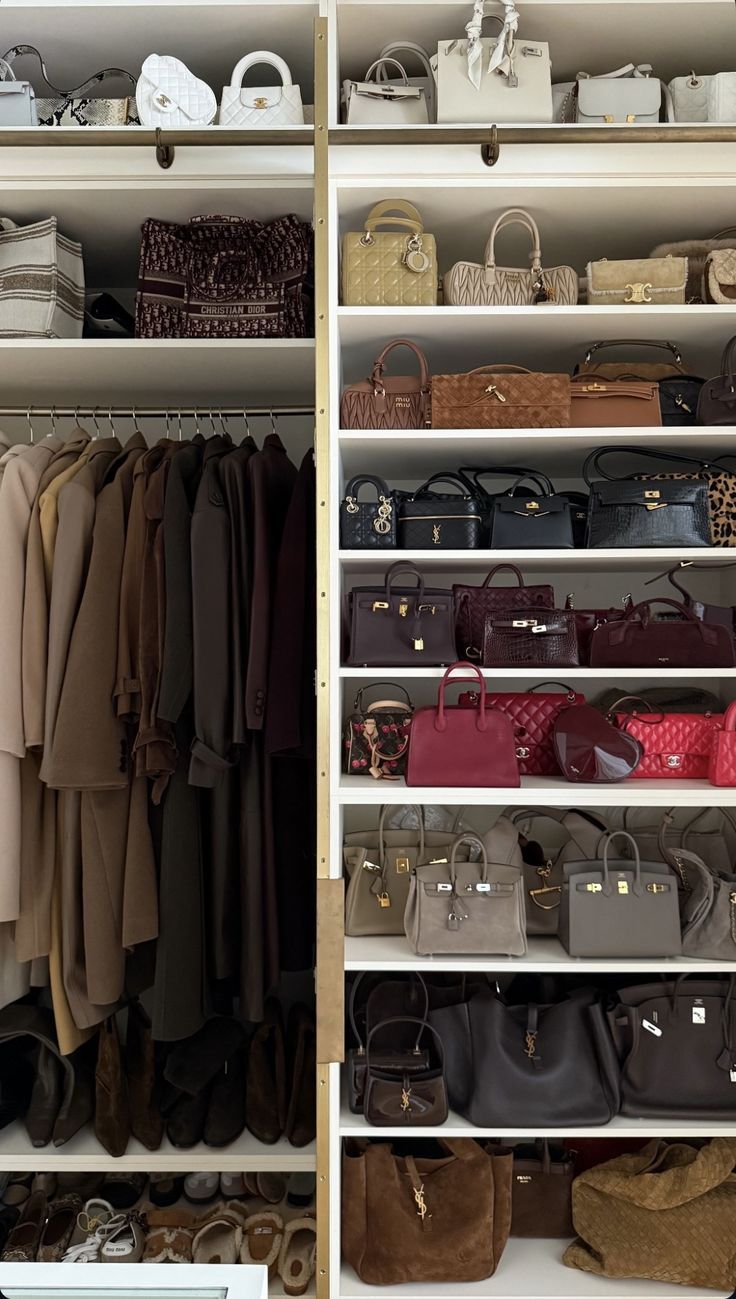
Vestiaire Collective's most durable competitive advantage is not its authentication technology, which competitors can replicate, or its curation standards, which can be imitated. It is its community — the millions of buyers and sellers who have built habits, relationships, and trust within the platform's ecosystem over more than a decade.
Murtas et al.'s 2025 paper in the Journal of Consumer Behaviour — one of the first academic studies to examine the customer journey specifically on secondhand luxury platforms — found that the experiential dimension of platform engagement (discovery, community interaction, the narrative of an item's provenance) significantly shapes loyalty and repeat behaviour beyond the functional dimensions of price and authentication. The platform is not just a marketplace. It is a space of cultural participation in luxury.
- Moat 01
Network effects
More sellers attract more buyers, which attracts more sellers — a virtuous cycle that deepens with scale and is extremely difficult to disrupt once established
- Moat 02
Data advantage
Millions of transactions over 15 years generate pricing data, authentication insights, and demand signals that no newer competitor can replicate without equivalent volume
- Moat 03
Brand partnerships
Vestiaire powers resale for Gucci, Chloé, Burberry, Alexander McQueen, and Mulberry — brand-endorsed resale channels that validate the platform's luxury positioning
- Moat 04
B Corp status
First resale fashion platform to achieve B Corp status — a credibility signal for sustainability-motivated buyers that is both authentic and competitively differentiated

05 What Vestiaire teaches about category creation.
The Vestiaire Collective case is ultimately a story about category creation — the strategic work of taking something that existed (secondhand fashion) and redefining its meaning (from compromise to connoisseurship). This is among the hardest and most valuable things a brand can do, because it does not simply capture an existing market — it creates the conditions for a new one.
The tools Vestiaire used — trust infrastructure, editorial curation, community investment, and a deliberate refusal to compete on volume — are replicable in principle. The timing, the founding conviction, and the fifteen-year accumulation of network effects are not. Which is, in the end, the most honest lesson the case offers: category creation requires both the right insight and the patience to build.
- Lesson 01
Trust is the product
In a market defined by counterfeiting risk, authentication is not a feature — it is the foundational value proposition on which everything else depends
- Lesson 02
Curation signals positioning
Banning fast fashion was a positioning decision as much as an operational one — it told the market clearly what kind of platform Vestiaire intends to be
- Lesson 03
Community is the moat
Technology and standards can be copied; a decade of community relationships, habits, and trust cannot. The community is the most defensible asset
- Lesson 04
Redefine the category
The greatest strategic move was not competing within resale — it was redefining what resale meant, shifting the cultural frame from discount to connoisseurship
Vestiaire Collective did not simply build a marketplace for secondhand luxury. It built the cultural infrastructure through which secondhand luxury became desirable. That is a different, and considerably harder, achievement — and it explains why, sixteen years later, the brand remains the reference point for an entire category it helped define.
Sources & Further Reading
- 01 Murtas, G., et al. (2025). Investigating the Customer Journey in Second-Hand Fashion Platforms: Implications for Luxury Brand Management. Journal of Consumer Behaviour (Wiley).
- 02 Gilal, F. G., et al. (2024). Secondhand consumption: A systematic literature review and future research agenda. International Journal of Consumer Studies (Wiley).
- 03 Ki, C., Li, C., Chenn, A. S., Chong, S. M., & Cho, E. (2024). Wise consumer choices in online secondhand luxury (OSHL) shopping. Journal of Retailing and Consumer Services, 76, 103571.
- 04 Aycock, M., Cho, E., & Kim, K. (2023). "I like to buy pre-owned luxury fashion products": Understanding online second-hand luxury fashion shopping motivations. Journal of Global Fashion Marketing, 14, 1–23.
- 05 Vestiaire Collective × BCG. (2025). Reshaping the Resale Market — consumer motivation data, geographic differences, Gen Z behaviour.
- 06 Vestiaire Collective. (2025). Resale Buying Guide Spring/Summer 2025. — Vestiaire Value Ranking methodology, brand performance data.
- 07 Research and Markets / BCG. (2024). Global Secondhand Luxury Market: $34.39B (2023) → $60.55B (2029), 10% CAGR — market size and growth projections.
- 08 Carroll, B. A., & Ahuvia, A. C. — Some Antecedents and Outcomes of Brand Love
- 09 ShabbirHusain, R. V., et al. — Navigating the Sustainability–Luxury Paradox: Bibliometric Insights and Research Directions
- 10 D'Arpizio, C., Levato, F., Steiner, A., Babbini, G., de Montgolfier, J., & Glaser, H. — Bain-Altagamma Luxury Goods Worldwide Market Study — Spring 2026 Update
Cite this case study
The Codes of Luxury. (2026, May 15). Vestiaire Collective: Making resale feel like luxury (Case N°04). https://codeofluxury.cloakify.pro/case-studies/vestiaire-collective-making-resale-feel-like-luxury