
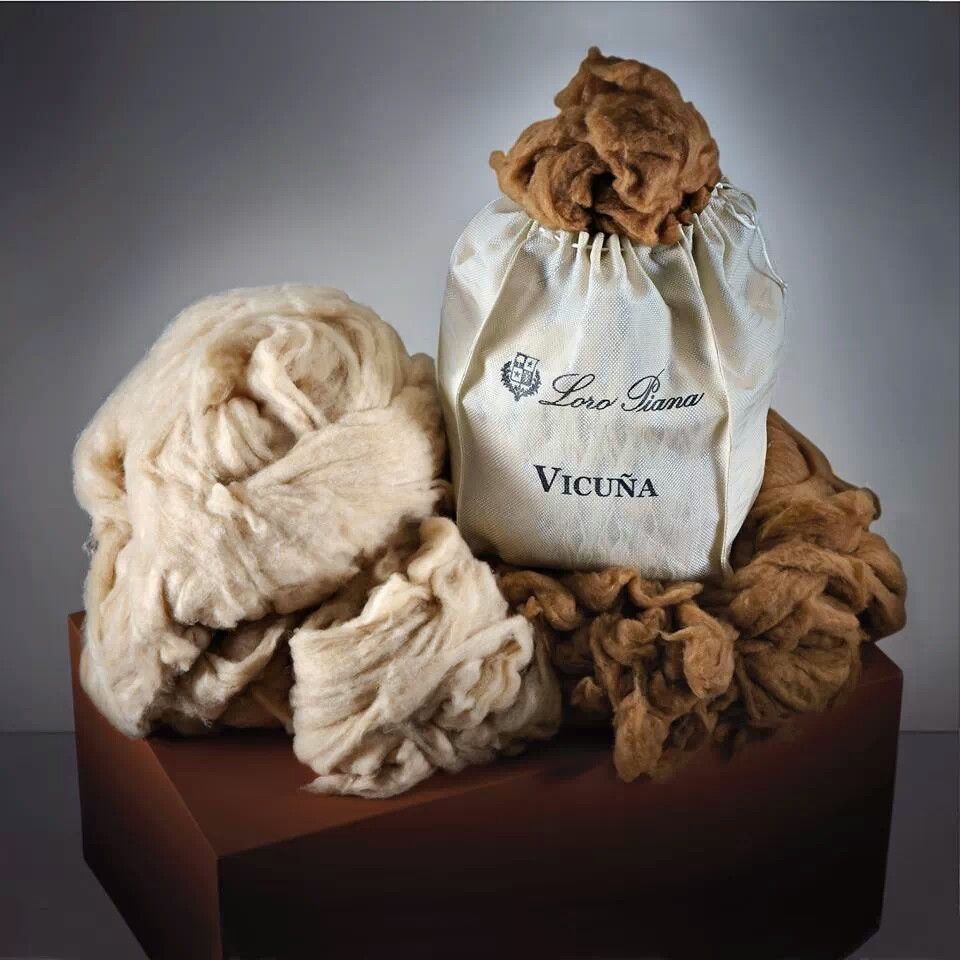
The proposition is unusually pure. A Loro Piana coat carries no visible mark. Its claim to value is entirely material: vicuña, baby cashmere, the ultra-fine merino the house markets as The Gift of Kings. You are meant to recognise it by touch and by drape, and the people who cannot are, by design, not the audience.
That is a claim about verifiability. It says: this object does not need a logo because the quality is checkable in the thing itself. Which is why the events of 2025 are not a public-relations problem for the brand. They go to the centre of the argument.
01 What was built.
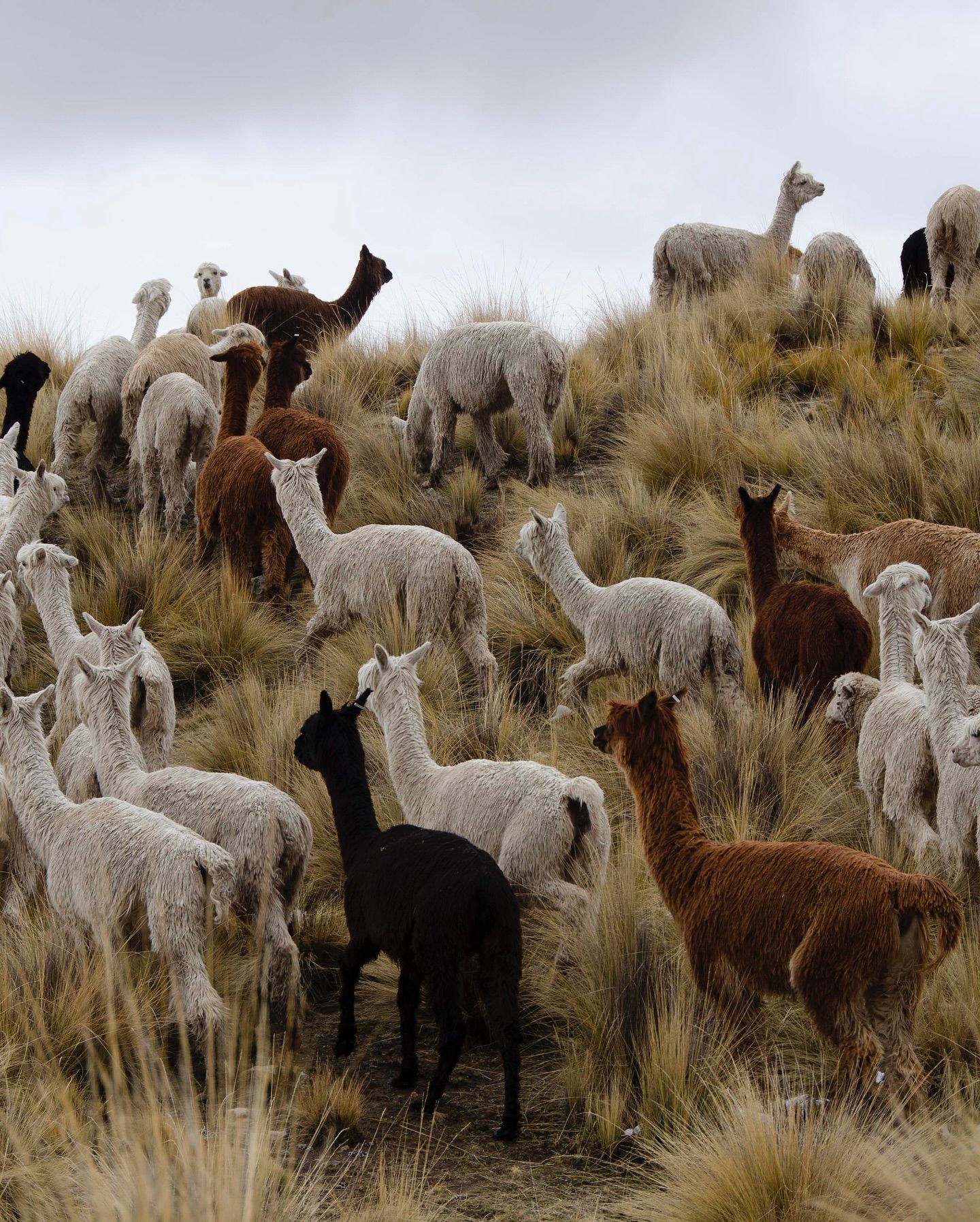
The house was founded in 1924 by Pietro Loro Piana and spent most of a century as a fibre business first and a fashion label second — sourcing, grading and weaving rare wools, then latterly making garments from them. In 2013 it announced a $1.6 million investment for a majority stake in a company holding vicuña shearing rights in a designated area of Argentina. That is the shape of the business: it buys the source, not the season.
LVMH acquired 80% of it that same year, for €2 billion against an enterprise value of about €2.7 billion, on expected 2013 sales of roughly €700 million.
02 The valuation, which never wavered.
€2BN
PAID BY LVMH FOR 80% IN 2013, ON EXPECTED SALES OF ABOUT €700 MILLION
LVMH, 2013
€11BN
VALUATION IN JANUARY 2026, WHEN LVMH PAID €1BN FOR A FURTHER 9%, TAKING ITS STAKE TO 94%
LVMH, January 2026
~€2.5BN
ESTIMATED REVENUE — THIRD-LARGEST BUSINESS IN LVMH'S FASHION & LEATHER GOODS AFTER LOUIS VUITTON AND DIOR
Market estimates; LVMH does not report Loro Piana separately
€4/hr
RATE PAID IN THE SUBCONTRACTED WORKSHOP, FOR SHIFTS OF UP TO 90 HOURS A WEEK
Court of Milan, July 2025
The commercial arc is the least ambiguous part of the case. From an enterprise value of €2.7 billion in 2013, Loro Piana was valued at €11 billion in January 2026, when LVMH exercised a €1 billion call option to raise its holding from 85% to 94%. Frédéric Arnault, previously running the group's watches division, was installed as chief executive.
The timing of that transaction matters. It was executed six months after the Milan court order and three months before it was lifted. Whatever the reputational consequences of 2025 were, they did not show up in what LVMH was prepared to pay for the rest of the company.
03 What the court found.
In July 2025 the Court of Milan placed Loro Piana under judicial administration for one year. The proceeding began with the physical assault of a migrant worker in a subcontracted workshop, who had been demanding unpaid wages.
Investigators found a workshop producing cashmere garments that employed ten Chinese migrant workers, working shifts of up to ninety hours a week, seven days a week, for around four euros an hour. The premises did not comply with workplace health and safety requirements or with Italian national collective labour agreements.
Loro Piana's position was that its supplier had not disclosed the existence of these subcontractors, and that it terminated the relationship within twenty-four hours of being notified on 20 May. The court's finding was narrower and more specific than an accusation of direct wrongdoing: the company had culpably failed to verify the capacity of the contractors and subcontractors it entrusted with production, and had failed to carry out effective inspection or audit along its supply chain.
In April 2026 the judicial administration was concluded early, three months ahead of its scheduled expiry. The company welcomed the outcome. Loro Piana is not the only luxury house to have been placed under this measure by the Milan court in recent years; it joins a list.
04 Discretion in both directions.
The finding is worth reading slowly, because of what the brand is. The court did not say the garments were poor. It said the company had not verified the conditions under which they were made.
A logo is a signature: it says we made this and we will answer for it. Removing the logo removes the signature. Loro Piana's proposition is that the object needs no external proof because the quality speaks — and a court found that the company itself had not checked.— TCL Analysis
There is a structural point underneath the specific case, and it applies well beyond this house. Quiet luxury is usually discussed as a consumer preference — the customer who does not wish to be read. But discretion is a property of the whole system, not only of its front end. The same opacity that keeps the wearer unlabelled keeps the workshop unexamined.
A logo-led brand is watched. Its supply chain is a standing target for journalists, campaigners and competitors, and that scrutiny is a form of free audit. A brand that has spent decades teaching the public not to look does not receive it.
- THE ASYMMETRY
Visible brands are policed
A monogram is an address. Anyone with a grievance about how the object was made knows exactly where to send it, which is why loud brands built compliance functions first.
- THE CONSEQUENCE
Quiet brands must self-police
With no external scrutiny to fall back on, the audit function has to be internal and genuinely funded. Discretion transfers the whole burden of verification onto the company.
- THE OPPORTUNITY
Traceability is the natural answer
A house that already owns its fibre source in Argentina is better placed than almost any competitor to document the whole chain — and a documented chain is the only version of “you can verify this yourself” that survives contact with a court.
05 What Loro Piana teaches.
- Lesson 01
A claim about quality is a claim about process
If the argument for the price is that the object is verifiably better, the company has undertaken to have verified it. The court's finding was not about the cashmere. It was about the checking.
- Lesson 02
Owning the source is not owning the chain
Loro Piana controls its fibre at the animal. The failure occurred at the other end, in a workshop it had not identified. Vertical integration upstream does not substitute for visibility downstream.
- Lesson 03
Discretion removes the free audit
Loud brands are scrutinised whether they like it or not, and that scrutiny catches problems early. Quiet brands must buy the equivalent, and the price of not buying it is a court doing the inspection instead.
- Lesson 04
The market priced it at zero
LVMH raised its stake to 94% at an €11 billion valuation while the administration was still running. Whatever this episode cost, it was not paid in equity — which tells you something uncomfortable about where the incentives sit.
The last lesson is the one worth sitting with. Between 2013 and 2026 Loro Piana went from an enterprise value of €2.7 billion to a valuation of €11 billion, and the single most serious governance event in its history occurred in the middle of that run without visibly interrupting it. The company acted quickly once informed, cooperated, and had the measure lifted early. All of that is to its credit and none of it changes the arithmetic.
Which returns the case to its title. The luxury of not being known was, for decades, a proposition offered to the customer: buy this and nobody will be able to place you. What 2025 established is that the same condition extended backwards through the business, to places the company itself had not looked. Not being known is a comfort at the front of the supply chain and a liability at the back.
Sources & Further Reading
- 01 Court of Milan. (2025, July). Judicial administration order, Loro Piana S.p.A.
- 02 WWD. (2026, April). Loro Piana welcomes early conclusion of judicial administration over labor practices.
- 03 Business & Human Rights Resource Centre. (2025). Italy: LVMH-owned Loro Piana under judicial administration for subcontracting production to suppliers allegedly exploiting workers.
- 04 Forbes. (2025, July 16). Italian court reprimands Loro Piana over worker abuse allegations.
- 05 Glossy. (2025). Inside the Loro Piana scandal: labor abuse, court oversight and the myth of sustainable luxury.
- 06 LVMH. (2013). LVMH to acquire 80% of Loro Piana.
- 07 WWD. (2026, January). LVMH increases stake in Loro Piana to 94%.
- 08 Eckhardt, G. M., Belk, R. W., & Wilson, J. A. J. (2015). The rise of inconspicuous consumption. Journal of Marketing Management, 31(7–8), 807–826.
- 09 Beverland, M. B. (2005). Crafting brand authenticity: The case of luxury wines. Journal of Management Studies, 42(5), 1003–1029.
Cite this case study
The Codes of Luxury. (2026, November 28). Loro Piana: The luxury of not being Known (Case N°26). https://codeofluxury.cloakify.pro/case-studies/loro-piana-the-luxury-of-not-being-known