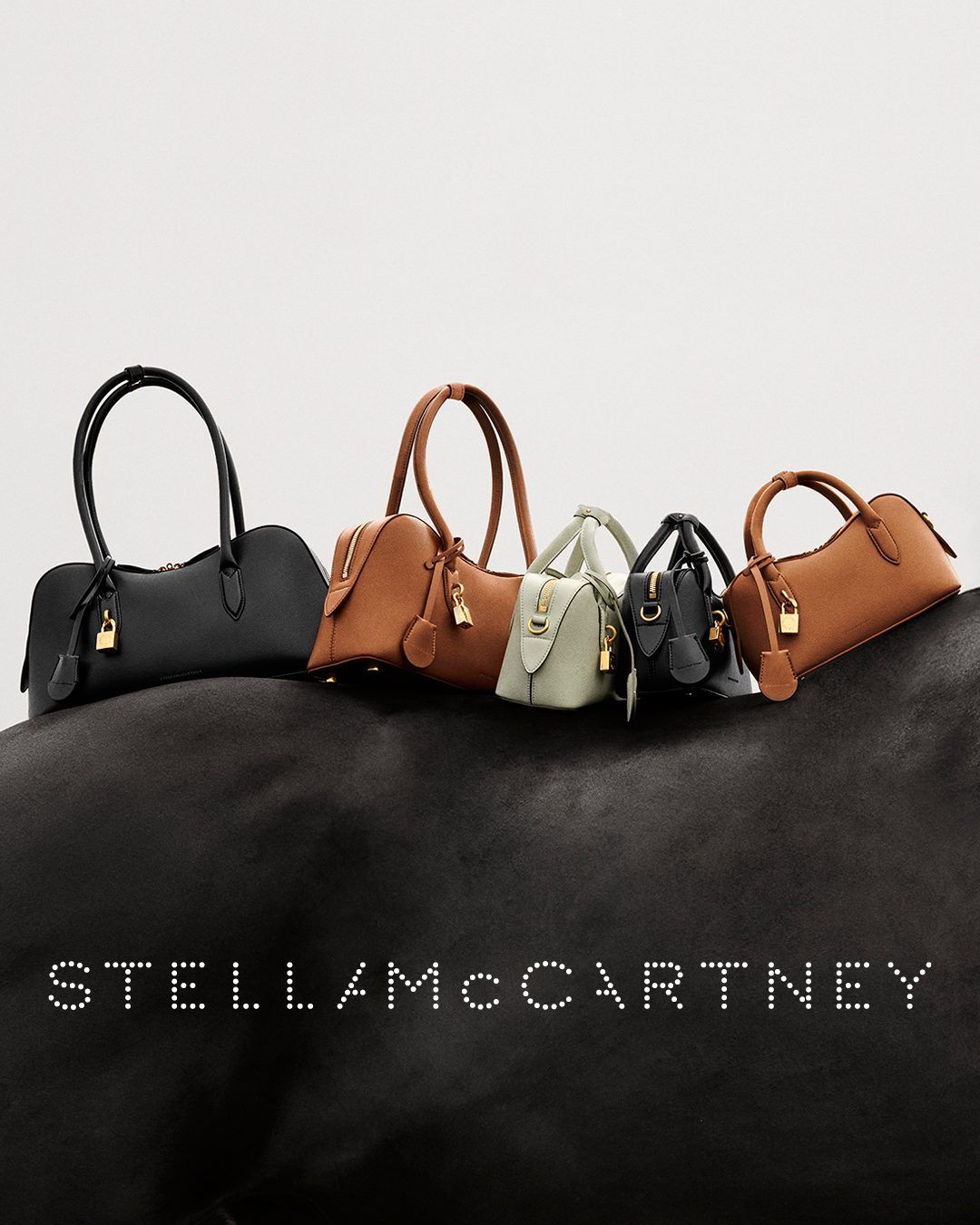
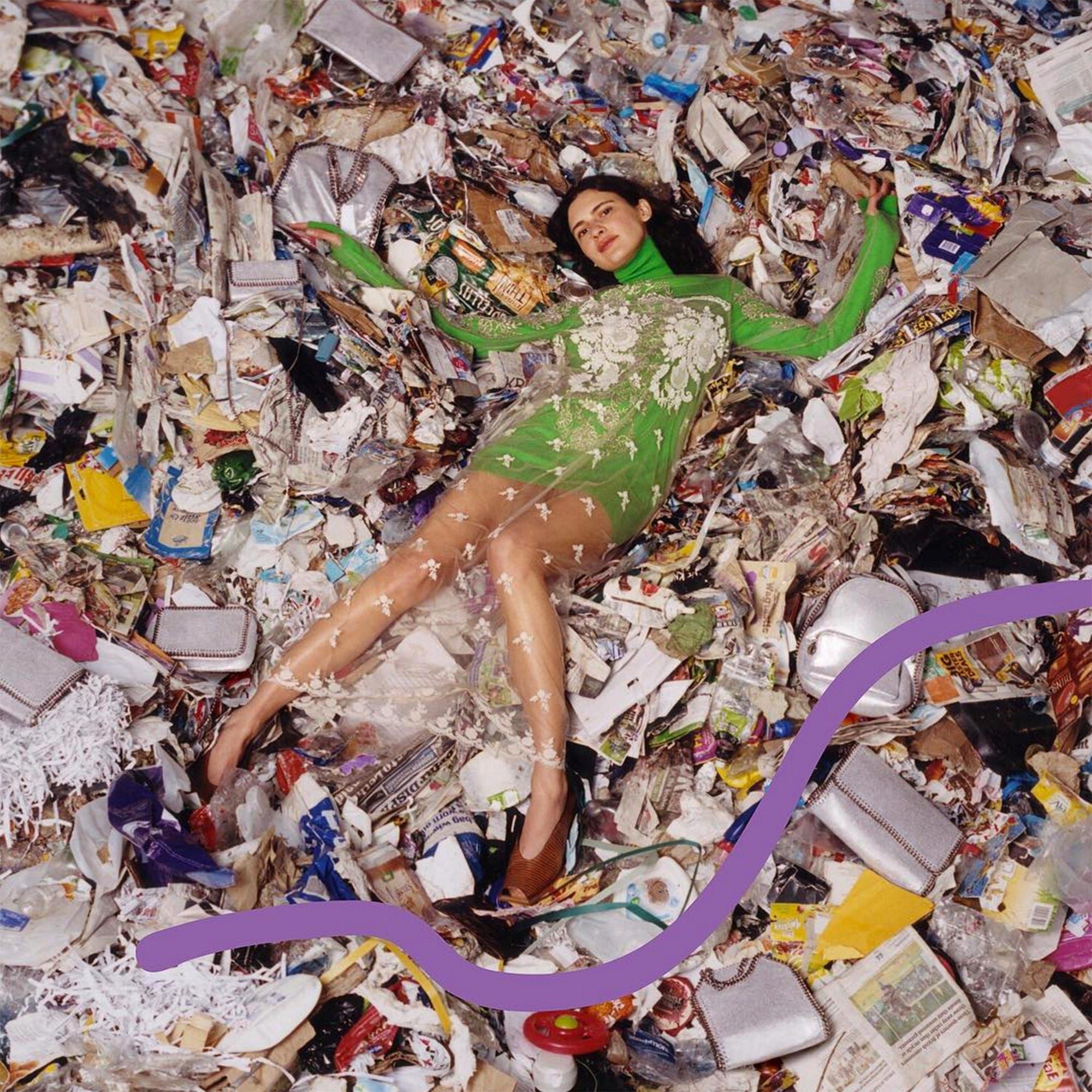
Almost every luxury house now has a sustainability position. Almost all of them treat it as an attribute — something the product also is, alongside being beautiful, well made and desirable. Stella McCartney is the only house of its stature that has treated it as the product itself: the constraint came first, and everything else was designed inside it.
That distinction is easy to admire and difficult to survive, and the last two years have made both halves of the sentence unusually legible.
01 The accounts.
£33.6M
LOSS AT THE UK ENTITY IN 2024, ON REVENUE OF £16 MILLION
Companies House filings, FY2024
£29.3M
OPERATING LOSS, UP 30% ON £22.5 MILLION IN 2023
FY2024
2017
LAST PRE-TAX PROFIT — £9 MILLION. CUMULATIVE LOSSES SINCE THEN EXCEED £177 MILLION
FY2024 filings
2019 → 2025
LVMH TOOK A MINORITY STAKE, THEN SOLD IT BACK TO THE FOUNDER
LVMH / Stella McCartney, January 2025
One clarification is essential before reading these figures. They are the accounts of the UK entity, not of the global brand. Its revenue lines are principally royalties and profit share from the Italian operating business, so £16 million is not what Stella McCartney sells in a year — it is what flows to this particular company. Royalty income fell 22.8% to £7.45 million in 2024, and the share of Italian profits fell from £7.3 million to £3 million.
Even read narrowly, the direction is unambiguous. The last pre-tax profit was £9 million, in 2017. Cumulative losses since have exceeded £177 million. Filings indicate further financing will be required in 2028, with the founder's holding company not calling in shareholder loans in the meantime.
One line moved the other way: sales through physical stores rose 9.3% to £5.39 million and now represent 34% of the entity's revenue, up from 22%. The part of the business closest to the customer is the part that grew.
02 What “ethics as product” commits you to.
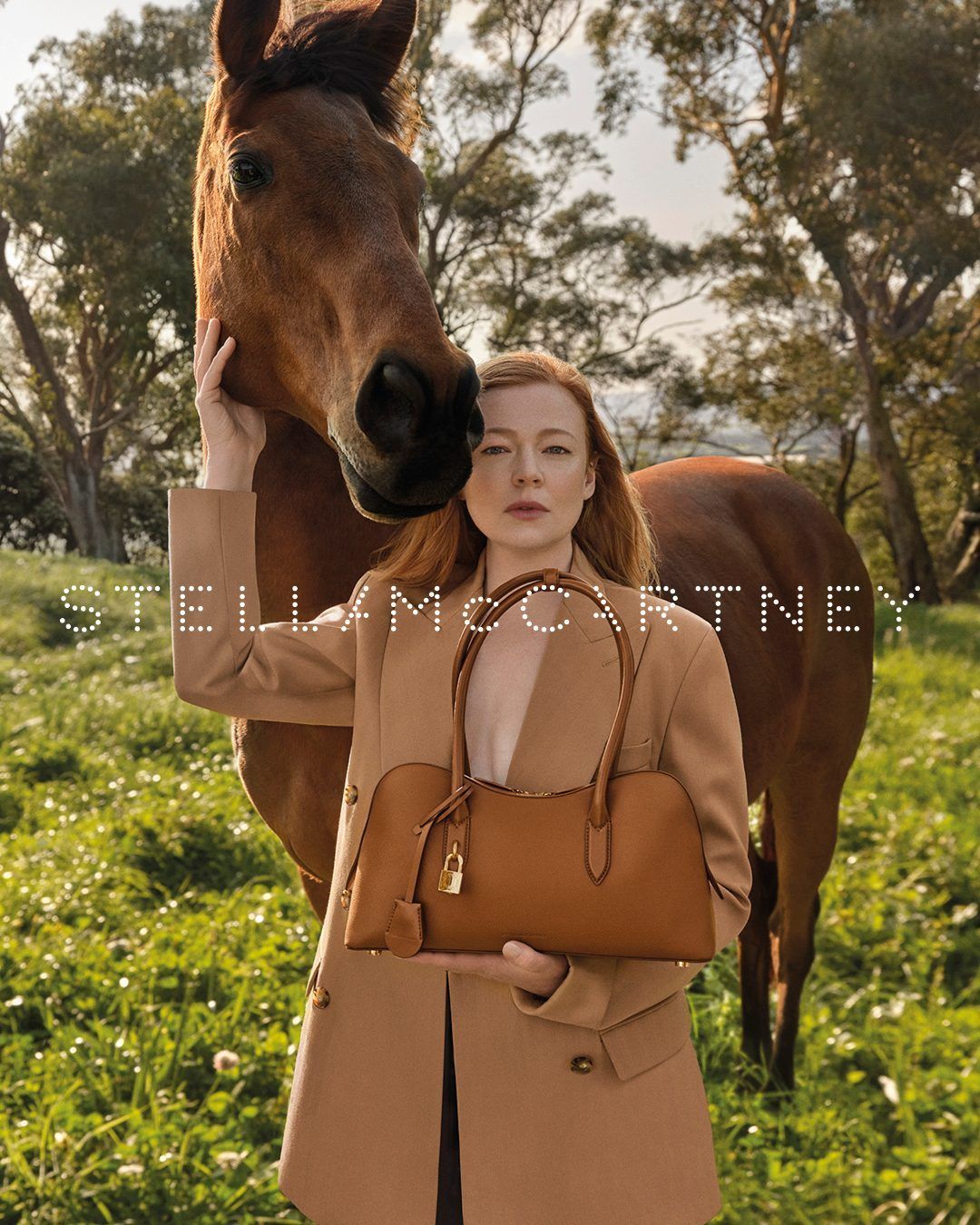
A house that treats sustainability as an attribute can source what exists. A house that treats it as the product must underwrite what does not exist yet. That is the whole difference, and it has three consequences.
- CONSEQUENCE 01
You carry the category's R&D risk
Leather has had three thousand years of supply-chain development. Its alternatives have had fifteen. Someone has to fund the gap, and a brand built on refusing leather has no one else to hand it to.
- CONSEQUENCE 02
You cannot use the escape hatch
Every other house facing a soft year can add a leather bag and recover margin overnight. This one structurally cannot. The constraint that makes the brand meaningful also removes its cyclical defence.
- CONSEQUENCE 03
Your proof points can fail publicly
A supplier's bankruptcy is an operational problem for most brands. For a brand whose position is this can be done, it is an argument lost in public.
03 The Mylo problem.
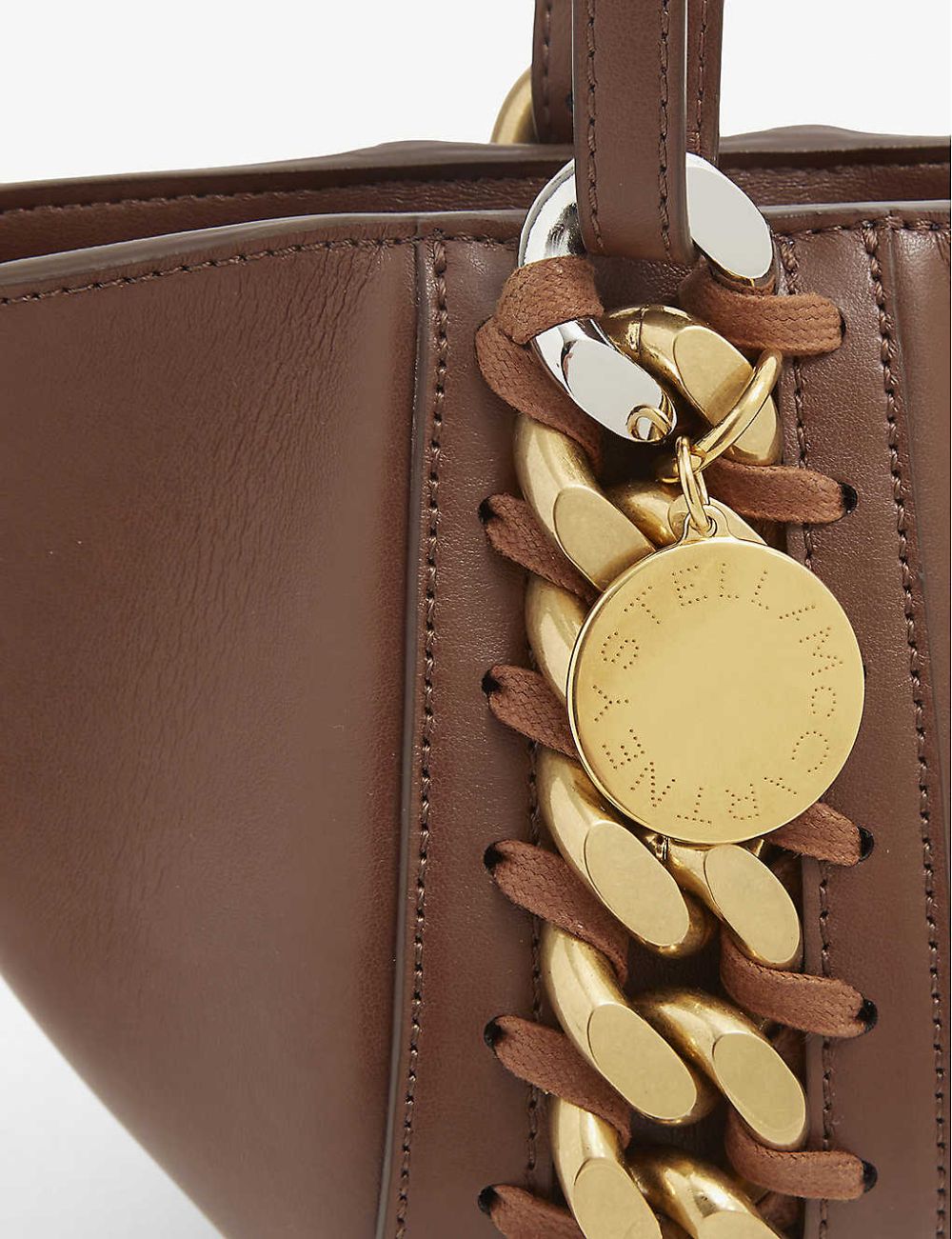
In 2022 Stella McCartney launched the world's first luxury handbag made from Mylo — a mycelium-based leather alternative grown by the American biotech firm Bolt Threads. The Frayme Mylo was released as a numbered run of one hundred pieces worldwide. It was the clearest possible demonstration of the brand's thesis: not a claim about intentions, but a physical object nobody else had made.
In 2023 Bolt Threads paused Mylo production, citing costs. The company had raised more than $300 million and stopped just short of commercial scale, caught between inflation and a collapse in venture funding.
Every other luxury house that experimented with mycelium lost a supplier. Stella McCartney lost a proof. When your product is an argument, a discontinued material is not a sourcing problem — it is evidence for the other side.— TCL Analysis
The category itself did not die with it. MycoWorks, Hydefy and Ecovative have each raised nine figures and continue. But the sequence exposes the structural weakness of the position: a brand that stakes itself on materials innovation is dependent on a supply chain that is still, financially, a venture-capital experiment.
04 The round trip through LVMH.
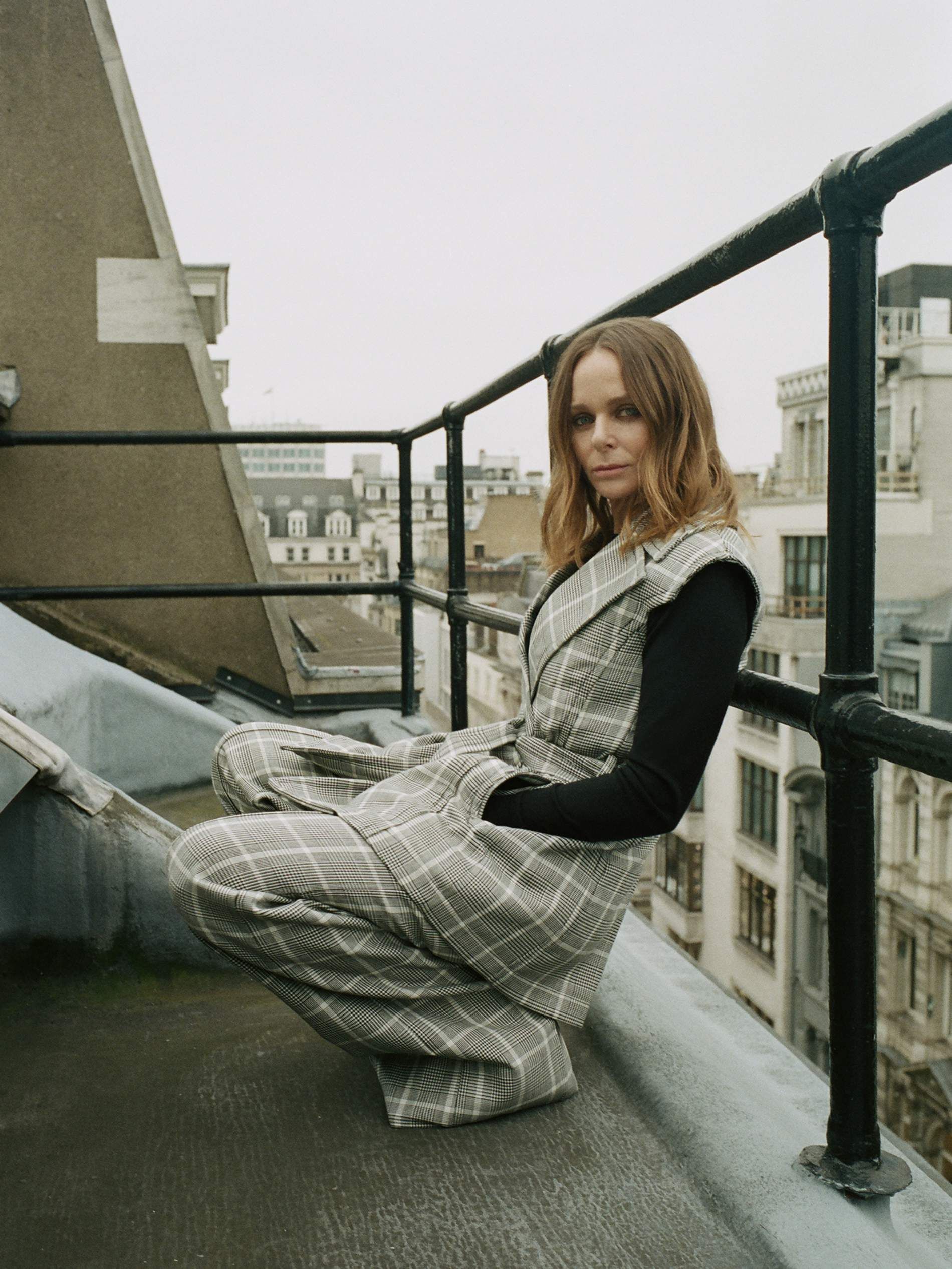
In 2019 LVMH took a minority stake in Stella McCartney. Bernard Arnault's stated reasoning was her commitment to sustainability — the group was buying expertise it did not have, in a domain it expected to matter.
In January 2025 McCartney bought that stake back, returning the house to independence after roughly five years. The terms were not disclosed. LVMH was, at the time, pruning its portfolio of smaller labels.
The part usually reported as a footnote is the most interesting. McCartney remained with the group as its global sustainability ambassador, continuing to advise Arnault and the executive team. She left the balance sheet and kept the seat.
Which raises a question the accounts cannot answer. If the founder of a loss-making house is retained as the sustainability adviser to the largest luxury group in the world, where exactly is the value of that house held? Not, evidently, in its P&L. The influence outlasted the equity — and influence is the thing the brand was built to accumulate.
05 What the case teaches.
- Lesson 01
Ethics as product is an R&D commitment, not a marketing position
Brands that treat sustainability as an attribute buy what exists. Brands that treat it as the product fund what does not. The second is a research budget disguised as a brand value.
- Lesson 02
A principle that cannot be suspended has no cyclical defence
The credibility of the position depends on its being non-negotiable, which is exactly what removes the lever every other house pulls in a downturn.
- Lesson 03
Being first is expensive and rarely the profitable position
The house proved that a luxury mycelium bag could be made. The company that made the material went under. Whoever eventually scales it will do so on ground this brand paid to clear.
- Lesson 04
Some brands accumulate influence rather than earnings
The founder of a loss-making house now advises LVMH on sustainability. That is a real asset and a real outcome. It is simply not one that any luxury valuation model knows how to price.
None of this settles whether the model works. The house is independent again, its retail line is growing, and the founder retains a position at the centre of the industry's thinking on the subject she chose thirty years ago. Filings point to a further financing requirement in 2028, which sets a date by which the question becomes concrete.
What the case does settle is the price of the position. Stella McCartney has spent more than £177 million since 2017 demonstrating that a luxury house can be built without leather. The industry has spent that period adopting the language of sustainability while retaining the escape hatch she gave up. Whether that was a business decision or something else is, in the end, the point of the case — and the reason it is worth studying rather than celebrating.
Sources & Further Reading
- 01 Stella McCartney Ltd. (2025). Annual report and accounts for the year ended 31 December 2024. Companies House.
- 02 FashionUnited. (2025, December). Stella McCartney reports widened loss amid revenue decline in 2024.
- 03 City A.M. (2025). Stella McCartney: losses widen as sales hit fifteen-year low.
- 04 WWD. (2025, January 27). Stella McCartney buys back minority stake from LVMH.
- 05 Business of Fashion. (2025, January). LVMH and Stella McCartney part ways.
- 06 Stella McCartney. Mylo — mycelium-based alternative to animal leather. Brand site.
- 07 NSS Magazine. (2023). Vegan leather: the company that produces for Stella McCartney and adidas is going bankrupt.
- 08 Amatulli, C., De Angelis, M., & Donato, C. (2021). The atypicality of sustainable luxury products. Psychology & Marketing, 38(11), 1990–2005.
- 09 Apaolaza, V., Policarpo, M. C., Hartmann, P., Paredes, M. R., & D'Souza, C. (2023). Sustainable clothing: Why conspicuous consumption and greenwashing matter. Business Strategy and the Environment, 32(6), 3766–3782.
Cite this case study
The Codes of Luxury. (2026, October 29). Stella McCartney: When ethics are the product (Case N°23). https://codeofluxury.cloakify.pro/case-studies/stella-mccartney-when-ethics-are-the-product