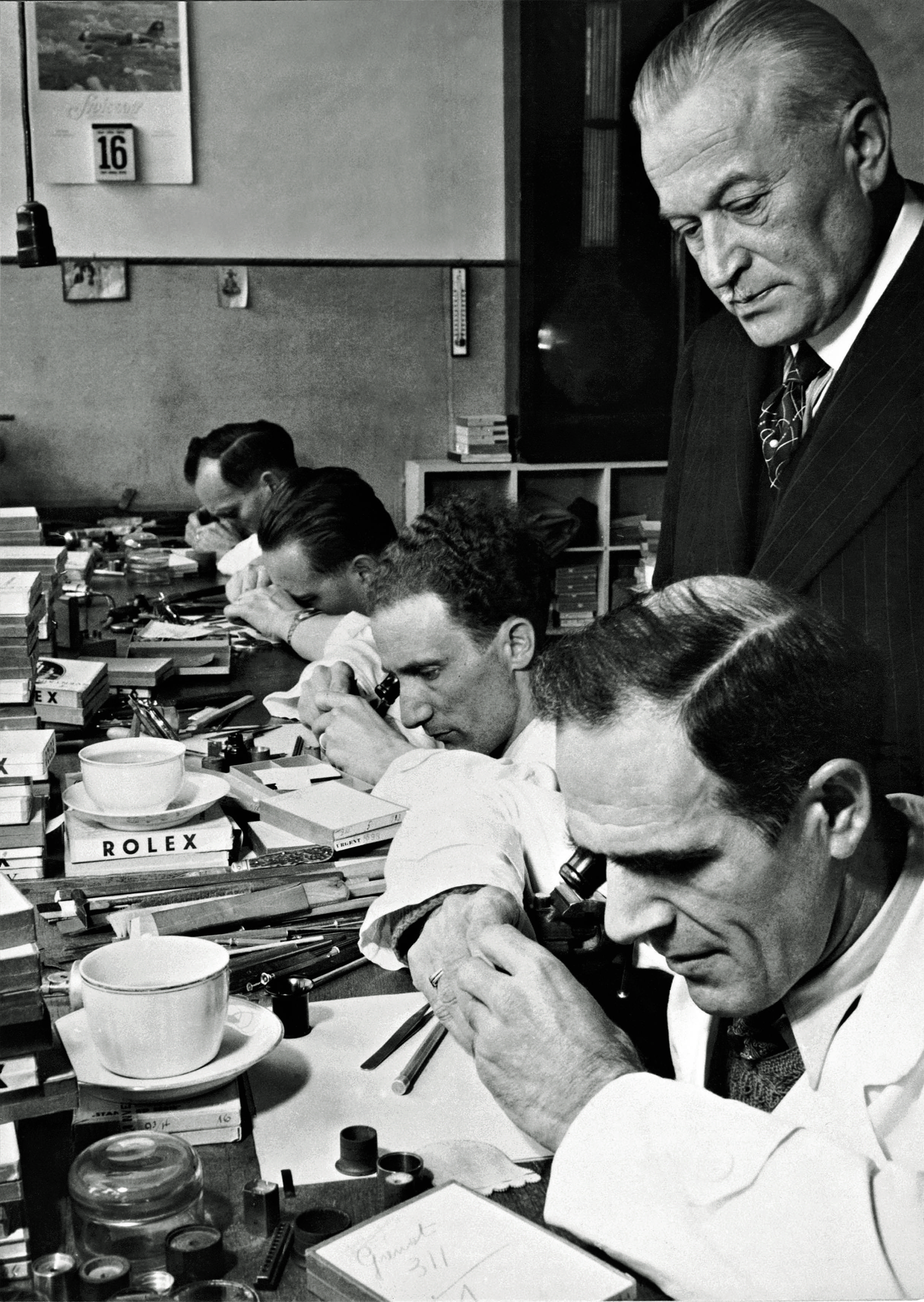
Rolex does not chase trends. It does not redesign its icons. It does not follow the market — it anchors it. In an industry built on novelty, Rolex has made unchangingness its most powerful competitive weapon. Understanding the logic behind that choice reveals something fundamental about how luxury value is created and sustained.
The Rolex Submariner, introduced in 1953, looks today almost exactly as it did then. The Daytona, introduced in 1963, is still recognisably itself. The Datejust, launched in 1945, remains the brand's most popular model on the secondary market. In a watchmaking industry that regularly introduces new collections, collaborations, and design evolutions, Rolex's commitment to its icons is so absolute that it has become the brand's defining strategic identity.
This is not conservatism. It is a deliberate and sophisticated use of design stability as a signal — a way of communicating that Rolex's products are not fashion objects subject to obsolescence, but permanent objects that accumulate rather than lose meaning over time. The grammar of permanence is Rolex's language, and it speaks it more fluently than any competitor.
01 Consistency as competitive advantage.
Most luxury brands manage the tension between heritage and relevance by periodically refreshing their designs — updating proportions, introducing new colourways, collaborating with contemporary designers. Rolex manages it differently: by making the consistency itself the story.
When a Rolex design does not change between 1953 and 2025, the implication is clear: the brand believes the design was right to begin with, and has the confidence not to second-guess it. This communicates a kind of institutional conviction that is extremely difficult to manufacture and essentially impossible to fake. You cannot decide to have had consistent design values for seventy years. You either do or you do not.
Rolex competes less on novelty and more on permanence — which stabilises demand, compresses lifecycle risk, and compounds cultural equity in ways trend-dependent portfolios cannot replicate.— TCL Analysis
The commercial results of this approach are measurable. Rolex holds approximately 30 percent of the global Swiss watch market by retail value, producing around one million watches annually against consistently greater demand. Estimated 2024 revenues exceed CHF 10 billion — sustained through a year in which Swiss watch exports declined 3 percent overall. The brand's market share is not merely large; it is structurally more stable than competitors who rely on trend momentum.
02 Sports partnerships as cultural legitimisation.
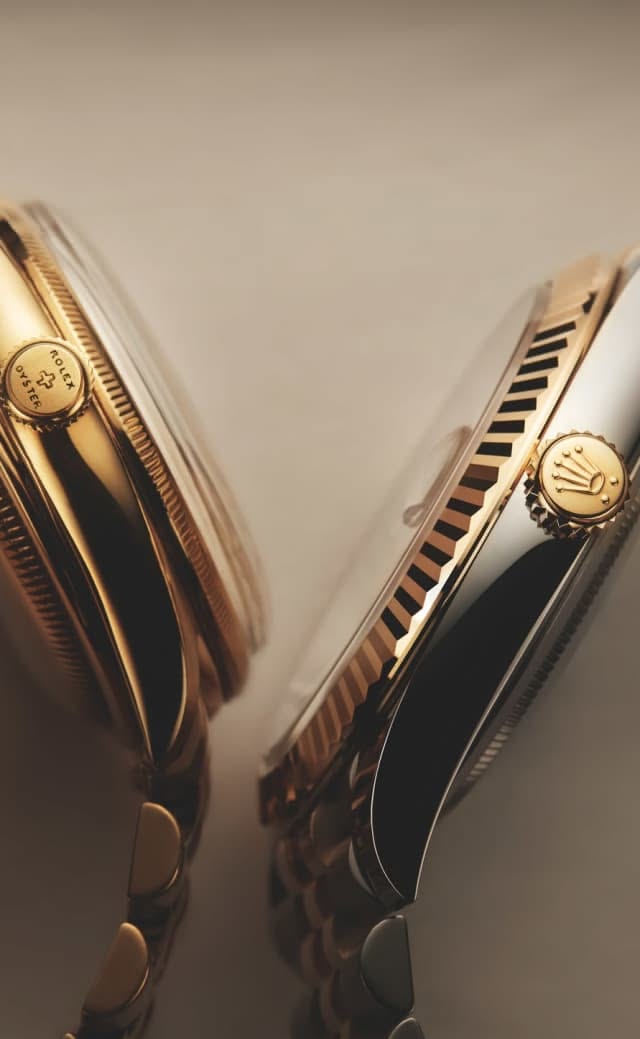
Rolex's approach to partnerships is as consistent as its product design: long-term, selective, and anchored in domains that share its core values of precision, endurance, and excellence under pressure. Golf. Sailing. Tennis. Motorsport. Equestrian sport. These are not sponsorships chosen for audience size — they are relationships chosen for alignment.
~30%
Global Swiss watch market share by retail value — sustained category leadership
Industry estimates, 2024–2025
34.2%
Share of global secondary luxury watch transaction volume — dominant market anchor
Chrono24 Secondary Market Analysis, 2025
+550%
Average Rolex price increase from 2010 to 2025 on secondary market — 15-year actual sales data
Bob's Watches, 2026
The Rolex 24 at Daytona — where the Rolex Cosmograph Daytona is presented annually to the winner — is among the most elegant examples of product and partnership integration in luxury. The trophy is the product. The relationship between the watch's name and the race it is given at is not a marketing construct; it is a genuine historical connection that has deepened over six decades. This is the kind of brand equity that cannot be bought and cannot be quickly built — it can only be sustained.
In 2025, Rolex deepened its motorsport presence by becoming the Official Timepiece of the IMSA Championship, and extended its SailGP partnership for a further ten seasons through 2034. The message is consistent: Rolex commits to relationships for the long term, in the same way it commits to its designs.
03 The secondary market as a trust metric.
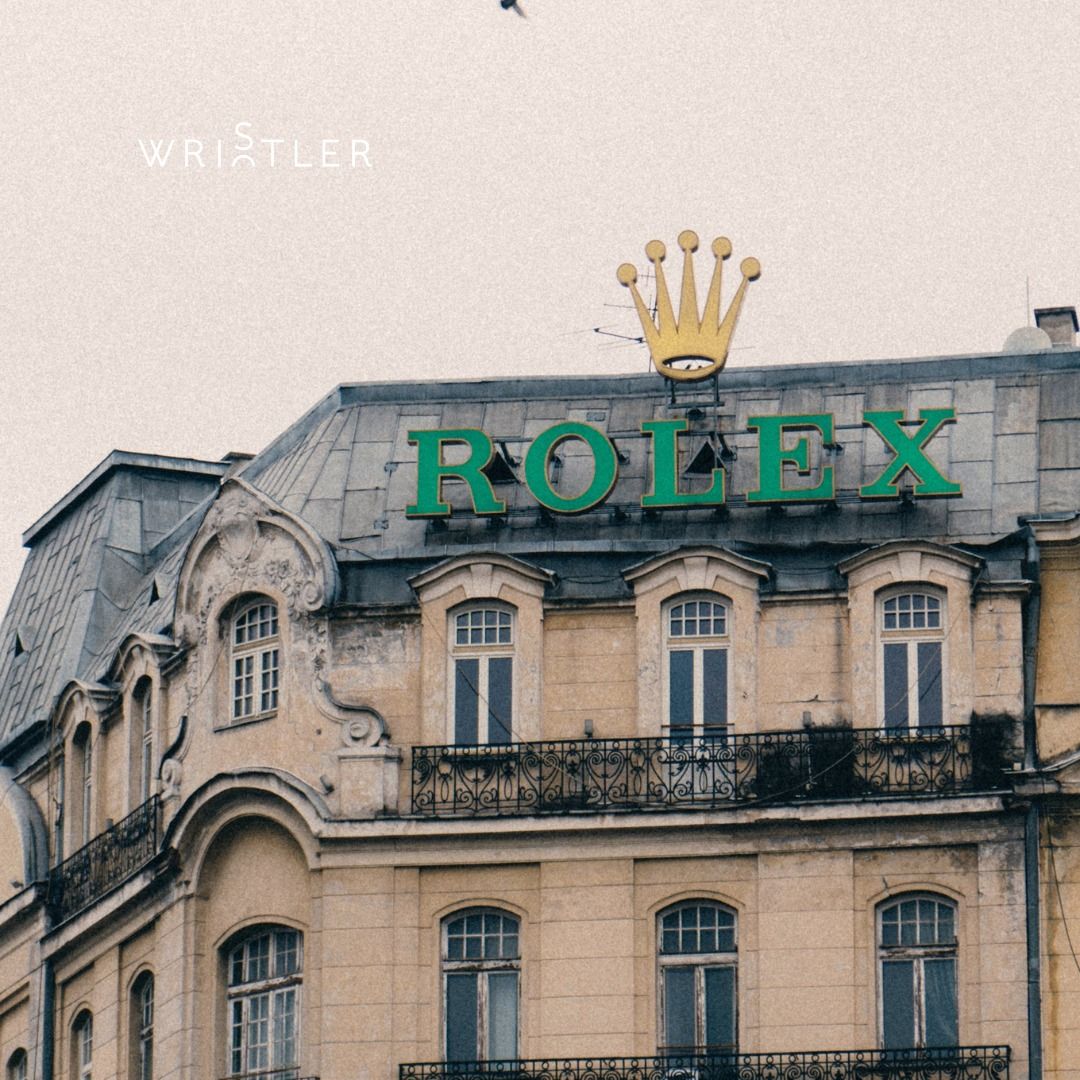
One of the most distinctive and strategically significant aspects of the Rolex brand is the behaviour of its products on the secondary market. While most luxury goods depreciate immediately upon purchase, Rolex watches — particularly the core sports references — have historically commanded premiums above retail, trading in a secondary market that functions, in the words of one market analyst, as "a parallel distribution system" for the brand.
The Chrono24 H1 2025 Secondary Market Report confirms that Rolex accounts for 34.2 percent of global secondary luxury watch transaction volume — by far the largest share of any single brand, and a figure that has held at elevated levels even as pandemic-era speculation has cooled and the market has corrected. The Rolex Certified Pre-Owned (CPO) programme, launched to bring the brand into the secondary market directly, achieved approximately $590 million in sales — a 204 percent increase year-over-year, reflecting the structural demand for authenticated Rolex ownership across price points.
- Signal 01
Secondary premium
Core steel sports models command 38–131% premiums above retail on the secondary market even after 2022–2024 corrections — reflecting trust in long-term value retention
- Signal 02
CPO programme
Rolex's entry into the certified pre-owned market — $590M in 2025, +204% YoY — brings authentication and brand control to the secondary channel, protecting price floors
- Signal 03
Market anchor
The Rolex35 index shows stable average prices and steady interest — "no surprises, but the brand continues to confirm itself as a certainty in the secondary market"
- Signal 04
Long-term appreciation
Average Rolex prices increased over 550% from 2010 to 2025 based on 15 years of actual sales data — demonstrating compounding brand equity, not speculative inflation
The secondary market behaviour is not incidental to Rolex's brand strategy — it is one of its most powerful proof points. A watch that holds or increases its value is not a fashion object. It is a store of value. And a store of value is, almost by definition, a permanent object — which is precisely what Rolex has been communicating about its products since 1905.

04 The Bucherer acquisition and downstream control.
In 2023, Rolex announced the acquisition of Bucherer — one of the world's largest luxury watch retailers, with over 100 locations across Europe and North America. The acquisition, completed in 2024, represents a significant strategic shift for a brand that has historically operated through authorised dealer networks rather than direct retail.
The logic is consistent with Rolex's broader strategy: control the experience, control the presentation, control the service standards. By owning a major retail partner, Rolex gains direct insight into and influence over the customer relationship at the point of purchase — the moment that most directly shapes brand perception. It also strengthens downstream control over the secondary market, since Bucherer operates one of the largest pre-owned watch businesses in Europe.
05 What Rolex teaches about permanence as strategy.
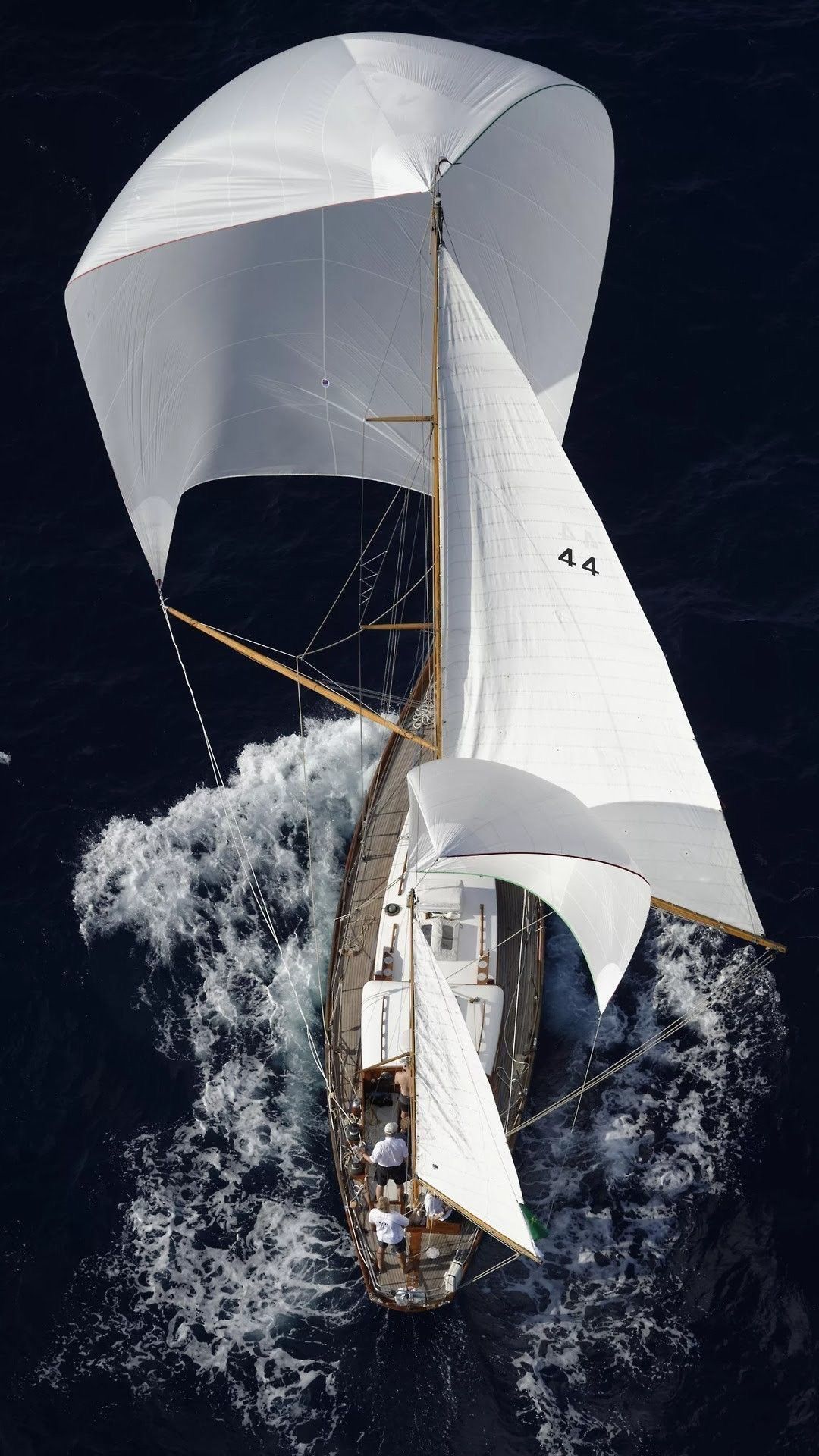
The Rolex case is, at its core, a study in the strategic power of restraint. In every domain — product design, partnerships, distribution, communication — Rolex has chosen depth over breadth, consistency over novelty, and long-term equity over short-term response. The result is a brand that does not need to be interesting, because it is permanent. And in luxury, permanence is the most aspirational quality of all.
- Lesson 01
Unchangingness is a signal
Design consistency communicates institutional conviction — the belief that what you made was right, and the confidence not to second-guess it
- Lesson 02
The secondary market is a metric
How a brand's products behave on the secondary market is one of the most honest measures of perceived long-term value — and Rolex treats it as such
- Lesson 03
Partnerships compound equity
Long-term, values-aligned partnerships accumulate cultural meaning in ways that seasonal campaigns cannot — Rolex's sport relationships are brand assets, not media buys
- Lesson 04
Control downstream
The Bucherer acquisition reflects the same logic as selective distribution — controlling the customer experience at every point of contact, including resale
Rolex does not need to be fashionable. It has spent over a century making that irrelevant. In a market where most brands compete on novelty, Rolex competes on permanence — and has demonstrated, with seventy years of consistent data, that permanence is the stronger position.
Sources & Further Reading
- 01 Chrono24. (2025). Secondary Watch Market Report H1 2025. about — Rolex 34.2% secondary market share, market stability analysis.
- 02 Chrono24. (2025). Luxury Watch Analysis: Rolex's Dominance on the Secondary Market. about — Datejust appreciation, market share by price tier.
- 03 Bob's Watches / Quill & Pad. (2026). True Rolex Secondary Market Prices: 15-Year Sales Data — 550% average price increase 2010–2025, actual transaction data.
- 04 EveryWatch. (2026). The $16.7B Market Reshaping Luxury Watches — CPO sales $590M (+204% YoY), secondary market structure.
- 05 Wang, W. (2024). Analyzing the Marketing Strategy of Luxury Brands: Taking Rolex Watches as an Example. Journal of Education, Humanities and Social Sciences, 35, 820–825.
- 06 Han, Y. J., Nunes, J. C., & Drèze, X. (2010). Signaling status with luxury goods: The role of brand prominence. Journal of Marketing, 74(4), 15–30. — theoretical framework for Rolex's understated status signalling strategy.
- 07 Kapferer, J.-N., & Bastien, V. (2012). The Luxury Strategy. Kogan Page. — permanence, anti-laws of marketing, brand consistency in luxury.
- 08 Beverland, M. B. — Crafting Brand Authenticity: The Case of Luxury Wines
Cite this case study
The Codes of Luxury. (2026, May 12). Rolex: The Grammar of Permanence (Case N°03). https://codeofluxury.cloakify.pro/case-studies/rolex-the-grammar-of-permanence