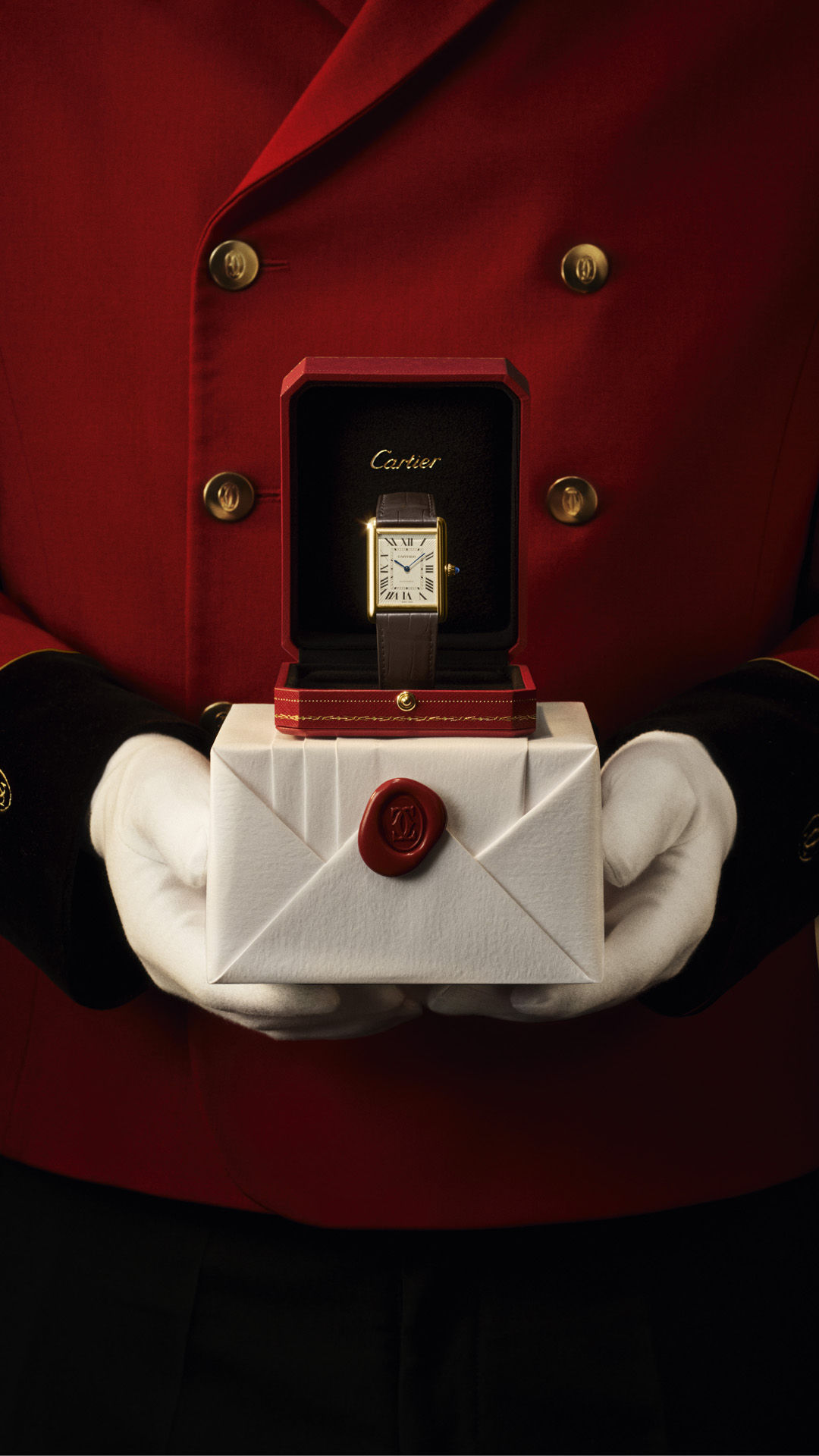
Richemont has spent much of the last two decades operating as two companies at once. One sells jewellery and watches under Cartier, Van Cleef & Arpels, Buccellati, Vhernier and a stable of Swiss watchmaking names. The other has been an attempt at something broader — fashion houses, leather goods, and for eight expensive years a controlling stake in online fashion retail.
The results published on 22 May 2026 do not argue that the first company is stronger than the second. They demonstrate that the first company is the whole company, and that the second has been a cost carried against it.
01 The arithmetic that ends the argument.
€16.5BN
Jewellery Maisons sales — 74% of group revenue of €22,420m, up 14% at constant rates
Richemont, FY2026
€5.0BN
Jewellery operating profit — against €4,492m for the group as a whole
Richemont, FY2026
30.5% / 3.4%
Operating margin, Jewellery Maisons against Specialist Watchmakers
Richemont, FY2026
−€96M
Operating loss at the 'Other' business area — on sales of €2.7bn, up 3% at constant rates
Richemont, FY2026
The group reported net sales of €22,420 million, up 11% at constant exchange rates, and operating profit of €4,492 million at a 20.0% margin — including €164 million of non-recurring costs. The Jewellery Maisons alone contributed €5.0 billion. The Specialist Watchmakers added €107 million. The 'Other' business area subtracted €96 million. Central costs did the rest.
Cartier and its sister houses generate more operating profit than Richemont does. Not most of it — more than all of it. Everything else in the group, net of the cost of running it, is a deduction from the jewellery business.— TCL Analysis
The trajectory has not slowed. In the quarter to 30 June 2026, published on 15 July, group sales rose 20% at constant exchange rates — the strongest opening quarter the group has reported.

02 Nine times the margin.
The comparison that matters most is not jewellery against fashion. It is jewellery against watches — two categories that share a customer, a distribution network, a price point and, in Richemont's case, a parent company.
The Jewellery Maisons ran at a 30.5% operating margin. The Specialist Watchmakers ran at 3.4%, on sales of €3.1 billion that fell 4% at actual rates and rose 1% at constant rates, with a return to growth in the second half led by A. Lange & Söhne, Jaeger-LeCoultre and Vacheron Constantin. That is a ninefold margin gap inside one building, between two businesses that look nearly identical from outside.
- Jewellery Maisons
€16.5bn sales · 30.5% margin
Cartier, Van Cleef & Arpels, Buccellati, Vhernier. Double-digit growth every quarter of the year at constant rates.
- Specialist Watchmakers
€3.1bn sales · 3.4% margin
A twenty-four-month correction in the watch market, and a deleveraging effect from lower sales on heavy fixed manufacturing costs.
- 'Other' — Fashion & Accessories
€2.7bn sales · €96m loss
Growth without profit, even with Alaïa and Peter Millar performing. The clearest evidence that scale is not the missing ingredient here.
03 Two exits in one year.
Richemont's most consequential recent decisions were not acquisitions. On 23 April 2025 the group completed the sale of Yoox Net-a-Porter to Mytheresa, ending an experiment in online fashion retail that had run since 2018.
The terms are the point. Richemont handed YNAP over with €640 million of net cash sitting in the disposed entities, took 36% of Mytheresa's parent LuxExperience in return, and had booked a loss of approximately €1.0 billion on discontinued operations in the prior financial year — principally the write-down of YNAP's carrying value.
Nine months later came a second disposal. In January 2026 Richemont announced an agreement for the Italian Damiani Group to acquire Baume & Mercier, with a €59 million write-down and closing expected in the summer. The stated reasoning was that the Maison's wholesale-led, accessibly priced model would be better realised elsewhere. Two exits in one year, from the two business areas that are not jewellery.
A group does not transfer cash and write off a billion to leave a business it believes in. The exits are the clearest statement Richemont has made about where it thinks value comes from — clearer than any strategy day, because they cost something.

04 Why jewellery structurally wins.
The margin gap is not an accident of one difficult year for watches. It reflects four structural properties that fine jewellery has and fashion does not.
- Property 01
No season, therefore no obsolescence
A Love bracelet designed in 1969 and an Alhambra motif from 1968 are sold today unchanged. There is no markdown cycle, because there is nothing to mark down.
- Property 02
A material floor under the price
Gold and stones carry intrinsic value that a handbag's leather does not — which is also why rising gold prices compressed Richemont's gross margin this year while sales accelerated.
- Property 03
No creative-director risk
Gucci lost €4.5 billion of annual revenue in three years while the house had no describable position. Cartier cannot lose its story that way, because its story is not renewed every six months.
- Property 04
It is where the substitution goes
As personal luxury prices rose, consumers began substituting jewellery for ready-to-wear and handbags. Jewellery is not taking share from outside luxury. It is taking it from the rest of luxury.
The third property is the one the industry underrates. Fashion houses carry a recurring, unhedgeable risk that jewellery houses do not: every creative transition is a period in which the brand may become unsayable. Richemont's jewellery business has run through multiple management generations without that exposure, because the Love bracelet does not need to be reinterpreted to remain legible.
05 What Richemont teaches about portfolio conviction.
- Lesson 01
Sales share and profit share are different arguments
Jewellery is 74% of Richemont's revenue and more than 100% of its operating profit. Portfolios judged on revenue mix will keep divisions that are quietly funded by the others.
- Lesson 02
Growth is not evidence of viability
The 'Other' business area grew 3% at constant rates and lost €96 million. A division can expand and destroy value in the same year; only one of those numbers usually gets quoted.
- Lesson 03
Exits cost more than entries and say more
A €1.0 billion write-down and €640 million of transferred cash to leave online fashion; a €59 million write-down to leave a watch Maison. That price is the measure of the conviction behind the decision.
- Lesson 04
The category with no season has no bad transition
The structural advantage of jewellery is not margin. It is the absence of the recurring narrative risk that fashion cannot avoid.
Kering reached the same conclusion in March 2026 and built a dedicated jewellery division around Boucheron, Pomellato, DoDo and Qeelin, with a target of doubling the business by 2030 from a base near €1 billion. Richemont's jewellery base is €16.5 billion. The gap is not strategy. It is twenty years.
Which is the uncomfortable part of the lesson. Richemont did not win the argument by seeing further than its competitors. It won by owning Cartier since 1988 and by finally, expensively, stopping the attempt to be something else as well.
Sources & Further Reading
- 01 Compagnie Financière Richemont SA. (2026, May 22). Richemont delivers strong sales growth and solid results for the year ended 31 March 2026. Ad hoc announcement pursuant to art. 53 LR.
- 02 Compagnie Financière Richemont SA. (2026, July 15). Richemont posts strong start to the year with sales up by 20% at constant rates for its first quarter ended 30 June 2026.
- 03 Compagnie Financière Richemont SA. (2026, January 22). Damiani Group to acquire Baume & Mercier from Richemont.
- 04 Compagnie Financière Richemont SA. (2025, May). Richemont posts robust performance for the year ended 31 March 2025.
- 05 Richemont / Mytheresa. (2024, October). MYT Netherlands Parent B.V. and Richemont sign agreement for Mytheresa to acquire Yoox Net-a-Porter.
- 06 Kering. (2026, March 16). Kering creates Kering Jewelry.
- 07 Bain & Company / Altagamma. (2026, June 25). Luxury Goods Worldwide Market Study — Spring 2026 update.
- 08 Han, Y. J., Nunes, J. C., & Drèze, X. (2010). Signaling status with luxury goods: The role of brand prominence. Journal of Marketing, 74(4), 15–30.
Cite this case study
The Codes of Luxury. (2026, September 8). Richemont: Why jewelry Beat fashion (Case N°18). https://codeofluxury.cloakify.pro/case-studies/richemont-why-jewelry-beat-fashion