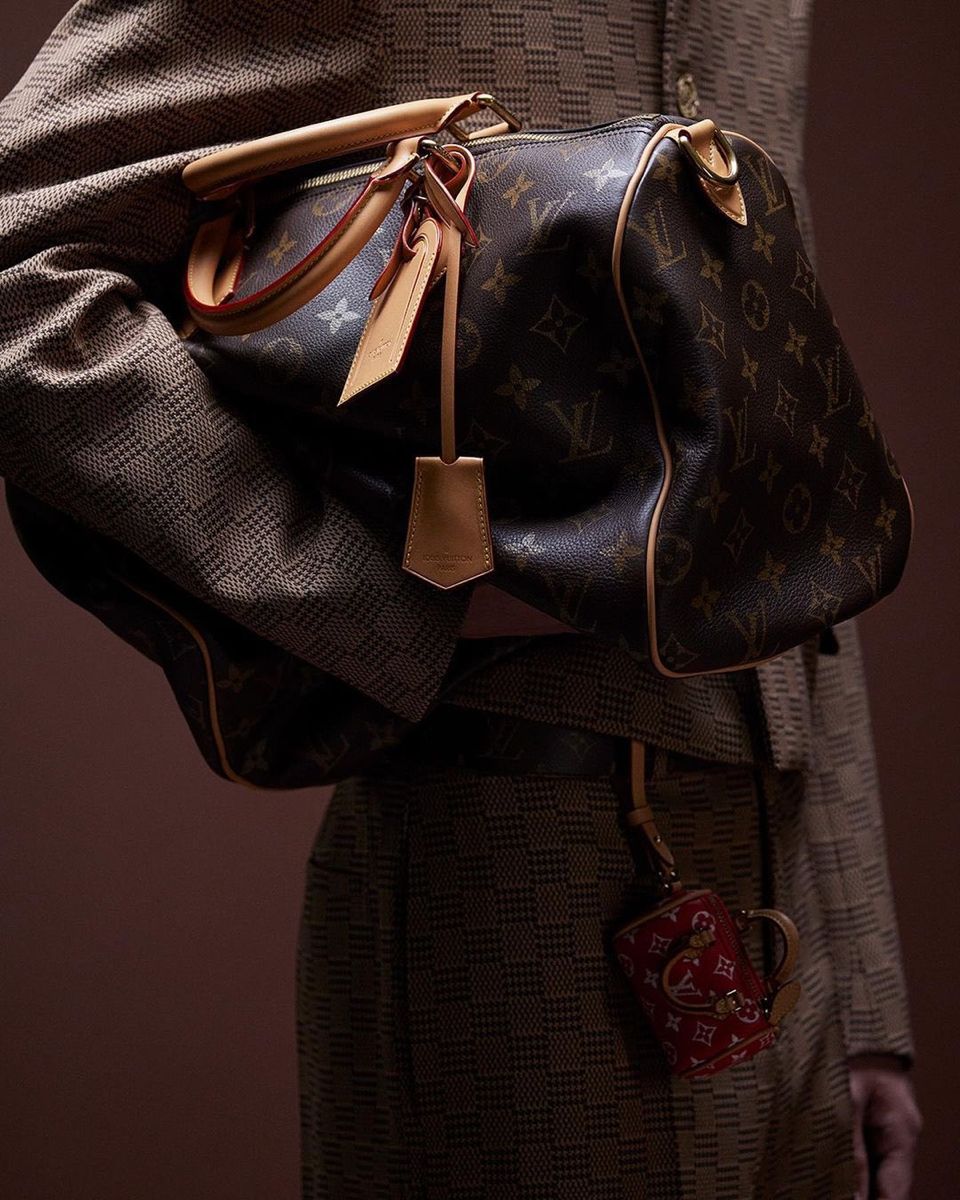
LVMH's identity has been built on a single verb. Christian Dior, Fendi, Bulgari, Loro Piana, Tiffany — the group's history reads as a list of acquisitions, and its strategic reputation rests on the proposition that a well-run conglomerate can hold seventy-five houses and make each of them better than it would be alone.
In the last eighteen months that proposition has been quietly reversed. LVMH is now looking for buyers — for its 50% stake in Fenty Beauty, for Make Up For Ever, for Fresh, and reportedly for others. It is not a crisis. Revenue is €80.8 billion and margins are above 22%. It is something more interesting: a group that has run out of things worth adding, and has started subtracting instead.
01 The two years that changed direction.
€80.8BN
Revenue 2025 — down 5% reported and 1% organic, a fall of €3.9bn
LVMH, FY2025
€17.8BN
Profit from recurring operations 2025 — down 9%
LVMH, FY2025
22.5%
Operating margin in H1 2026 — held while reported revenue fell 3%
LVMH, H1 2026
€1.5–2.5BN
Sought for the 50% stake in Fenty Beauty, with Evercore advising
Reported, 2026
The 2025 accounts, published in January 2026, recorded the group's first meaningful contraction in years: revenue of €80.8 billion, down 5% as reported and 1% organic, with profit from recurring operations at €17.8 billion, down 9%. The second half stabilised at 1% organic growth.
The first half of 2026, published on 27 July, is the turn. Revenue of €38.6 billion was down 3% as reported but up 2% organically, with the second quarter accelerating to 3% — and, LVMH noted, 4% excluding the effect of conflict in the Middle East. Profit from recurring operations came to €8.7 billion, down 4%, at a margin of 22.5%. Currency movements alone took €686 million off that profit line. Net profit attributable to the group was essentially flat at €5.7 billion.
Read together, the two periods describe a group whose top line is recovering slowly and whose profitability has barely moved. That is not the profile of a business in trouble. It is the profile of a business that has stopped growing by default and must now decide what it is for.
02 Where the profit actually sits.
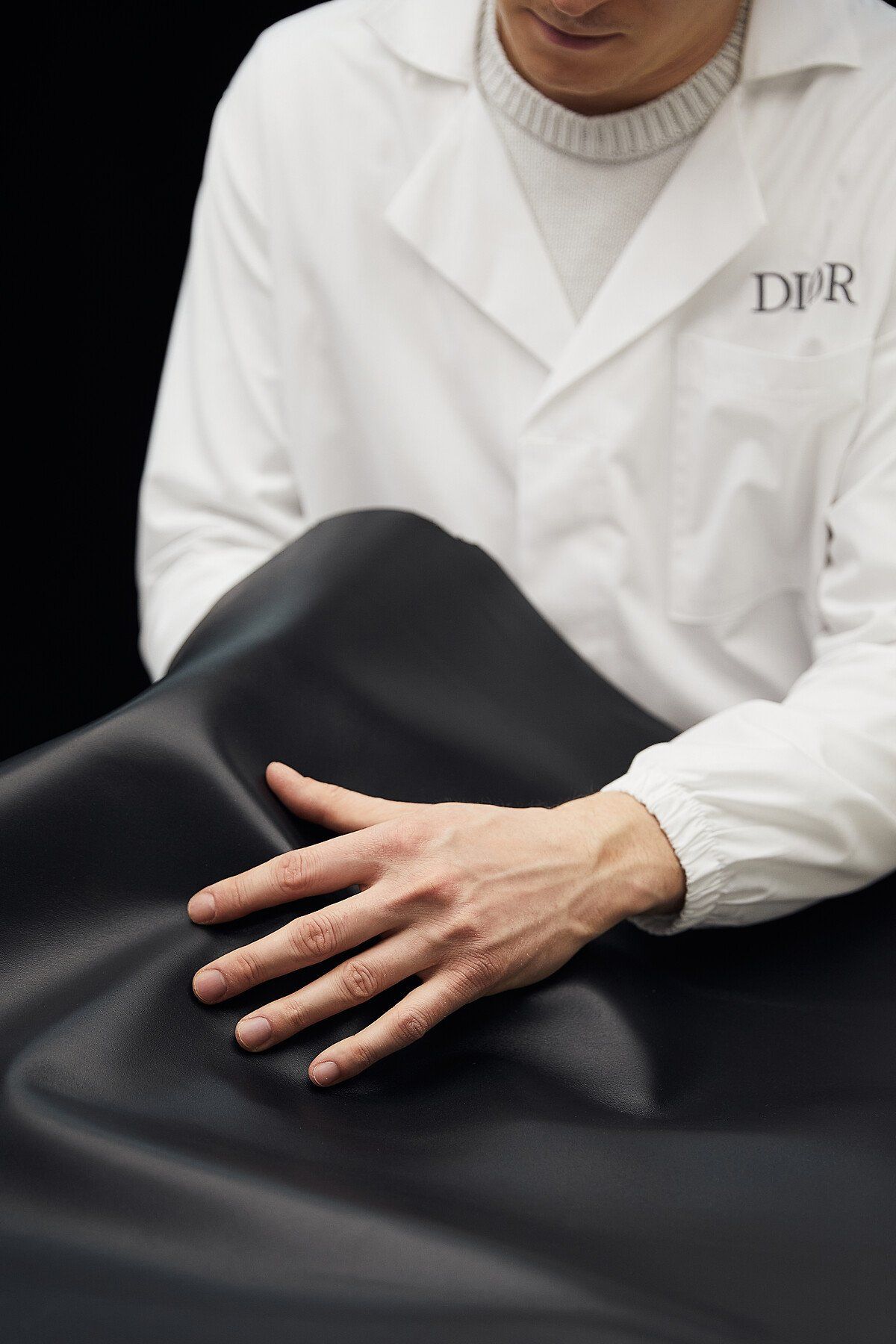
The number that explains the recalibration is not in the headline. In 2025, Fashion & Leather Goods — the division anchored by Louis Vuitton and Dior — produced revenue of €37.8 billion and profit from recurring operations of €13.2 billion.
That is 47% of the group's revenue and 74% of its profit. Wines & Spirits, Perfumes & Cosmetics, Watches & Jewellery and Selective Retailing — four divisions, dozens of houses, tens of thousands of employees — divide the remaining quarter between them.
- Fashion & Leather Goods
€37.8bn revenue · €13.2bn profit
A 35% operating margin. Louis Vuitton and Dior carry the group, and the group knows it.
- Everything else
53% of revenue · 26% of profit
Four divisions and the majority of the house count, producing a quarter of the earnings between them.
Richemont's jewellery houses produce more than 100% of its operating profit. LVMH's fashion and leather goods produce 74% of its own. Both are single-engine companies that spent years describing themselves as diversified. The difference is that Richemont has finished pruning and LVMH has just begun.— TCL Analysis
03 What is being sold, and what it says.
Three disposals are in progress or under consideration, and the reasoning behind each is different — which is what makes the set instructive.
- Fenty Beauty · 50% stake
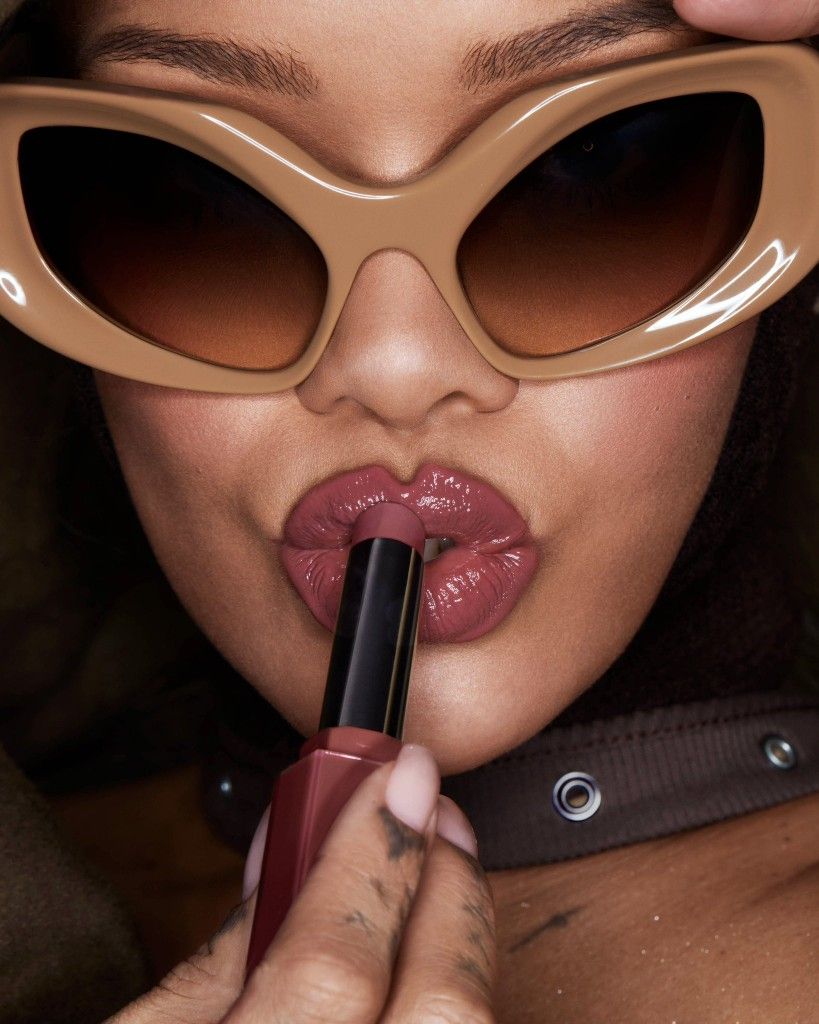
Profitable, culturally significant, co-owned with Rihanna. LVMH has engaged Evercore and is reported to be seeking €1.5–2.5 billion. This is not a distressed sale — it is a decision that a successful business is not a core business.
- Make Up For Ever
Loss-making for eight consecutive years on annual sales of roughly €300 million. The group's stated view is that the forty-two-year-old brand is too mass for its positioning. A house can be inside LVMH and still be the wrong shape.
- Fresh
Also loss-making. Together with Make Up For Ever it represents the part of the beauty portfolio that scale never fixed.
The Fenty decision is the one worth sitting with. A group does not usually sell a profitable brand with a globally famous founder unless it has concluded that owning it changes nothing about the rest of the portfolio. That is a judgement about focus, not about performance — and it is the clearest signal LVMH has given about which houses it considers structural and which it considers optional.
Reports suggest buyers have not been easy to find. That is itself informative: the market agrees with LVMH's assessment more than it disagrees.
04 Why the margin is the real story.
Between 2024 and the first half of 2026, LVMH's revenue fell, its profit fell, currency moved against it by nearly €700 million in six months, and the Middle East cost it a percentage point of quarterly growth. Through all of that the operating margin sat at 22.5%.
Holding a margin through a contraction is harder than growing one through an expansion, and it is achieved by refusing the obvious levers. LVMH did not discount. It did not widen distribution. It did not accelerate product launches to fill the gap. Instead it appointed Jonathan Anderson to all three Dior lines — the first designer since Christian Dior himself to hold that mandate — and put its energy into the houses that generate three-quarters of its earnings.
The disposals and the concentration are the same decision seen from two ends. Selling Fenty and appointing Anderson are both statements that the group's attention is finite and has been reallocated.
05 What LVMH teaches about pruning at scale.
- Lesson 01
Diversification is a description, not a defence
Seventy-five houses across five divisions, and 74% of the profit comes from one of them. Breadth did not protect LVMH from a contraction; concentration is what carried it through.
- Lesson 02
The hardest disposal is the profitable one
Selling a loss-maker is arithmetic. Selling Fenty is strategy — an admission that ownership without leverage is just capital sitting still.
- Lesson 03
Margin discipline is what a downturn actually tests
Revenue fell, currency moved, a region went dark, and 22.5% held. Every lever that would have protected the top line would have cost the margin, and none were pulled.
- Lesson 04
Empires recalibrate before they are forced to
LVMH began selling from a position of a €17.8 billion operating profit. Pruning under duress is a rescue. Pruning from strength is a strategy, and only one of the two works.
The word most often used about this period is contraction. It is the wrong frame. LVMH's revenue is roughly where it was three years ago, its margin is above 22%, and its balance sheet is intact. What has changed is not the size of the empire but the theory behind it — from the belief that a great operator can improve any luxury house it buys, to the narrower and more defensible belief that attention is the scarce resource and should be spent where it compounds.
Richemont reached that conclusion after a €1 billion write-down. Kering is reaching it now, one division at a time. LVMH, characteristically, is reaching it while still the largest and most profitable group in the industry — which is the only moment at which the conclusion is worth anything.
Sources & Further Reading
- 01 LVMH. (2026, January 27). 2025 full year results.
- 02 LVMH. (2026, July 27). Accelerating growth in the second quarter — solid first-half results.
- 03 The Fashion Law. (2026, July). LVMH reports €38.6bn in H1 sales, highlights creative leadership and brand assets.
- 04 Business of Fashion. (2026). Report: LVMH explores sale of Fenty Beauty.
- 05 BeautyMatter. (2026). LVMH explores sale of Make Up For Ever.
- 06 FashionNetwork. (2026). LVMH reportedly mulling sale of several brands from its portfolio.
- 07 Compagnie Financière Richemont SA. (2026, May 22). Results for the year ended 31 March 2026.
- 08 Kering. (2026, March 16). Kering creates Kering Jewelry.
- 09 Kapferer, J.-N., & Bastien, V. (2012). The luxury strategy: Break the rules of marketing to build luxury brands (2nd ed.). Kogan Page.
Cite this case study
The Codes of Luxury. (2026, September 28). LVMH: When the empire recalibrates (Case N°20). https://codeofluxury.cloakify.pro/case-studies/lvmh-when-the-empire-recalibrates