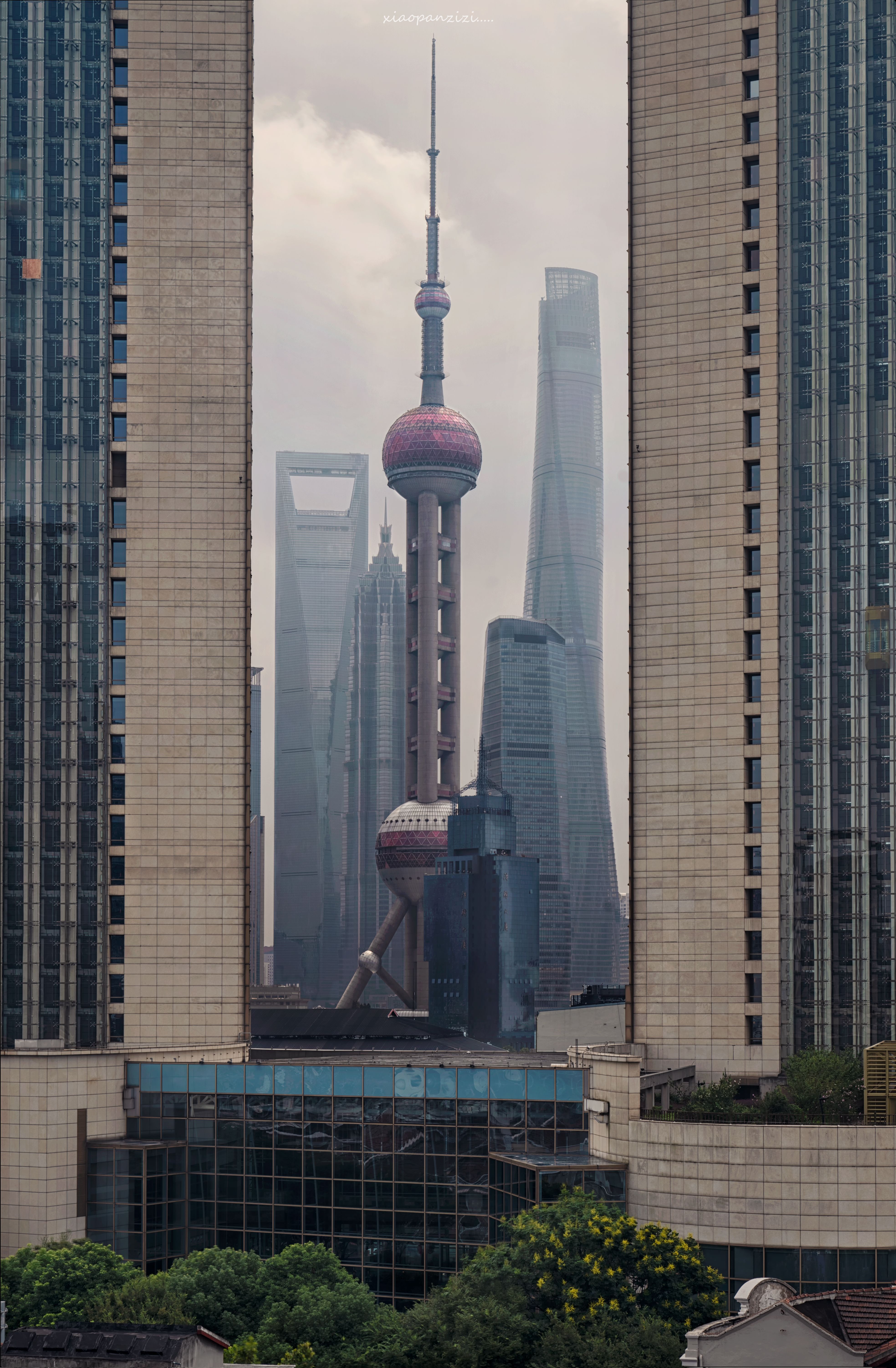
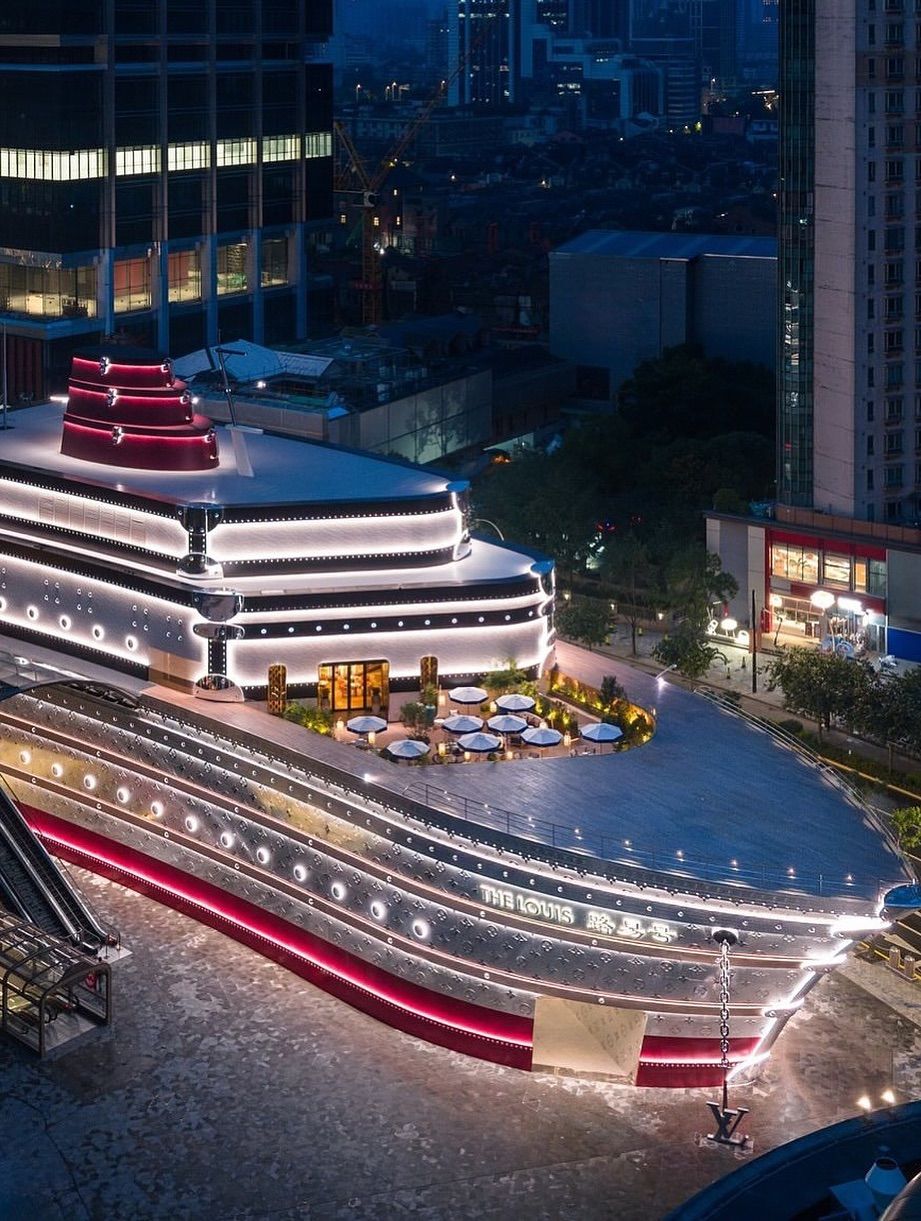
On 28 June 2025, Louis Vuitton opened The Louis on Wujiang Road in Shanghai — a ship-shaped structure rising roughly thirty metres above the street, housing a flagship store, a café, and an exhibition of some 1,200 square metres designed by OMA. It is not a store that happens to look like a ship. It is a cultural monument that happens to contain a store. The distinction matters — and it defines the future of luxury retail.
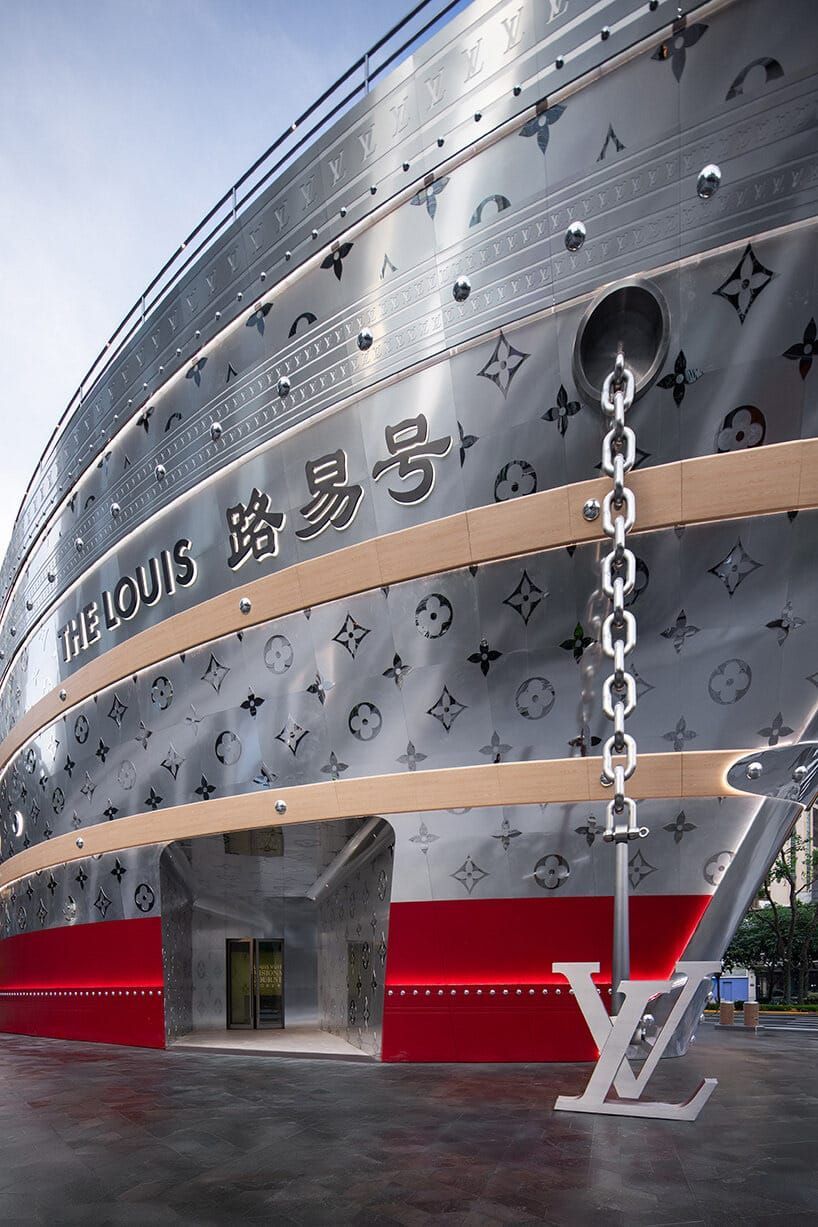
There is a moment when you look at The Louis from Wujiang Road in Shanghai's Jing'an district — 30 metres of metallic monogram hull rising from the pavement, upper decks stacked to resemble Louis Vuitton trunks with leather straps and white stitching, a giant LV anchor at the bow — and the question that arises is not "what is this?" but "how does it exist?"
The answer is that it exists because Louis Vuitton, with LVMH's resources and the architectural firm OMA's intelligence, decided that a flagship store in Shanghai in 2025 needed to be more than a flagship store. It needed to be a destination — a place people would seek out not only to shop, but to experience, to photograph, to tell others about. A cultural landmark that happened to sell leather goods, rather than a retail outlet that tried to create cultural meaning through décor.
The distinction is not semantic. It defines the entire strategic architecture of The Louis — and it has lessons for every luxury brand thinking about what physical retail needs to become.
01 What The Louis actually is.
The Louis is, by any conventional retail metric, an extraordinary object. It rises about thirty metres above Wujiang Road, inside the HKRI Taikoo Hui complex that fronts Nanjing West Road — one of Shanghai's most commercially dense luxury districts, and one of the most heavily walked stretches of the city.
~30m
Height — visible from across the Jing'an district
1,207m²
Visionary Journeys exhibition, across two levels
10
Themed rooms, curated by OMA's Shohei Shigematsu
3
Floors — exhibition, retail, café
But the numbers are not the point. What makes The Louis strategically significant is its programme — the way its three floors are allocated, and what that allocation communicates about Louis Vuitton's understanding of what a flagship store is for.
- Floor 1
Visionary Journeys Exhibition
Ten themed rooms: Origins, Voyage, perfume, books, sport, fashion. Curated by Shohei Shigematsu of OMA. Opens with Trunkscape — an archway of Monogram canvas trunks. Historical patents, archival advertising, unique pieces.
- Floor 2
Exhibition continues + Retail
Exhibition continues across the second floor. Retail floor: ready-to-wear, leather goods, accessories, Shanghai-exclusive items. Personalisation zones with hot-stamping services featuring Shanghai-exclusive motifs.
- Floor 3
Le Café Louis Vuitton
The café sits at the top of the ship. Warm wooden surfaces, soft lighting reminiscent of an old ship's cabin. Monogram-covered trunks as primary decorative element. The hospitality layer that extends the visit. The programme is, deliberately, more exhibition than retail. Two floors of the three-storey building are dedicated to the brand's cultural and historical narrative before the commercial transaction is invited. The visitor spends time with Louis Vuitton's 19th-century heritage of trunk-making for transoceanic voyages, with its relationship to travel, sport, books, and perfume — and arrives at the retail floor already immersed in the brand's world. The purchase, when it comes, is the culmination of an experience rather than the purpose of a visit.
02 The architectural logic.
The ship form is not an arbitrary aesthetic. It is a precise intersection of two histories: Louis Vuitton's 19th-century identity as the maker of trunks for transoceanic voyages, and Shanghai's identity as the "Gateway to the East" — a port city whose trading history runs back through the Tang-dynasty ports of Qinglong and Huating, and which opened to foreign trade as a treaty port in 1843.
Louis honours both histories simultaneously. The metallic monogram hull, the stacked trunk upper decks, the LV anchor — these are Louis Vuitton codes. The ship form, the maritime setting, the Wujiang Road location in a city defined by its relationship to water and trade — these are Shanghai codes. The building exists at the intersection, making both legible to audiences who may know one but not the other.
This ship-shaped decoration echoes Shanghai's urban spirit of 'embracing all rivers and seas' and showcases its international outlook of innovation and forward momentum."— Wu Yue, President of LVMH Greater China, at The Louis opening, June 2025— TCL Analysis
Dezeen's coverage noted that the building was "designed to create a new cultural landmark within Shanghai's central business district" — language that comes from Louis Vuitton's own brief, but that the building justifies. The Louis is already functioning as a cultural landmark: a destination that draws visitors who are not necessarily luxury shoppers, a photographic subject that circulates on Chinese social media platforms, a reference point in conversations about Shanghai's architecture and retail landscape.
03 What The Louis represents for luxury retail strategy.
The Louis is the most ambitious single expression of a strategic shift that has been building in luxury retail for several years: the move from the flagship store as a distribution point to the flagship store as a brand universe. The academic case for it is well established. Brakus, Schmitt and Zarantonello (2009) defined brand experience as the sensory, affective, intellectual and behavioural responses evoked by a brand's design, identity, packaging, communications and environments — placing the store itself inside the definition rather than outside it. Shahid, Paul, Gul Gilal and Ansari (2022) tested the mechanism directly: across three studies with more than 800 participants, sensory cues and brand experience in luxury retail built emotional attachment and, through it, brand loyalty, with consumers reporting stronger attachment in luxury settings than in non-luxury ones. The Louis takes that logic to a scale nobody has attempted.
- 01
The building as brand communication
The Louis communicates Louis Vuitton's heritage, values, and cultural identity to anyone who sees it from Wujiang Road — without requiring entry. The exterior is a 30-metre brand advertisement that is also a piece of architecture. The communication happens before the door is opened.
- 02
Exhibition as purchase justification
Spending two floors on the brand's cultural and historical narrative before reaching the retail floor is not generosity — it is strategy. Consumers who understand the provenance of what they are buying, who have spent an hour with the brand's history, are more likely to perceive value in the purchase and to form emotional attachment to the brand.
- 03
The café as extended dwell time
Le Café Louis Vuitton at the top of the ship extends the visit beyond the exhibition and the retail floor. A consumer who stays for coffee is a consumer who has spent more time in the brand's world — and whose emotional connection to that world has deepened. Café as a retention mechanism.
- 04
Shanghai-exclusive as local relevance
Products available only at The Louis — with Shanghai-exclusive motifs in the hot-stamping service — create a destination logic that is specific to this location. You cannot get this Vuitton anywhere else. The exclusivity of the place becomes an argument for visiting the place.
04 China as the laboratory for luxury's wildest ambitions.
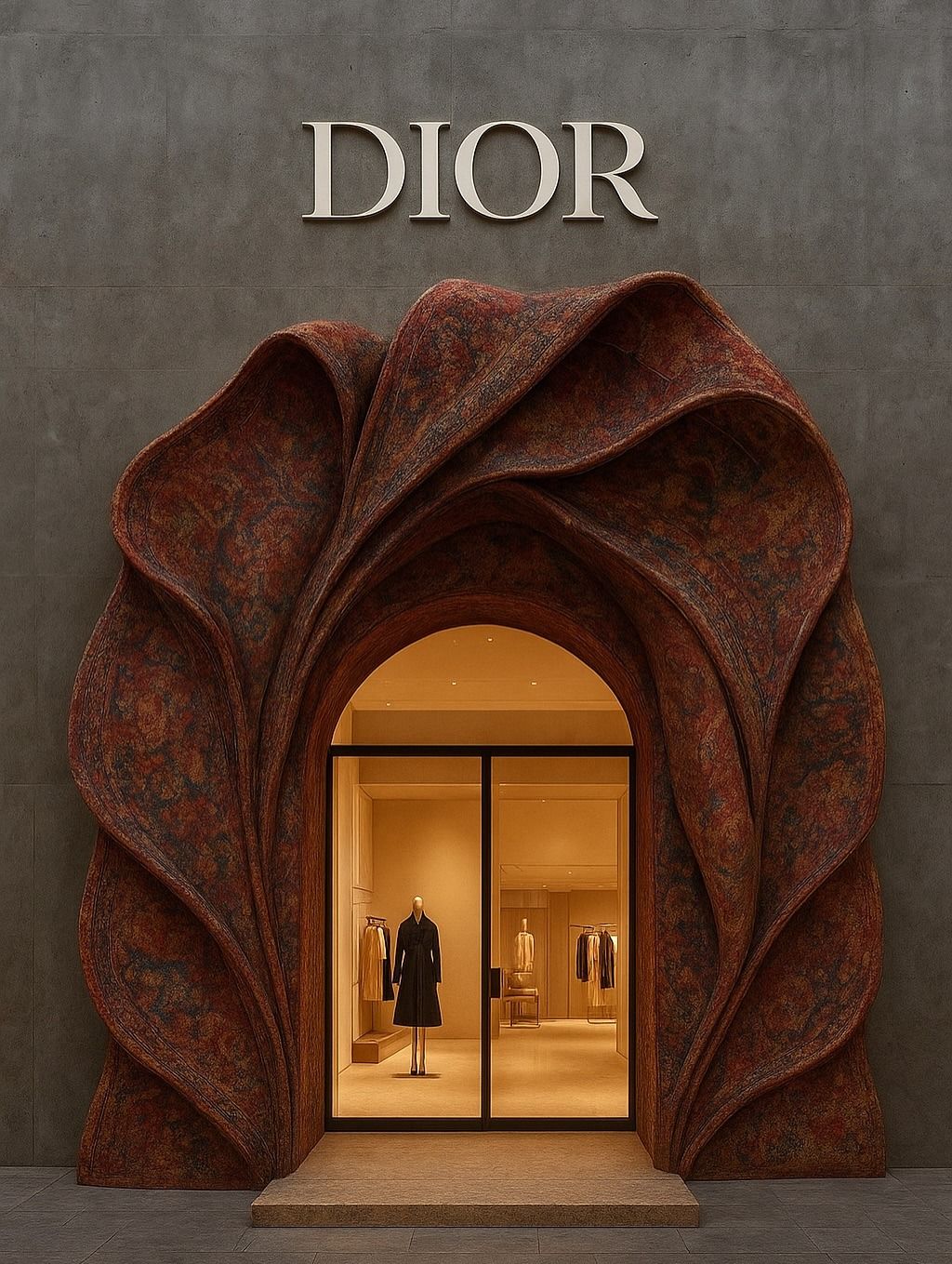
There is a version of this argument that circulates in the industry as a shrug: the wildest work gets built in China because China lets you build it. Stated more precisely, it describes something structurally true about the relationship between luxury brands and the Chinese market in 2025. China demands — and rewards — ambition at a scale that other markets do not.
A ship-shaped flagship store that is also a museum that is also a café that is also a cultural landmark is not a concept that could be built and sustained in most Western luxury retail contexts. In Shanghai, on Wujiang Road, it draws crowds, generates organic social media content, and positions Louis Vuitton as a brand that takes China seriously enough to do something unprecedented here.
In the context of China's luxury market recovery — Bain forecasting modest growth in 2026 after the sharp contractions of 2024 — Louis is also a strategic signal. A brand that opens a monument in China during the most difficult period for the market in a decade is a brand that believes in the market's long-term trajectory, not just its current quarter. That signal reaches Chinese consumers directly. And in a market where brand trust and brand commitment are significant purchase drivers, it matters.
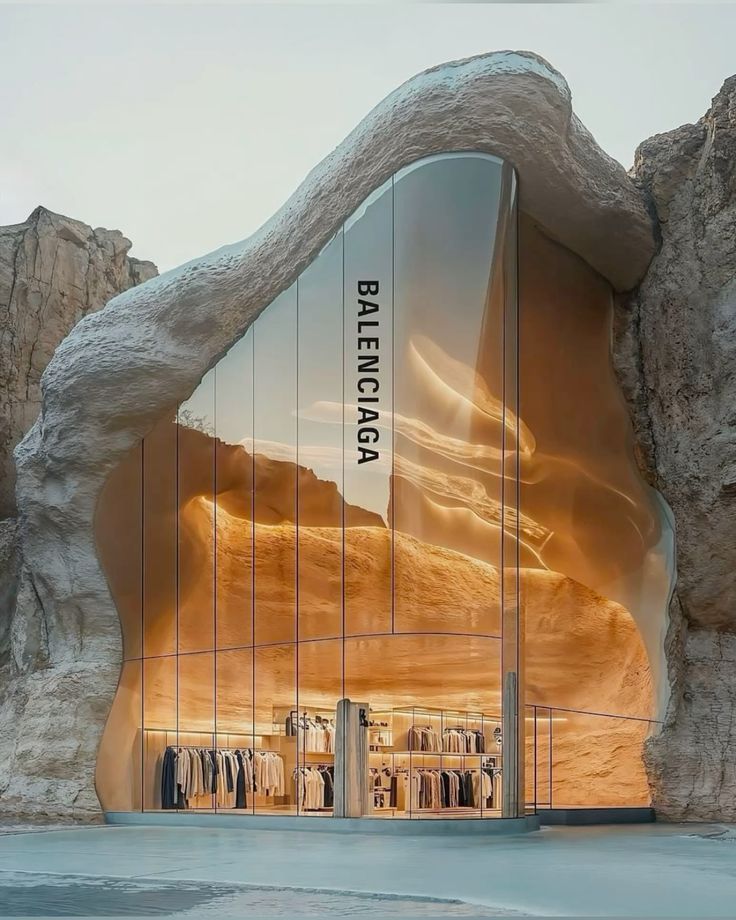
05 What The Louis teaches about flagship strategy.
- Lesson 01
The flagship is a brand universe
Two floors of exhibition before the retail floor communicates a fundamental reorientation: the store is not a place to buy things, it is a place to experience the brand. The purchase is a consequence of that experience, not its purpose
- Lesson 02
Heritage is architectural material
The ship form — drawn from LV's 19th-century trunk-making heritage — is not decorative. It is the load-bearing concept of the entire building. The brand's history becomes the architecture, not the backdrop
- Lesson 03
Local specificity creates destination logic
The ship honours Shanghai's maritime history as precisely as it honours LV's trunk-making history. The building could not be anywhere else. That specificity makes it worth visiting — which is the prerequisite for everything else
- Lesson 04
Ambition in downturns signals commitment
Opening a 30-metre monument during China's luxury contraction is a statement about long-term market belief. Brands that signal commitment during difficult periods earn trust that outlasts the difficulty
The Louis on Wujiang Road is not the future of luxury retail. It is an extreme version of it — made possible by LVMH's resources, OMA's intelligence, and Shanghai's appetite for architectural ambition. But the principles it embodies — experience before transaction, heritage as architecture, local specificity as destination logic, ambition as brand signal — are available to any luxury brand willing to ask what a store is actually for. The answer, The Louis suggests, is not selling. It belongs.
Sources & Further Reading
- 01 Louis Vuitton. (2025, June). Visionary Journeys Shanghai.
- 02 Designboom. (2025, June 27). Louis Vuitton ship brings flagship and OMA-designed exhibition to Shanghai.
- 03 Dezeen. (2025, June 26). Louis Vuitton creates ship-shaped store formed of trunks in Shanghai.
- 04 WWD. (2025, June). Exclusive: Louis Vuitton's latest store is a futuristic boat docked in downtown Shanghai.
- 05 Wallpaper*. (2025, June). A Louis Vuitton cultural and retail hub docks in Shanghai.
- 06 Brakus, J. J., Schmitt, B. H., & Zarantonello, L. (2009). Brand experience: What is it? How is it measured? Does it affect loyalty? Journal of Marketing, 73(3), 52–68.
- 07 Shahid, S., Paul, J., Gul Gilal, F., & Ansari, S. (2022). The role of sensory marketing and brand experience in building emotional attachment and brand loyalty in luxury retail stores. Psychology & Marketing, 39(7), 1398–1412.
- 08 Guzzetti, A., Crespi, R., & Belvedere, V. (2024). Phygital luxury experiences. A correspondence analysis on retail technologies. International Journal of Consumer Studies, 48(2), e13008.
- 09 Bain & Company. (2026, January). The 2025 Chinese personal luxury goods market.
Cite this case study
The Codes of Luxury. (2026, June 5). Louis Vuitton in Shanghai: When a Flagship Becomes a Monument (Case N°11). https://codeofluxury.cloakify.pro/case-studies/louis-vuitton-in-shanghai-when-a-flagship-becomes-a-monument