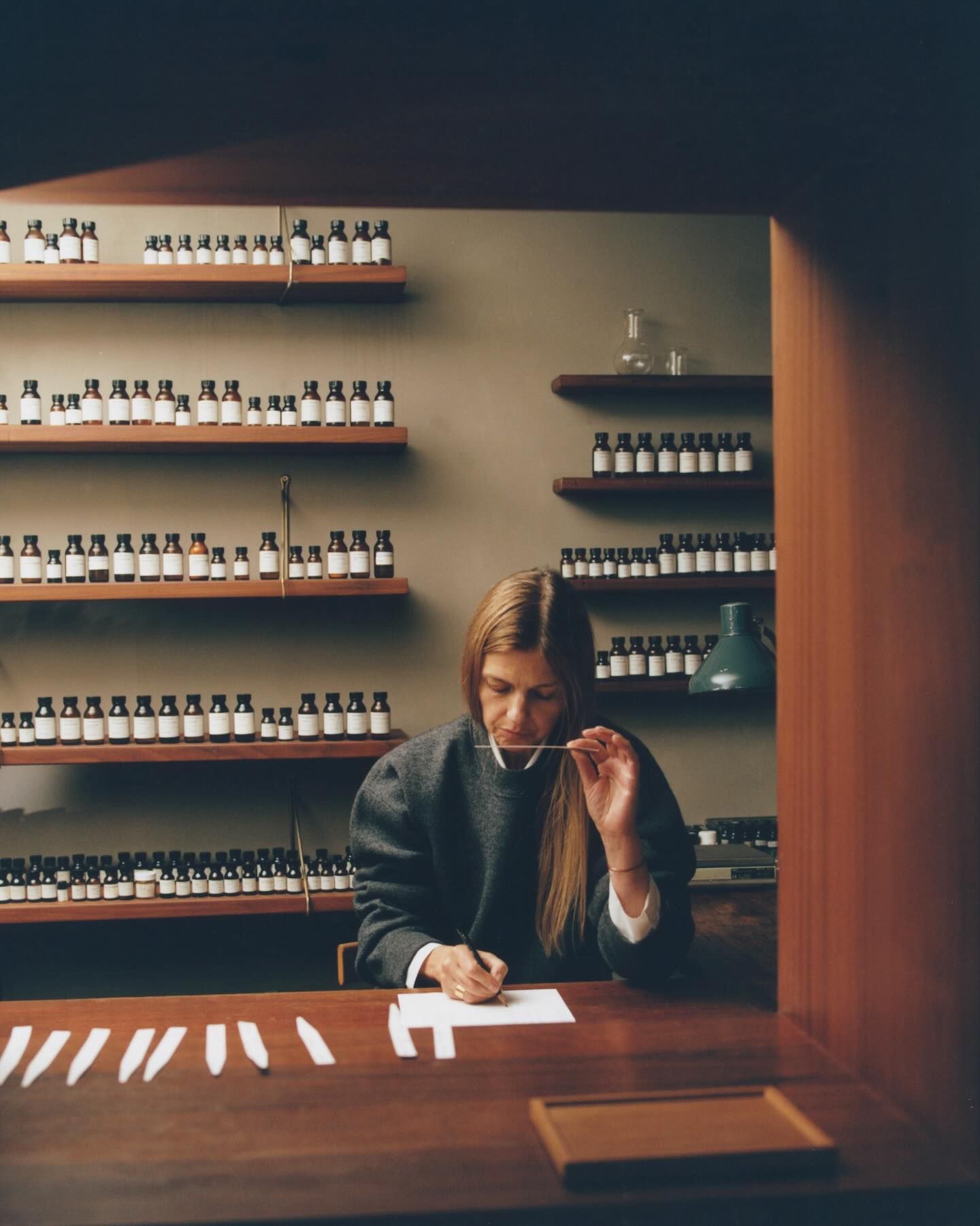
Le Labo does not advertise in magazines. It does not work with mass influencers. It does not optimize for viral reach. And yet it has one of the most devoted followings in the beauty industry. The question is not whether the strategy works — it clearly does. The question is how.
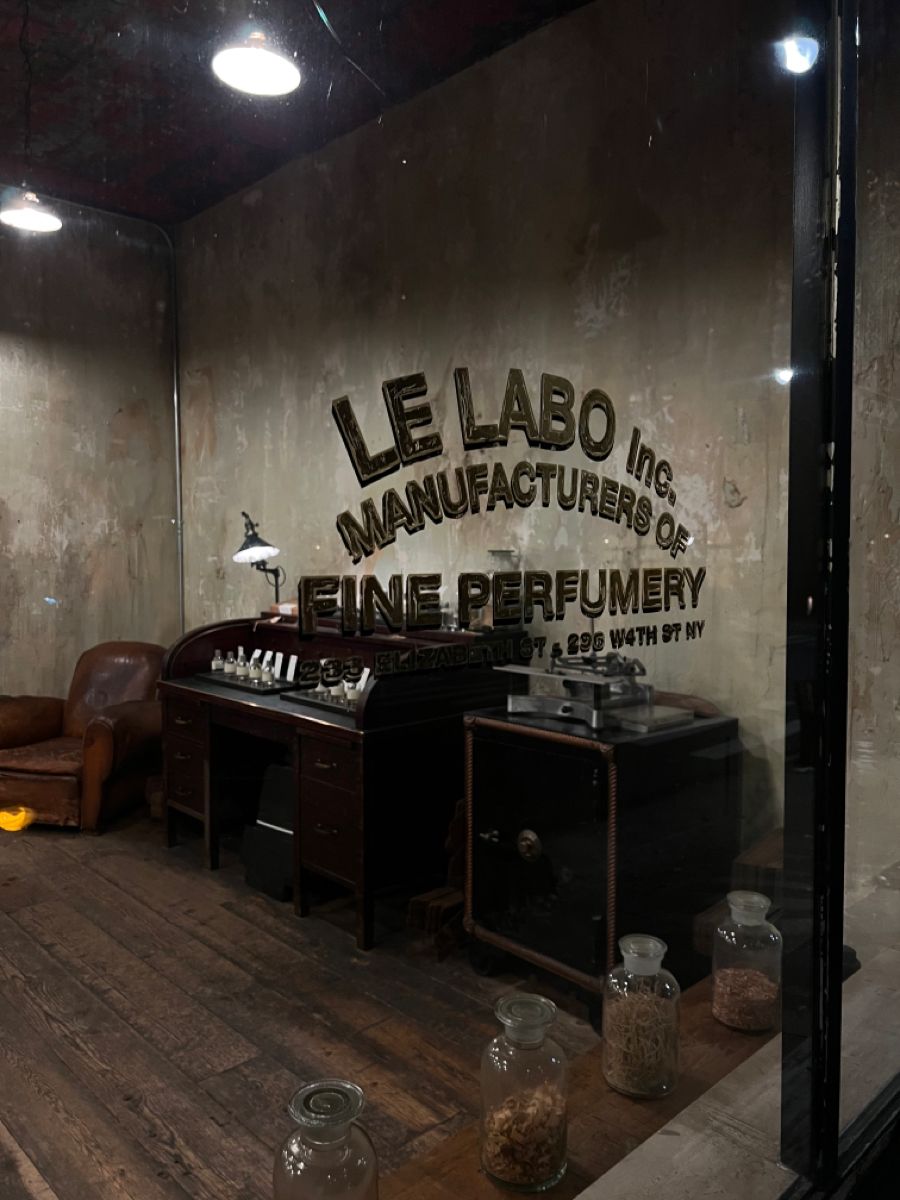
In 2006, Fabrice Penot and Edouard Roschi opened a small fragrance boutique in New York's NoLIta neighbourhood with a founding motto that doubled as a business strategy: "The future of luxury resides in workmanship." They wanted to build something that reflected their own values — craftsmanship, transparency, slowness — rather than the logic of the fragrance industry they were entering, which was built on celebrity endorsements, glossy advertising, and department store distribution.
Eighteen years later, Le Labo is owned by Estée Lauder, has boutiques in dozens of cities worldwide, and its hero fragrance Santal 33 has achieved the cultural status of a modern classic — instantly recognisable, widely imitated, the subject of think-pieces about what it means to smell like a certain kind of person. The brand did this without departing from the principles it started with. Understanding what is the purpose of this case.
01 The store as the medium.
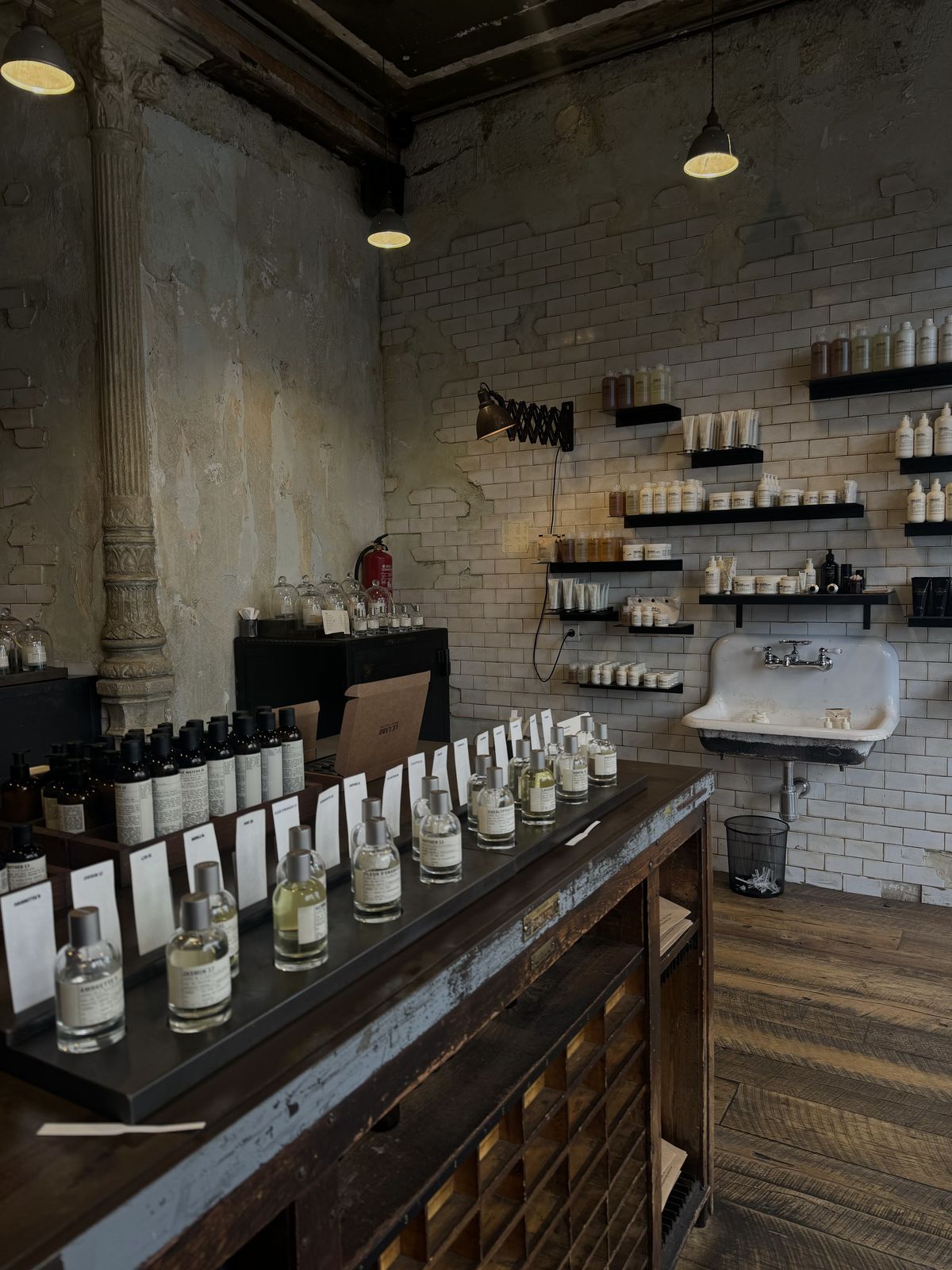
Le Labo's most fundamental strategic decision was to make the physical store the primary brand communication channel — not a distribution point, not a retail outlet, but the medium through which the brand's entire value proposition is transmitted.
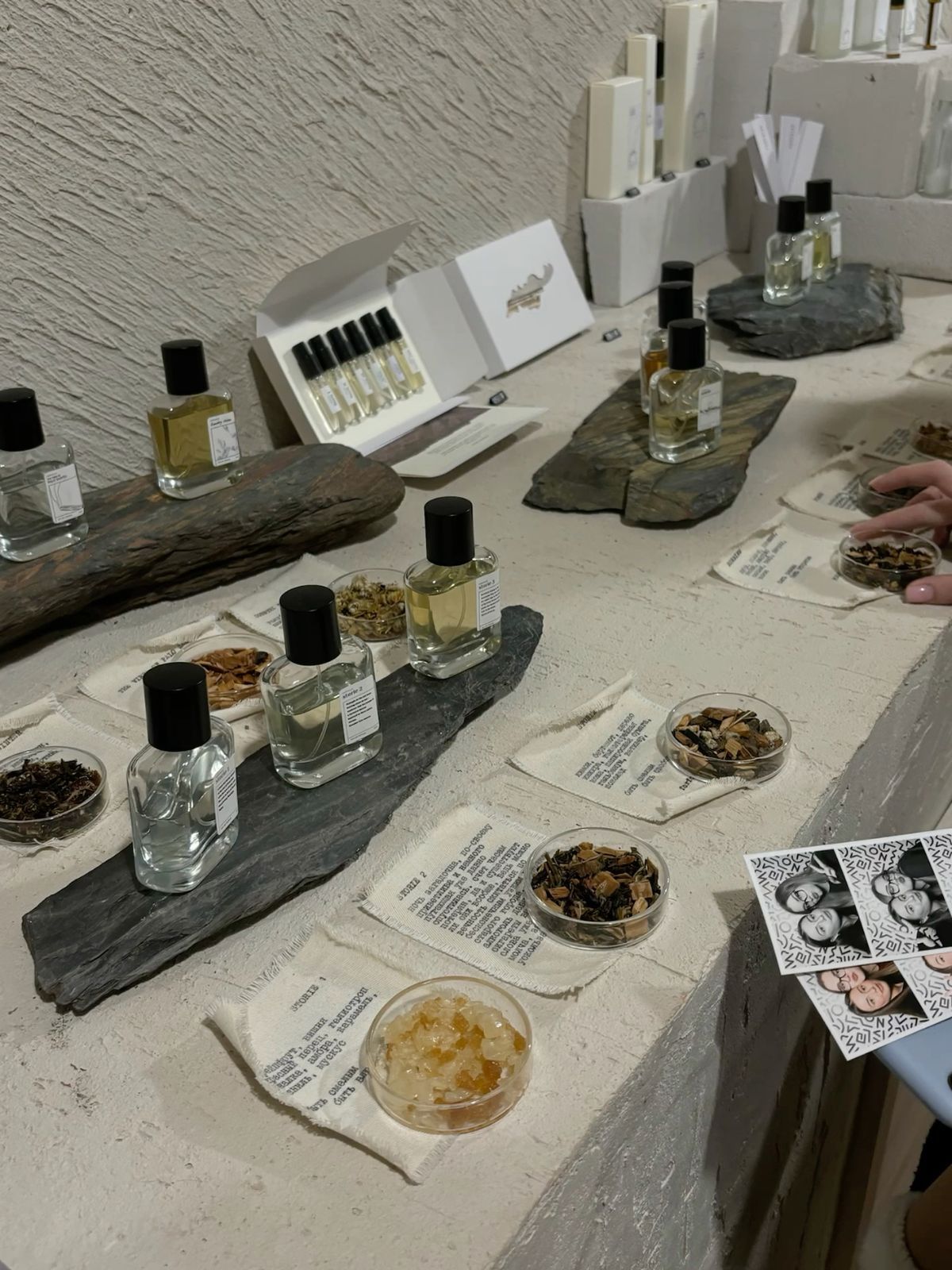
In Le Labo boutiques, fragrances are blended to order in front of the customer. The raw ingredients are visible. The process is observable. The label is printed with the customer's name and the date of blending. This is not theatre for its own sake — it is a deliberate inversion of the fragrance industry's standard operating logic, which treats the production process as proprietary and invisible. Le Labo makes the invisible visible, and in doing so transforms the purchase into a participation.
The store is not where the product is sold. It is where the product is created — and where the customer becomes part of that creation.— TCL Analysis
Research on experiential retail consistently supports the commercial logic of this approach. Guzzetti et al.'s 2024 study in the International Journal of Consumer Studies found that luxury brands designing immersive, interactive physical store environments see significantly stronger emotional attachment and loyalty than those treating stores primarily as transactional spaces. Le Labo's boutique model is a case study in this principle, built before the academic literature fully articulated it.
02 The ritual as the product.
Le Labo's product is not, strictly speaking, a fragrance. It is an experience that includes a fragrance. The distinction matters because it explains the brand's retention logic: customers who have participated in the blending ritual, received their personalised label, and understood the ingredient philosophy are not simply fragrance customers. They are participants in a practice — and participants are significantly harder to displace than customers.
73%
of first-time Santal 33 buyers repurchase within 6 months — vs. 49% industry average
Aggregated retail data, 2022–2024
8.2%
CAGR of niche luxury fragrance sector 2021–2024 — vs. 3.1% for mainstream luxury fragrance
Industry analysis, 2024
4.2%
Santal 33 return rate — lowest among top 20 luxury fragrances
Aggregated retail data, 2024
This ritual economy extends to the City Exclusive collection — a series of fragrances available only in specific cities, designed to be acquired through travel rather than online ordering. The model is anti-convenience by design: it creates scarcity through geography rather than price, and rewards the customer who makes the effort to seek the product out. The Shahid, Paul et al. (2022) research on sensory marketing in luxury retail — finding that multi-sensory cues build emotional attachment with effects stronger in luxury than non-luxury contexts — directly describes the mechanism Le Labo has been deploying since 2006.
03 Community without campaigns.
Le Labo does not run mass advertising campaigns. It does not work with celebrity ambassadors in the traditional sense. It does not optimise its social media presence for reach or follower growth. And yet it has built one of the most coherent and vocal brand communities in beauty.
The mechanism is word-of-mouth, activated by the in-store experience and sustained by the product's performance. Research on brand love — Carroll and Ahuvia (2006) — establishes that emotional attachment to a brand directly predicts positive word-of-mouth, and that the effect is strongest in hedonic, self-expressive categories. Fragrance is among the most self-expressive product categories that exist: what you wear says something specific about who you are. Le Labo has made this self-expression unusually legible — Santal 33 is recognisable enough that wearing it is itself a form of community membership.
- Pillar 01
No mass media
Le Labo has consistently refused glossy advertising and celebrity endorsement in favour of word-of-mouth activated by the in-store experience. The absence of paid media is itself a brand signal
- Pillar 02
Geographic scarcity
The City Exclusive collection makes certain fragrances available only in specific cities, creating scarcity through geography and rewarding discovery over convenience
- Pillar 03
Visible process
Fragrances blended in-store, ingredient transparency, personalised labels — the production process is the brand story, told live in front of the customer
- Pillar 04
Scent as identity
Genderless fragrances, ingredient-led naming, minimalist packaging — the brand positions fragrance as personal identity expression rather than aspirational status signal
04 The Estée Lauder question.
In 2014, Le Labo was acquired by Estée Lauder Companies — one of the largest beauty conglomerates in the world. The acquisition raised an obvious question: can a brand built on anti-commercialism survive within a corporate structure built on scale and commercialisation?
The answer, a decade later, appears to be yes — with conditions. Le Labo has maintained its boutique brand attributes: artisan production, restricted distribution, no mass media, commitment to the founding principles. Estée Lauder has allowed the brand to expand geographically — including a 2023 entry into mainland China through a WeChat mini-program and a single Shanghai boutique, deliberately avoiding third-party platforms like Tmall — without requiring it to adopt the parent company's distribution logic.
The China entry is itself instructive. Le Labo chose WeChat as an exclusive direct-to-consumer channel, refused Tmall distribution, and opened a single boutique in Xintiandi. The result: heavy traffic from the first month, consistent stock shortages, and organic demand that the brand chose not to immediately satisfy. Anti-convenience as strategy, executed at scale.
05 What Le Labo teaches about community-first luxury.
The Le Labo case establishes something important for luxury brand strategy: community does not require campaigns. It requires a product experience compelling enough to make customers want to talk about it, and a brand position clear enough that talking about it says something meaningful about the person doing the talking.
The brand also demonstrates the strategic value of deliberate friction. Every element of the Le Labo model that makes it inconvenient — the in-store blending, the geographic exclusives, the refusal of mass distribution — also makes it memorable, shareable, and resistant to commoditisation. In a market saturated with fragrances, inconvenience is differentiation.
- Lesson 01
The store is the medium
When the physical space delivers the brand's entire value proposition, it becomes irreplaceable — not a cost centre but a brand asset
- Lesson 02
Friction creates memory
Deliberate inconvenience — blending to order, geographic exclusivity — makes the experience memorable and shareable in ways that convenience cannot
- Lesson 03
Community without campaigns
Word-of-mouth activated by a genuinely distinctive product experience is more durable than paid reach — and harder to replicate
- Lesson 04
Acquisition ≠ dilution
Corporate ownership can coexist with brand integrity — if the acquiring entity allows the brand to maintain its founding logic rather than requiring adoption of the parent's scale model
Le Labo did not build a cult by accident. It built one by making every structural decision — about distribution, media, packaging, pricing, and process — consistent with a single founding belief: that the future of luxury resides in workmanship. The cult is the result of that consistency, maintained across eighteen years and one corporate acquisition.
Sources & Further Reading
- 01 Guzzetti, E., et al. (2024). Phygital luxury experiences: A correspondence analysis on retail technologies. International Journal of Consumer Studies (Wiley). — experiential retail and emotional attachment in luxury.
- 02 Alexander, B., & Varley, R. (2025). Retail futures: Customer experience, phygital retailing, and the Experiential Retail Territories perspective. Journal of Retailing and Consumer Services, 82, 104108. — physical store as primary CX driver.
- 03 Shahid, S., Paul, J., Gul Gilal, F., & Ansari, S. (2022). The role of sensory marketing and brand experience in building emotional attachment and brand loyalty in luxury retail stores. Psychology & Marketing, 39(7), 1398–1412.
- 04 Carroll, B. A., & Ahuvia, A. C. (2006). Some antecedents and outcomes of brand love. Marketing Letters, 17(2), 79–89. — brand love → word-of-mouth in hedonic categories.
- 05 Liu, X., et al. (2024). Brand Building Triumphs: Le Labo's Inspiring Market Entry. Journal of Education, Humanities and Social Sciences, 27, 280–286. — Le Labo's China entry strategy via WeChat, boutique model.
- 06 Niche fragrance market growth data (2021–2024): Aggregated from industry analysis sources including Euromonitor and brand retail performance reporting.
- 07 Batra, R., Ahuvia, A., & Bagozzi, R. P. — Brand Love
- 08 Brakus, J. J., Schmitt, B. H., & Zarantonello, L. — Brand Experience: What Is It? How Is It Measured? Does It Affect Loyalty?
Cite this case study
The Codes of Luxury. (2026, May 9). Le Labo: How a Fragrance brand Built a Cult without Mass Media (Case N°02). https://codeofluxury.cloakify.pro/case-studies/le-labo-how-a-fragrance-brand-built-a-cult-without-mass-media