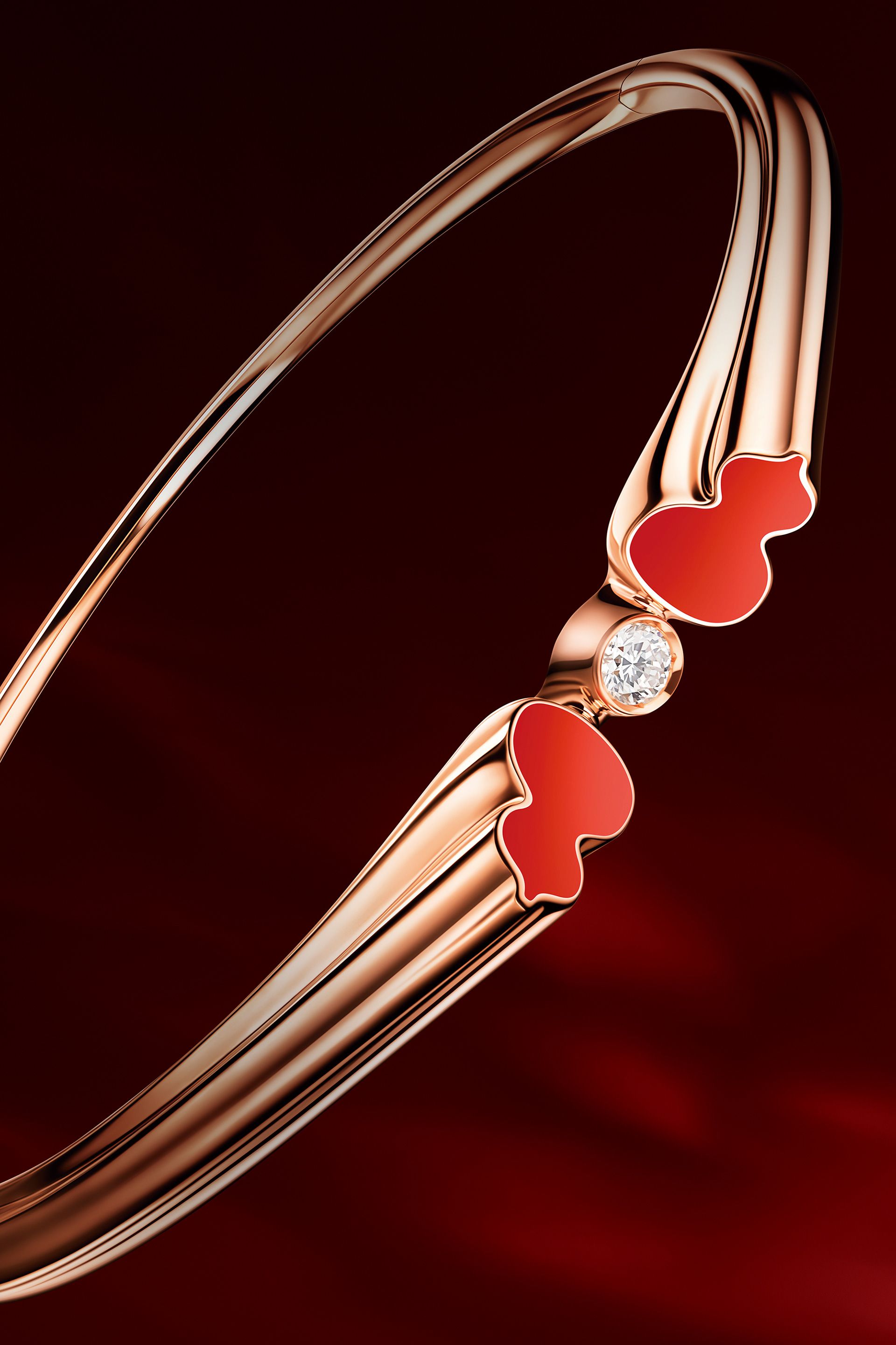
On March 16, 2026, Kering announced the creation of Kering Jewelry — a dedicated division uniting Boucheron, Pomellato, Dodo, and Qeelin under a single structural umbrella. The timing, the rationale, and the commercial results already visible make this one of the clearest examples of portfolio strategy in real time: a conglomerate under pressure identifying its most resilient category and deliberately restructuring around it.
When a conglomerate that built its empire on leather goods and runway fashion decides to restructure around fine jewelry, it is worth paying attention. That is precisely what Kering did on March 16, 2026 — and the decision was not impulsive. It was the logical conclusion of two years of market data, financial pressure, and a CEO who arrived from outside the luxury industry and read the situation with fresh eyes.
Luca de Meo took over as chief executive of Kering on 15 September 2025, having previously led the turnaround of Renault Group. He arrived at the group's most difficult financial moment in recent memory: 2025 revenues of €14.7 billion, down 13% on a comparable basis, driven primarily by Gucci's prolonged weakness. His response — announced piece by piece across late 2025 and early 2026 — was a systematic portfolio recalibration: sell beauty to L'Oréal for €4 billion, reduce debt, restructure reporting, and identify the categories with the strongest underlying fundamentals. The answer to the last question was, unmistakably, jewelry.
01 The numbers that made it obvious.
+17%
Kering Jewelry organic growth, Q4 2025 — €268M revenue, outperforming all other divisions
Kering, Q4 2025
+22%
Kering Jewelry comparable-store sales growth, Q1 2026
Kering, Q1 2026 revenue release
€935M
Kering Jewelry full-year 2025 revenue — approximately 6% of group sales
Kering, FY2025
2×
De Meo's stated 2030 target: double jewelry revenue
Capital Markets Day, 16 April 2026
The contrast with the group's fashion and leather goods performance was stark. While Gucci posted an 8% organic decline in Q1 2026, Kering Jewelry was "clearly standing out as a growth engine," as Kering CFO Armelle Poulou described it on the Q1 2026 earnings call. The division generated €935 million in full-year 2025 revenue — approximately 6% of Kering's total — with growth accelerating quarter by quarter.
The category benefits from strong underlying fundamentals and from the disciplined way we are scaling it across houses and regions. With strong brand desirability, a growing retail footprint, and an increasingly integrated industrial backbone, we are confident in jewelry's ability to increase its contribution."— Armelle Poulou, CFO Kering, Q1 2026 earnings call— TCL Analysis
For context, jewellery has been the luxury sector's one reliable growth category. Bain puts sector growth at 4–6% in 2025 against a broadly stagnant luxury market, and McKinsey expects jewellery to grow more than 4% annually over the next three years — roughly four times the rate expected for clothing. Richemont, whose portfolio is anchored by Cartier and Van Cleef & Arpels, grew 5% in the six months to September 2025, with its jewellery maisons carrying the group while its fashion houses fell. The structural advantage of jewellery over fashion in the current consumer environment was not a hypothesis. It was visible in every set of results published that year. And Kering, with four jewellery houses already generating nearly €1 billion annually, was substantially under-invested in the category relative to its potential.
02 The four houses and their roles.
Boucheron
Founded 1858. The first jeweller to open on Place Vendôme, in 1893, and still Kering's flagship jewellery house. Delivers the strongest growth in the group in Q1 2026 — "brand traction was particularly solid." High jewellery authority, watch entry planned. → Focus on iconic lines, move into watches, expand Asia and US.
Pomellato
Milanese, colored stones, unconventional luxury since 1967. "Sound growth, driven by Japan and the success of its key collections." Strong existing position in Europe, growth potential in Asia. → Strengthen colored stones position, increase store productivity
Dodo
Italian charm jewelry, accessible luxury tier. "Extended several quarters of sustained growth." Bridge between accessible and fine jewelry — important for customer acquisition and brand ladder. → Sustain growth momentum, customer ladder to Pomellato
Qeelin
Chinese luxury jewelry founded in Hong Kong, 2004. "Strong performance, driven by Asia." The most China-relevant jewelry brand in Kering's portfolio — significant growth potential in recovering market. → Asian market expansion, cultural relevance positioning
03 The structural logic of the division.
Creating Kering Jewelry is not simply a reporting change — though it is also that. Starting Q1 2026, Kering reports across four segments: Fashion & Leather Goods, Jewelry, Eyewear, and Corporate & Other. The new transparency gives investors — and, importantly, the four jewelry house CEOs — a clearer view of the category's performance, isolated from the group's fashion struggles.
- 01
Operational synergies
The four houses will share infrastructure, manufacturing expertise, and distribution muscle without compromising their individual creative identities. Central to this is the integration of Raselli Franco Group — an Italian jewelry manufacturer that becomes the industrial backbone of the new hub. Shared production capability reduces cost and increases quality control across all four brands simultaneously.
- 02
Leadership architecture
Jean-Marc Duplaix — Kering's group Chief Operating Officer — was appointed CEO of Kering Jewelry effective immediately, while continuing in his COO role. All jewelry house CEOs now report directly to him. This creates a direct chain of command between the group's operational leadership and the jewelry category — a signal of institutional seriousness about the division's strategic importance.
- 03
Cross-portfolio integration
De Meo plans for Kering's jewelry brands to work closely with its fashion houses — Gucci, Saint Laurent, Bottega Veneta. This is potentially the most interesting strategic dimension: jewelry brands that are visible within, associated with, and promoted through Kering's fashion ecosystem gain access to distribution, customer relationships, and cultural cachet that standalone jewelry brands cannot replicate.
- 04
Investor visibility
Reporting jewelry separately — with its own revenue, regional breakdown, and channel data — creates a compelling sub-narrative within the Kering investment case. A division growing 17–22% organically in a market where the group overall declined 13% is a story that deserves its own paragraph. The reporting change ensures that paragraph gets written.
04 What this means in the context of the K-shaped luxury market.
Kering's jewelry restructuring is the most direct corporate response available to the K-shaped luxury dynamic. The group's fashion and leather goods business is in the falling arm of the K — Gucci's prolonged weakness, Saint Laurent's slower recovery, the broader challenge of aspirational luxury in an uncertain economy. Its jewelry business is in the rising arm — category growth of 4–6% annually, consumer substitution from handbags to jewelry, the store-of-value logic driving demand even among cautious consumers.
At the Capital Markets Day in Florence on 16 April 2026, de Meo presented the full ReconKering roadmap. Jewellery was one of several 2030 doubling targets, alongside business with top-tier clients — who already account for around a quarter of all luxury purchases — sales density in Gucci's boutiques and its icon products, Saint Laurent's menswear and Asia business, Bottega Veneta's non-leather categories, and Balenciaga's leather goods, women's ready-to-wear and US business. The headline ambition for the group was to double its profit margin in the medium term.
Jewellery is therefore not the only bet. It is the one with the least distance to travel. The question is whether €1 billion in jewellery revenue, growing at 17–22%, can compensate for a fashion and leather goods business that still represents the overwhelming majority of the group's sales. The answer, mathematically, is not yet — but the structural trajectory is clear.
05 What Kering Jewelry teaches about portfolio strategy under pressure.
- Lesson 01
Structure follows strategy
Creating a dedicated division with its own CEO, reporting, and industrial backbone is not an administrative change — it is a signal of strategic priority. The structure communicates what the group actually believes about where growth will come from
- Lesson 02
Portfolio recalibration is sequential
Sell beauty → reduce debt → restructure reporting → identify growth category → create dedicated division → set 2030 target. Kering's moves in 2025–2026 are a coherent sequence, not a series of reactive decisions. The logic connects
- Lesson 03
6% of revenue, 100% of the growth story
Jewelry was 6% of Kering's total revenue in 2025. Yet it delivered the group's strongest performance. Identifying the small part of a portfolio that is structurally advantaged — and investing disproportionately in it — is the essence of portfolio strategy under pressure
- Lesson 04
Cross-portfolio integration is an underused asset
Integrating jewelry brands with fashion houses — shared campaigns, shared events, shared customer relationships — is something only a conglomerate can do. Standalone jewelry brands cannot access the fashion ecosystem. This is Kering's structural advantage and de Meo knows it
Kering bet on leather and fashion for decades. The bet paid off — until it didn't. The creation of Kering Jewelry in March 2026 is not an admission that the fashion bet was wrong. It is the recognition that in the K-shaped luxury market of 2026, the rising arm belongs to jewelry — and that a conglomerate with nearly €1 billion in annual jewelry revenue, growing at 17–22%, should not be treating that category as a footnote. The future of Kering may gleam more than it ever has. Whether it gleams enough is the question the rest of the decade will answer.
Sources & Further Reading
- 01 Kering. (2026, March 16). Kering creates Kering Jewelry. Press release.
- 02 Kering. (2026, April 14). 2026 First-quarter revenue: gradual improvement and focus on execution. Press release.
- 03 Kering. (2026, April 16). Capital Markets Day — ReconKering. Investor presentation, Florence.
- 04 Kering. (2026, February). 2025 Full-Year Results.
- 05 Business of Fashion. (2026, March 17). Kering unveils new jewellery unit, merges fashion brand reporting.
- 06 WWD. (2026, March 16). Kering launches jewelry division to boost growth and innovation.
- 07 WWD. (2026, April 16). Kering Capital Markets Day 2026: group aims to double profit margin mid-term.
- 08 JCK Online. (2026, April 17). Kering debuts ReconKering strategy with an eye on jewelry.
- 09 NSS Magazine. (2026, May 6). Why Kering is betting big on jewelry.
- 10 Il Sole 24 Ore. (2026, March 16). Kering riorganizza e lancia una nuova strategia gioielli.
- 11 Bain & Company / Altagamma. (2025, November 20). Luxury goods worldwide market study: Finding a new longevity for luxury (24th ed.).
Cite this case study
The Codes of Luxury. (2026, June 8). Kering jewelry: Portfolio Logic in Practice (Case N°12). https://codeofluxury.cloakify.pro/case-studies/kering-jewelry-portfolio-logic-in-practice