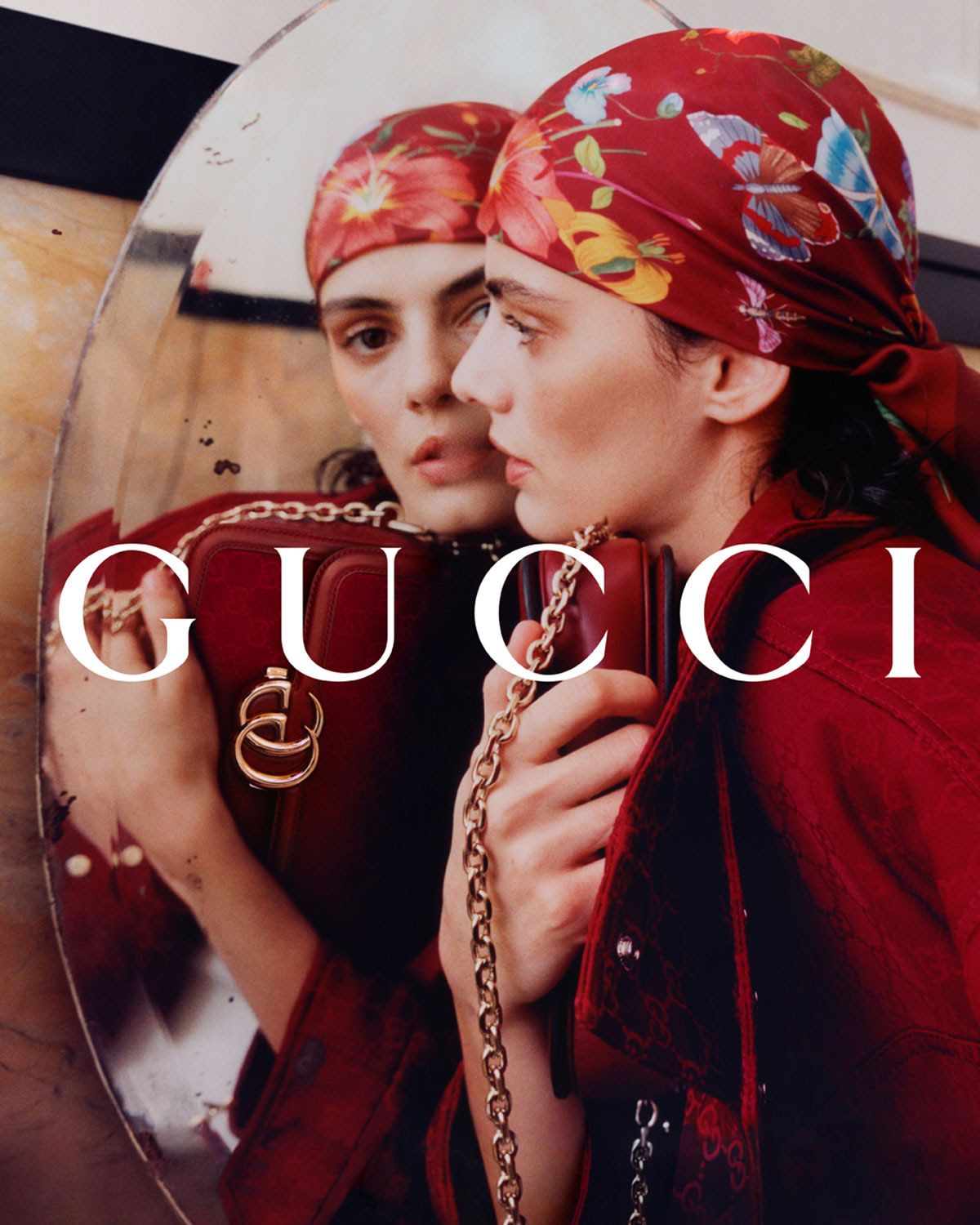
Luxury talks constantly about storytelling and almost never puts a number on it. Gucci offers the rare opportunity to do so, because between the end of one creative era and the beginning of the next, everything else about the house held steady. The ateliers kept working. The stores stayed open. The leather did not get worse. The only variable that changed materially was whether anyone could say what Gucci currently meant.
The answer, over three years, was €4.5 billion of annual revenue — more than the entire yearly turnover of Prada Group. It is the most expensive silence in recent luxury history, and the sequence in which it unfolded is more instructive than the total.
01 The size of the hole.
Gucci's peak was 2022: €10,487 million, roughly half of Kering's revenue and about two-thirds of its profit. In 2023 it slipped to €9,873 million. By 2024 the house was at €7.7 billion. In 2025 it fell again, to €5,990 million — down 22% on a comparable basis, with retail off 18% and wholesale off 34%. Recurring operating income came in at €966 million, a margin of 16.1% against 33.1% just two years earlier. The margin halved in two years.
−43%
GUCCI REVENUE, PEAK TO TROUGH — €10,487M IN 2022 TO €5,990M IN 2025
Kering, FY2022 and FY2025
€4.5BN
ANNUAL REVENUE LOST — MORE THAN THE ENTIRE TURNOVER OF PRADA GROUP
Kering
33.1 → 16.1%
GUCCI RECURRING OPERATING MARGIN, 2023 TO 2025 — HALVED IN TWO YEARS
Kering, FY2023 and FY2025
26th → 6th
GUCCI'S BRAND MOMENTUM RANKING, Q1 TO Q2 2026
Kering, H1 2026
Those figures are usually read as a single event — a house in decline. They are better read as three distinct phases, each with a different cause, and only the middle one has anything to do with storytelling.
02 What actually went missing.
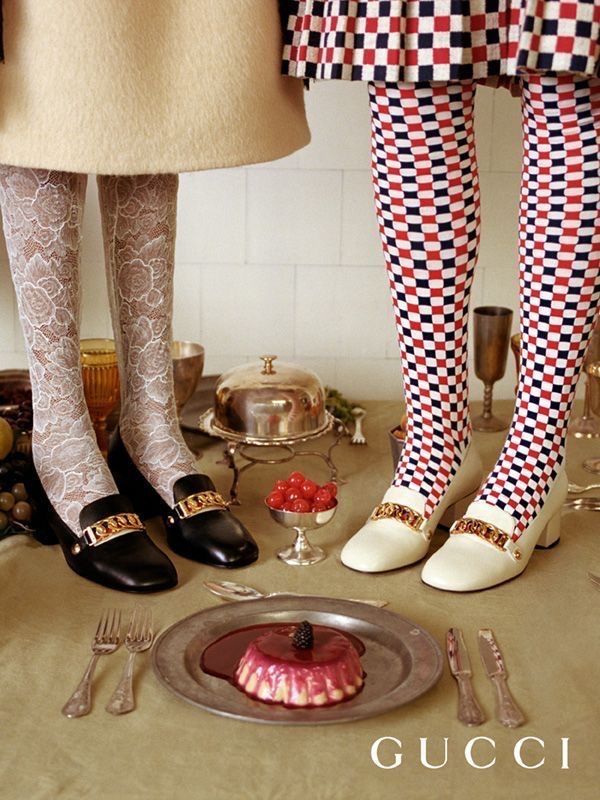
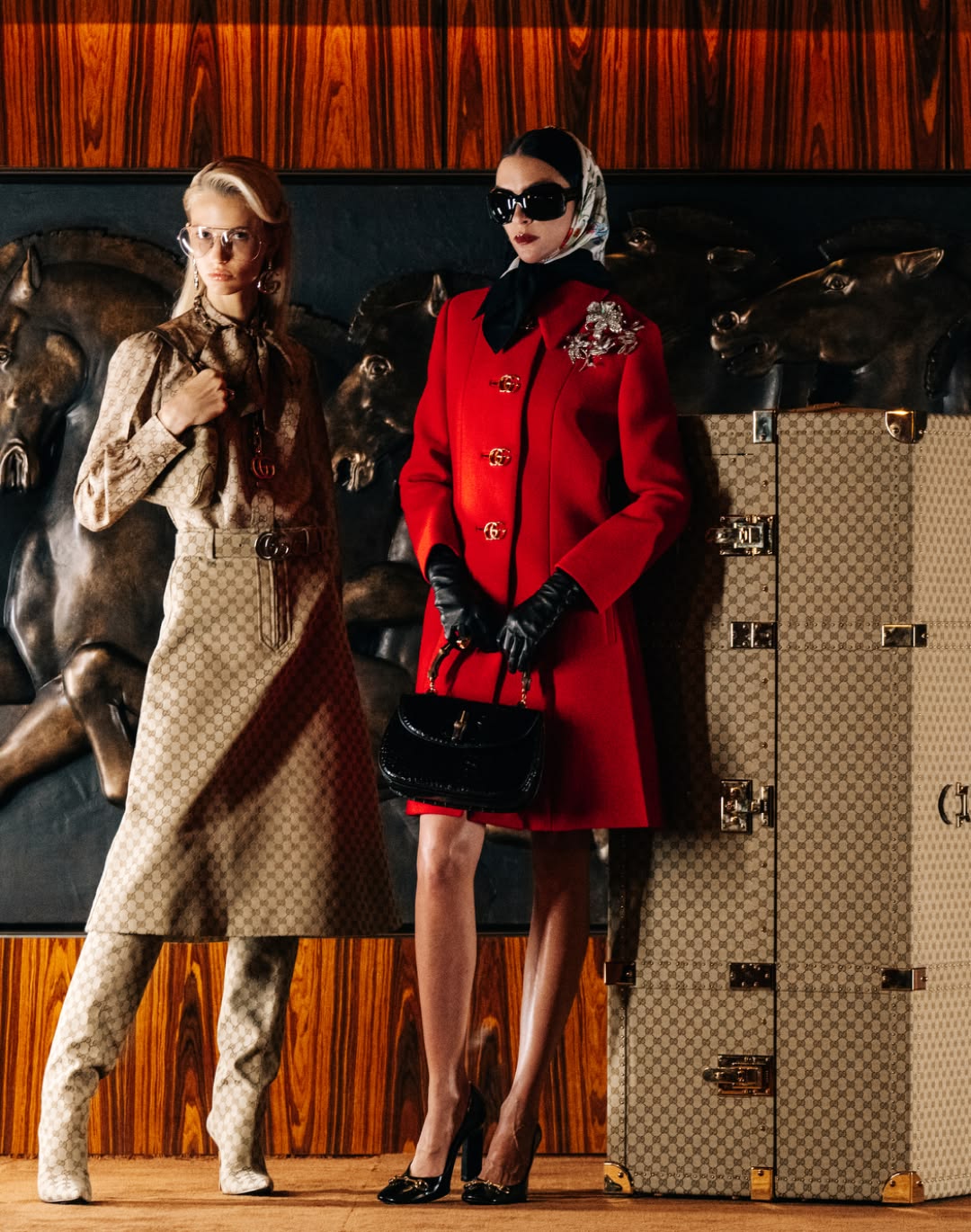
Alessandro Michele's Gucci, from 2015 to 2022, was legible to the point of caricature. You could describe it in a sentence to someone who had never seen it — maximalist, historicist, gender-fluid, deliberately excessive — and they would recognise it on the street. That legibility was the asset. It made the product recognisable at a distance, which is the precondition for a status good, and it made the brand describable in a headline, which is the precondition for cultural presence.
Sabato De Sarno's Gucci was, by design, the opposite: restrained, precise, unshouty. Whether it was good is a separate question, and the reviews were not unkind. The problem was that it was not describable. Two years in, the house had no sentence. It had clothes, stores, campaigns and a creative director, and no answer to the question of what it currently stood for.
Michele's departure was announced in November 2022. De Sarno was appointed that January and left in February 2025. Demna was named in March 2025 — Kering's stock fell 12% on the day — presented his first collection in Milan that September, and staged his first runway show, Primavera, in February 2026. Between the end of one legible Gucci and the beginning of the next lie roughly three and a half years.
Wholesale fell 34% in 2025 while retail fell 18%. Professional buyers stopped ordering at nearly twice the rate consumers stopped buying. The trade knew before the customer did.— TCL Analysis
03 The order in which things fall.
The 2025 split between channels is the most diagnostically useful number in the whole sequence, because the two halves measure different things. Retail measures whether people still want the product. Wholesale measures whether the trade believes they will want it next season. When a house loses its story, the second collapses first — buyers place orders six months ahead, on a forecast of desire rather than a record of it, and a brand with no describable position is impossible to forecast.
- FIRST TO GO
Wholesale orders
Down 34% in 2025. Buyers commit two seasons ahead and cannot underwrite a brand they cannot describe to their own customers.
- SECOND
Full-price retail
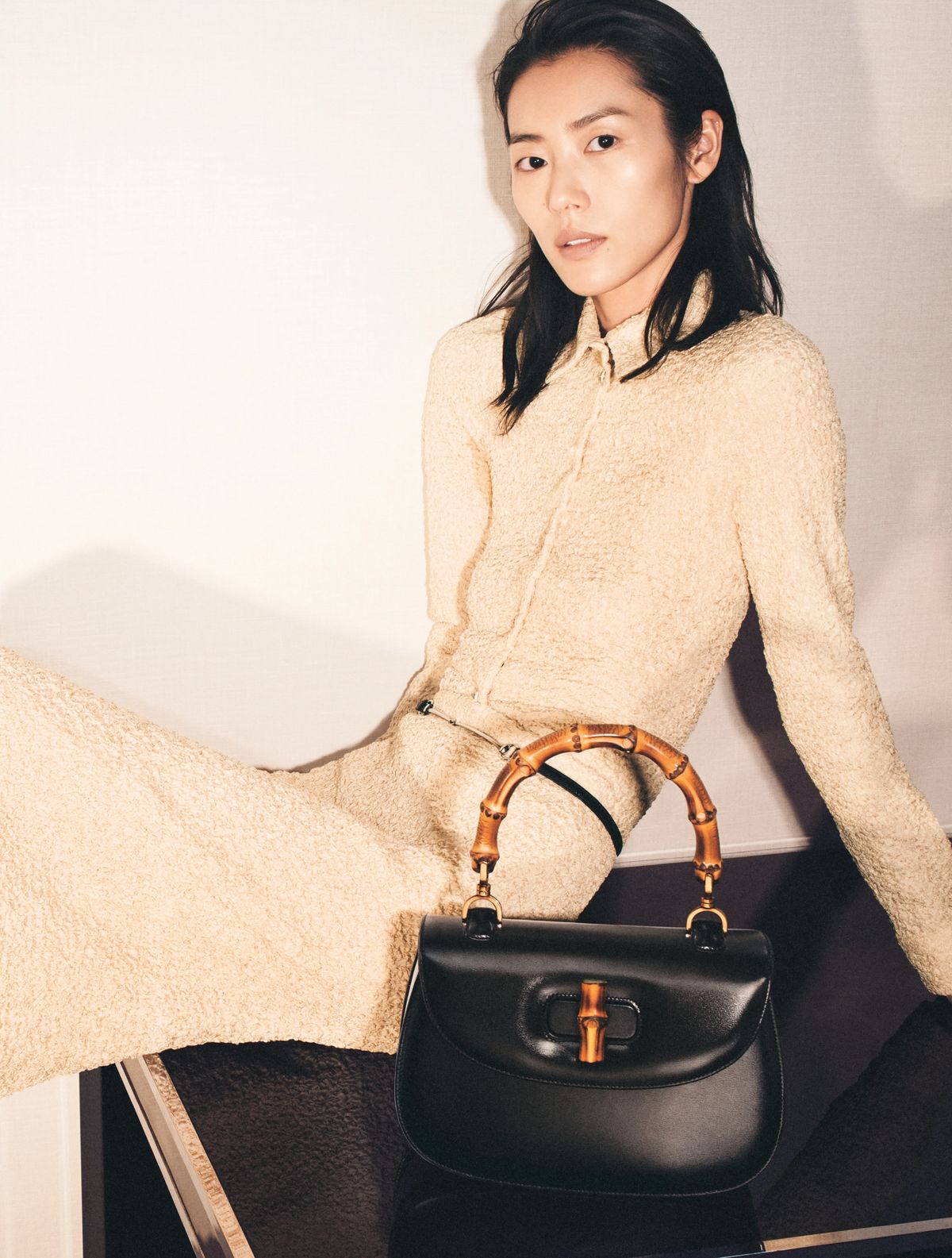
Down 18%. Existing customers keep buying the icons — the loafer, the Jackie, the Bamboo — long after they stop buying the collection.
- LAST, AND SLOWEST TO RETURN
Margin
33.1% to 16.1% in two years. Fixed costs — stores, staff, ateliers — are held deliberately, because cutting them would forfeit the recovery.
This ordering matters strategically. It means that by the time a narrative failure shows up in the headline revenue figure, it has already been visible in the order book for a year. It also means that the icons carry the house through the gap. Gucci did not survive 2023 to 2025 on new ideas. It survived on objects designed decades earlier, which is precisely what an archive is for.
04 What returns first.
Kering's first half of 2026, published on 28 July, is the first period in four years that reads as a recovery rather than a decline. Group revenue rose 1% on a comparable basis to €7.22 billion. Gucci was still down — €2.75 billion, off 5% for the half — but the second quarter narrowed to −2%, with leather goods returning to growth and North America up 7%. Recurring operating income at Gucci reached €468 million, a margin of 17.0%, up a full percentage point year on year. It is the first margin improvement since 2022.
But the number that describes the mechanism is not financial. Kering reports a brand momentum indicator — a composite of search, social and press attention. Gucci ranked 26th in the first quarter of 2026 and 6th in the second. Twenty places, in three months, on the back of one runway show and the campaign that followed it.
Attention moved four quarters ahead of revenue. That is the shape of the entire case in one data point: a story can be lost faster than it can be monetised and regained faster than it can be banked. Between the two lies the gap that cost €4.5 billion a year.
05 What Gucci teaches about narrative as an asset.
- Lesson 01
A brand's story is a balance-sheet item that no balance sheet carries
Nothing physical changed at Gucci between 2022 and 2025. Revenue fell 43% and margin halved. The asset that moved was the one no accounting standard recognises.
- Lesson 02
Describability, not quality, is what wholesale buys
The channel that collapsed hardest was the one that orders furthest ahead. Buyers were not judging the clothes. They were judging whether they could explain them.
- Lesson 03
Icons are the bridge, and only the bridge
The archive kept the house solvent through the interregnum. It could not restart growth. An archive buys time; it does not buy a future.
- Lesson 04
Attention recovers before revenue, and the gap is the risk
Gucci's momentum ranking moved twenty places in a quarter while sales were still negative. Boards that read only the revenue line will cut exactly when the recovery has started.
The final lesson is the least comfortable. Gucci's decline was not caused by a bad decision. Michele's exit was defensible after seven years; De Sarno's appointment was a reasonable bet; his removal was a correction. Each individual step was rational. The cost came from the aggregate time in which no single sentence described the brand — and no one is accountable for aggregate time.
That is the case's real subject. Not a house that failed, but an industry that has no line item for the thing it most depends on, and therefore no way to notice when it is being spent.
Sources & Further Reading
- 01 Kering. (2026, February 10). 2025 results: sequential improvement, unlocking the next phase of sustainable and profitable growth.
- 02 Kering. (2026, July 28). 2026 first-half results: back to growth, performance improvement and strategy execution on track.
- 03 Kering. (2024, February 8). 2023 annual results.
- 04 Kering. (2025, March 13). Demna appointed Artistic Director of Gucci.
- 05 WWD. (2026, July 28). Kering Q2 2026: revenues up 1% as Gucci improves.
- 06 Han, Y. J., Nunes, J. C., & Drèze, X. (2010). Signaling status with luxury goods: The role of brand prominence. Journal of Marketing, 74(4), 15–30.
- 07 Beverland, M. B. (2005). Crafting brand authenticity: The case of luxury wines. Journal of Management Studies, 42(5), 1003–1029.
Cite this case study
The Codes of Luxury. (2026, August 18). Gucci: What Happens when a brand Loses its Story (Case N°16). https://codeofluxury.cloakify.pro/case-studies/gucci-what-happens-when-a-brand-loses-its-story