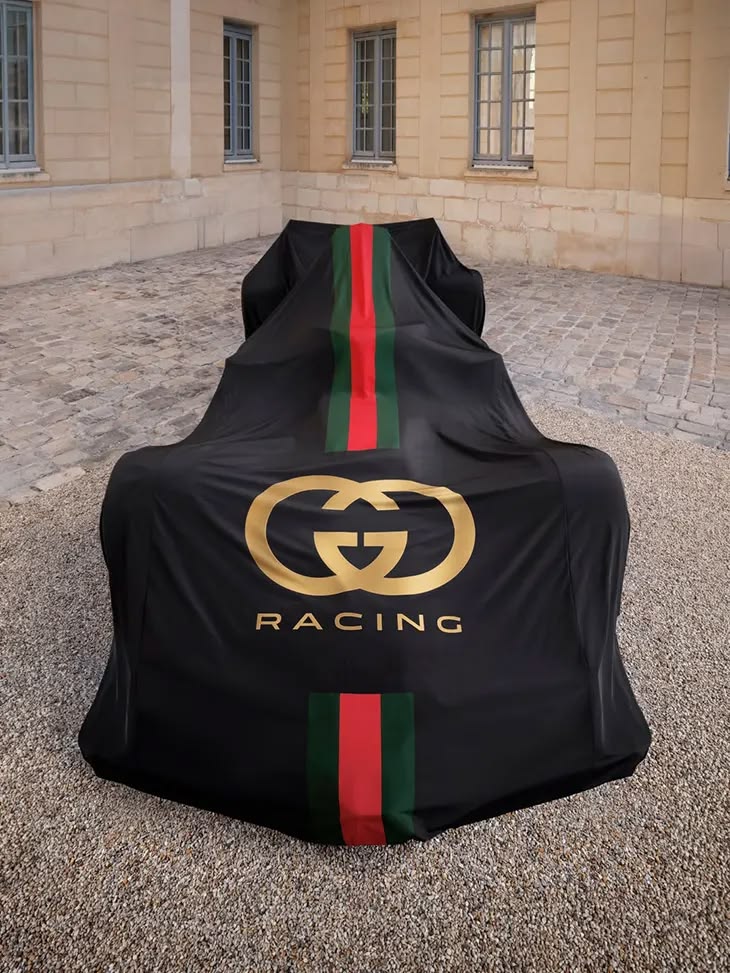
On May 27, 2026, Gucci announced it would become the title partner of Alpine Formula One Team from the 2027 season — the first luxury fashion house in history to hold that position in F1. This is not a sponsorship deal. It is a strategic declaration about what Gucci intends to be under Demna. And it deserves to be read as such.
The announcement came with all the hallmarks of a carefully orchestrated signal. The photo: Demna, Francesca Bellettini, Alpine CEO Philippe Krief, Flavio Briatore, drivers Pierre Gasly and Franco Colapinto, Kering CEO Luca de Meo, Renault Group CEO François Provost, and François-Henri Pinault — Chairman of Kering — all in one frame. This was not a marketing team's press release. This was the top of Kering's pyramid, standing next to a Formula One team, declaring that Gucci is going racing.
From 2027, Alpine will compete as the "Gucci Racing Alpine Formula One Team," wearing Gucci's signature red, green, and gold livery — the colours of Florence, the colours of Gucci's founding in 1921. A dedicated "Gucci Racing" logo has been created: an interlocking double-G with the word "Racing" underneath. A new business and experiential platform — "Gucci Racing" — will be built around the values of "performance, precision, discipline, and excellence at the intersection of luxury and sport."
It is the boldest single brand-positioning move in luxury in 2026. And to understand why Gucci made it — and what it means — requires understanding what the brand needed that a fashion show alone could not provide.
01 The strategic logic: what Gucci needed.
Gucci entered 2026 in a specific position: a brand with enormous heritage, recovering from two years of creative drift and commercial decline, with a new creative director whose appointment had divided analysts, and whose first runway show — on February 27 in Milan — had drawn Kate Moss as its closing act and Botticelli's Primavera as its central reference. The collections were being received. But collections alone do not rebuild cultural dominance. They require context.
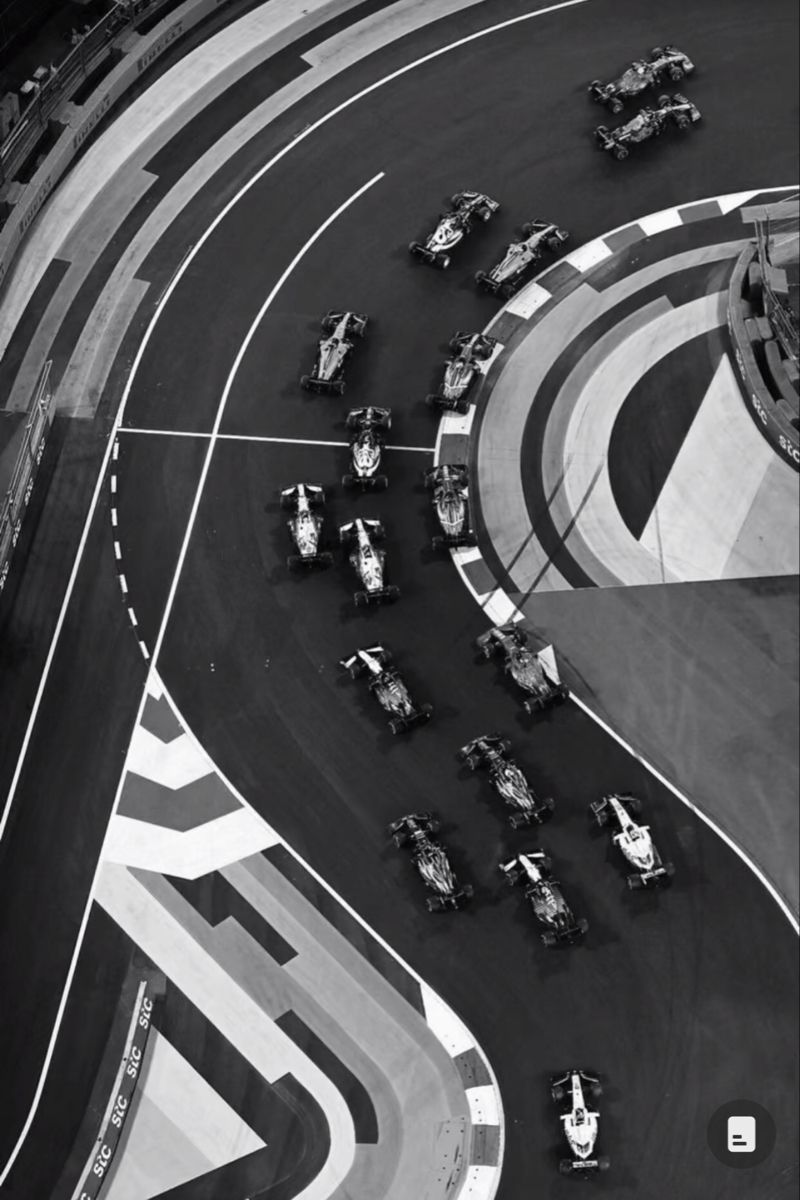
Formula One in 2026 is not what it was in 2010. The sport has undergone one of the most dramatic audience transformations in modern sport history. Netflix's Drive to Survive — launched in 2019 — introduced F1 to a global, younger, fashion-adjacent audience that had never watched a race. By 2025, F1 had over 750 million fans globally, with the fastest-growing demographic being 16-to-35-year-olds in the US and Asia. The sport's intersection with music, streetwear, and luxury culture is now structural, not incidental. Lewis Hamilton wears custom Dior to race weekends. Lando Norris collaborates with Supreme. The paddock has become a fashion week-equivalent cultural moment several times a year.
Formula One is one of the most dynamic and attractive platforms in global sport. For Gucci, it is a powerful asset to build awareness, desirability and influence across markets — while reaching new audiences and young generations."— François Provost, CEO Renault Group / Gucci Racing Alpine announcement, May 2026— TCL Analysis
Gucci's diagnosis is clear: to rebuild cultural dominance with a younger, more globally diverse audience, it needs a platform that reaches beyond fashion week. F1 — with its 24-race global calendar, its Netflix-amplified storytelling, its youth audience, and its intersection with exactly the performance and precision values that Demna is building Gucci around — is that platform.
02 The timeline of a turnaround in motion.
- Feb 2025
De Sarno exits Gucci
Two years in, creative director departs just before a planned Milan show. Sell-through at 37%. Kering revenue −12% full-year 2024. The brand needs more than a new designer.
- Mar 2025
Demna appointed — Kering stock −12% on announcement day
J.P. Morgan places Kering on negative catalyst watch. Bernstein "not satisfied." Jefferies: unclear if impact will be visible before 2026. Analysts divided. The market does not believe the appointment.
- Feb 2026
Demna's first Gucci show — "Primavera", Milan
An imagined museum of ancient sculptures. Kate Moss closes in a plunging gown and branded thong. The collection is named for the Botticelli painting that inspired Gucci Flora. Demna: "My mission is to create a new desire for a customer… because today storytelling is not enough."
- May 2026
Gucci × Alpine F1 announced
Gucci becomes the first luxury fashion house as F1 title partner. "Gucci Racing Alpine Formula One Team" from 2027. Red, green, gold livery. "Gucci Racing" as a new business and experiential platform. Bellettini: "This partnership writes a new chapter for Gucci."
03 Why Alpine — and why now.
The choice of Alpine as the partner is not incidental. Alpine is a Renault Group team, connected to Kering through Luca de Meo — who is CEO of both Kering and Renault Group. The partnership is, in that sense, an intra-ecosystem move: two organisations with significant shared leadership aligning around a common brand-building opportunity.
750M+
F1 global fans — fastest-growing demographic: 16–35 year-olds in US and Asia
P5
Alpine's 2026 Constructors' Championship position — up from bottom of standings in 2025
- 2027
Season in which "Gucci Racing Alpine Formula One Team" competes for the first time
Alpine's trajectory matters: the team rose from the bottom of the 2025 standings to fifth in the 2026 Constructors' Championship. A title partnership with a team that is visibly improving — rather than one languishing at the back of the grid — gives the "Gucci Racing" platform a performance narrative to build on. Excellence and winning, in the context of luxury, are inseparable. Partnering with a competitive team matters.
04 What Demna's Gucci is building toward.
The F1 partnership makes most sense when read alongside Demna's stated creative mission: to build Gucci as a "cultural behemoth" rather than a fashion house alone. His quote from the show period — "My mission is to create a new desire for a customer… because today storytelling is not enough" — is a precise formulation of what the Alpine deal represents. If storytelling is not enough, you need presence. Presence in culture, in sport, in the places where the audience you want to reach actually spends its attention.
- What fashion week gives
Cultural authority within the industry
Critical validation, press coverage, wholesale orders, brand narrative among the existing luxury audience. Essential — but insufficient for rebuilding cultural dominance with a younger, broader global audience.
- What F1 gives
Cultural presence outside the industry
24 global races, 750M+ fans, Netflix audience, paddock cultural moments. Access to a 16–35 demographic in the US and Asia that follows F1 as a cultural phenomenon and may not follow Paris Fashion Week at all. The precedent for this approach within luxury is Rolex, which has used its long-term commitments to tennis, golf, sailing, and motorsport to build cultural legitimacy that transcends fashion cycles. Rolex's partnership model — long-term, values-aligned, woven into the fabric of the sport — has contributed meaningfully to the brand's perception as permanent rather than fashionable. Gucci Racing, if executed with similar discipline over the coming years, is attempting something analogous: to attach Gucci's identity to the qualities of performance, precision, and excellence in a context where those qualities are tested under extreme conditions, not merely claimed in campaigns.
05 What this teaches about luxury brand strategy in 2026.
- Lesson 01
Cultural presence requires platforms outside fashion
Fashion weeks reach the fashion audience. Rebuilding cultural dominance with a younger, more global audience requires presence in the spaces where that audience actually lives — and in 2026, F1 is one of those spaces
- Lesson 02
Partnerships must be values-coherent
Performance, precision, discipline, excellence — the values Gucci claims in its F1 announcement are coherent with what Demna is building aesthetically. Incoherent partnerships dilute rather than amplify brand identity
- Lesson 03
The team's trajectory matters
A title partnership with a team rising from bottom to fifth builds a performance narrative. Associating with failure, even in a sport context, communicates something about the brand. Alpine's 2026 trajectory made it a credible partner.
- Lesson 04
The ecosystem advantage
Luca de Meo leading both Kering and Renault Group made this partnership possible in a way it would not otherwise have been. Luxury conglomerate relationships extend beyond brand portfolio — they include industrial and institutional networks that create strategic opportunities
Gucci's turnaround will not be confirmed or denied by the Alpine partnership alone. Collections must sell. Brand perception must shift. The commercial recovery must materialise in data. But the Alpine announcement is the clearest signal yet that Gucci — under Demna and Bellettini — understands that rebuilding cultural dominance requires something more than getting the clothes right. It requires being in the right places, talking to the right audiences, in the right language. The chequered flag, in 2027, will be Gucci's colours.
Sources & Further Reading
- 01 Formula 1 official. (2026, May 27). Gucci announced as Alpine title partner from 2027 season — official announcement, team standings context (P5 in 2026), start date.
- 02 Alpine F1 official / LUXUO / Wallpaper*. (2026, May–June). Luxury takes the grid: Gucci enters Formula One with Alpine, becoming its Title Partner. — full leadership photo, "Gucci Racing" platform details, red/green/gold livery, Bellettini and Briatore quotes.
- 03 Marie Claire. (2026, February 27). Live From Gucci's Fall Fashion Show: The First Runway Looks of the Demna Era. — "Primavera" F/W 2026 collection, Kate Moss closing, Botticelli reference, Demna quote on desire.
- 04 AP / AOL. (2026, February 27). Kate Moss closes Demna's first Gucci show in a plunging gown and branded thong. — show description, Milan, Feb 27 2026.
- 05 Wallpaper*. (2026, February 27). Demna's first runway set for Gucci is an imagined museum filled with sculptural greats. — show set design, ancient sculptures, marble-clad space.
- 06 WWD. (2026). All the Big Fashion Designer Debuts Expected in 2026. — Demna's pre-fall collection, "Gucciness" quote, mission statement.
- 07 Han, Y. J., Nunes, J. C., & Drèze, X. (2010). Signaling status with luxury goods. Journal of Marketing, 74(4), 15–30. — framework for luxury-sport partnerships as cultural legitimisation.
Cite this case study
The Codes of Luxury. (2026, May 24). Gucci × Alpine F1: When a fashion House Goes Racing (Case N°07). https://codeofluxury.cloakify.pro/case-studies/gucci-alpine-f1-when-a-fashion-house-goes-racing