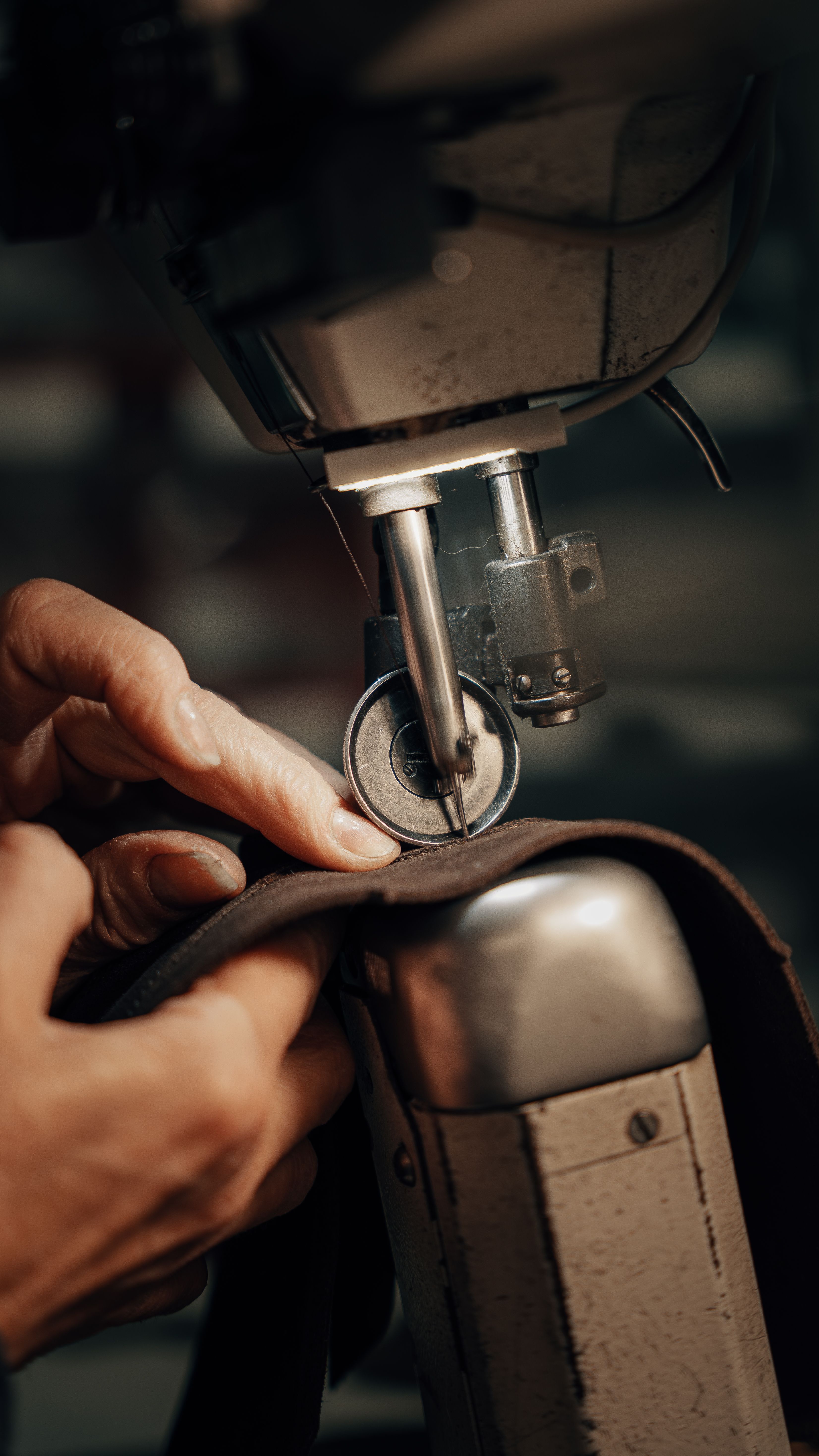
In October 2025, Maria Grazia Chiuri returned to Fendi as Chief Creative Officer — 36 years after first joining the house as an accessories designer. She carries with her nine years at Dior, the legacy of the first female creative director in that house's history, and a career defined by transforming how luxury brands communicate with women. This is a case study about what second acts mean in luxury — and what LVMH's decision to keep Chiuri within its ecosystem reveals about how conglomerates manage creative talent at scale.
There are very few precedents for what Maria Grazia Chiuri is doing. Moving from one major luxury house to another within the same conglomerate — Dior to Fendi, both LVMH — is not simply a career move. It is a strategic deployment by the parent company of a creative asset it has invested in, developed, and proved. Bernard Arnault's statement on the appointment was unambiguous: "I am delighted that she has chosen to return to Fendi to continue expressing her creativity within the LVMH group." The phrase "within the LVMH group" is doing significant work. This is not a departure. It is a transfer.
To understand what this means — for Fendi, for Chiuri, and for how luxury conglomerates think about creative talent — requires tracing the full arc of what Chiuri built at Dior, what she left there, and what she brings back to the house where her career began.
01 The Dior decade: what Chiuri built and left behind.
Maria Grazia Chiuri joined Dior in 2016, becoming the first woman to serve as Creative Director of the house in its entire history. Over nine years, she transformed the brand's commercial and cultural profile in ways that are still being counted.
9 yrs
Chiuri at Dior 2016–2025 — longest tenure of any Dior CD since Yves Saint Laurent
2×+
Dior revenue roughly quadrupled during her tenure — from ~€2B to a peak of ~€9.5B
Légion
Chiuri was awarded France's Légion d'honneur in 2019 for contribution to fashion
Chiuri's contribution at Dior was not primarily aesthetic — though her aesthetic was coherent and commercially effective. It was strategic. She repositioned Dior as a brand that spoke to contemporary women about contemporary concerns: feminism, craft, global culture, the politics of clothing. The "We Should All Be Feminists" T-shirt from her debut collection became one of the most discussed fashion items of the decade — not because of its price or its construction, but because of what it said and who said it.
She built hit bags — the Book Tote, the Bobby Camera bag — that reduced Dior's dependence on the Lady Dior and created new entry points into the brand's commercial ecosystem. She launched Dior's haute couture garden shows, each one a spectacular collaboration with an artist, craftsperson, or cultural institution from outside the fashion world. She made Dior feel globally engaged, intellectually serious, and commercially accessible simultaneously.
The role of a creative director is no longer to simply design beautiful clothes but to curate a culture and hold a mirror to the world we live in.— Ramon Ros, CEO of Fendi, on Chiuri's appointment, October 2025
She departed in May 2025, her final show staged at the Villa Albani Torlonia in her hometown of Rome — an elaborate, personal farewell to a house she had transformed. Her successor at Dior, Jonathan Anderson, was announced the following month. The transition was, by all accounts, handled with exceptional care by LVMH — a signal that Chiuri's departure was not a crisis but a planned movement within the group's creative architecture.
02 The timeline of a carefully orchestrated transition.
- 1989
Chiuri joins Fendi as accessories designer
Rome-born, IED-trained. Begins career at Fendi, where she will spend a decade. Works with Pierpaolo Piccioli. Co-develops what will become the iconic Baguette bag alongside Silvia Venturini Fendi.
- 1999
Moves to Valentino with Piccioli
Leaves Fendi. Joins Valentino as co-creative director with Pierpaolo Piccioli. Builds Valentino into one of the most admired houses in luxury over 17 years.
- 2016
Joins Dior — first female CD in the house's history
Nine years of transformation: feminist positioning, global craft collaborations, hit bags, double-digit revenue growth. Stages the most elaborate couture shows of her generation.
- May 2025
Departs Dior — finale at Villa Albani Torlonia, Rome
Final show in her hometown. Jonathan Anderson appointed successor at Dior. LVMH manages the transition publicly as a planned creative evolution, not a departure under pressure.
- Oct 2025
Returns to Fendi as Chief Creative Officer
First time she has been at the house since 1999. Succeeds Kim Jones (womenswear) and Silvia Venturini Fendi (interim). Given full creative leadership: womenswear, menswear, haute couture, and accessories under one hand for the first time.
- Feb 2026
Debut collection — A/W 2026 — Via Solari, Milan
First collection staged at Fendi's Via Solari show space in Milan. BoF: "The masculine and feminine faced off — how very Milanese!" Deeper changes expected to arrive gradually over subsequent seasons.
03 What Chiuri brings to Fendi — and what she faces.
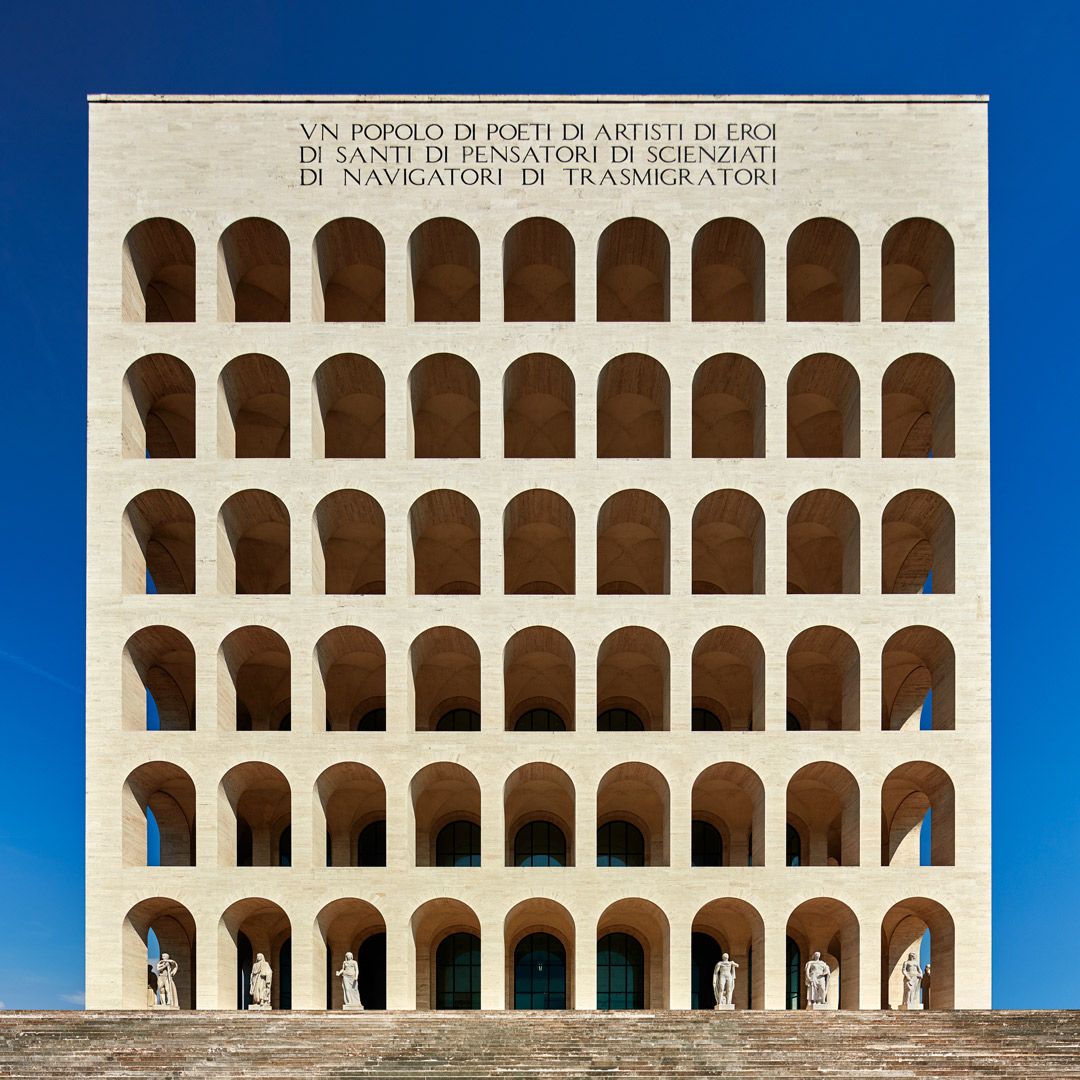
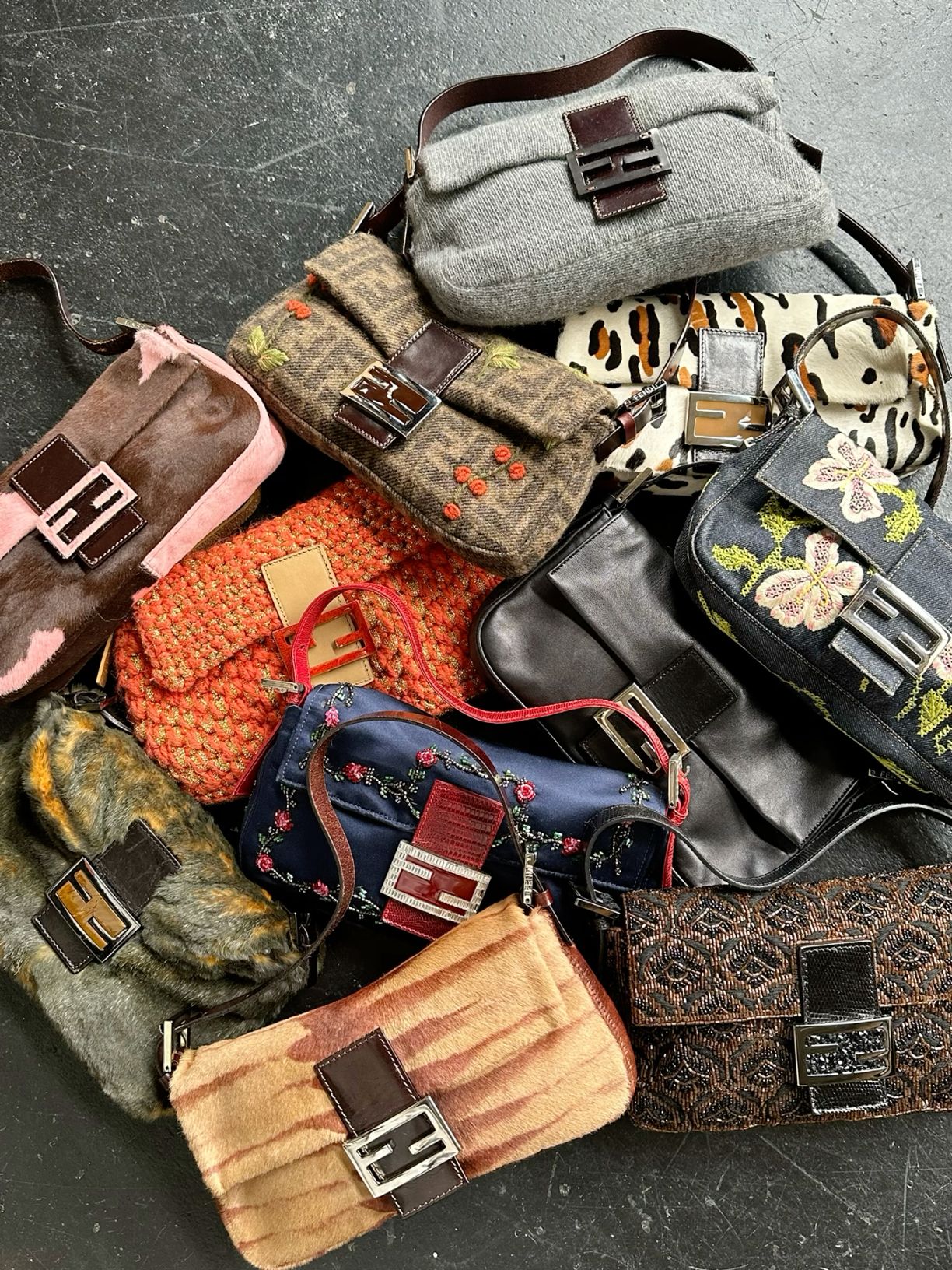
Fendi is a fundamentally different creative and commercial challenge from Dior. Where Dior is a global fashion powerhouse with brand recognition in every major market, Fendi is a Roman house with a more particular identity: the Baguette, the double-F logo, the fur legacy, the Palazzo Civiltà Italiana headquarters. It is a house of great heritage and considerable complexity.
- What she carries from Dior
Proven commercial instincts
Hit bag creation (Book Tote, Bobby). Feminist communication strategy. Global craft collaboration model. Couture as cultural spectacle. Nine years of navigating the world's most scrutinised fashion brand.
- What Fendi offers
A Roman homecoming
Her city, her origins, the house where her career began. The five Fendi sisters she credits with forming her. A brand whose identity — craft, fur, Roman playfulness — is genuinely Italian rather than globally constructed. The Baguette bag she helped create.
The structural change Chiuri inherits at Fendi is significant: for the first time, all lines — womenswear, menswear, haute couture, and accessories — are under a single creative leadership. The decision to concentrate all lines under a single creative direction marks a strategic shift in Fendi's structure, which until now had divided management by category. This is a meaningful upgrade in creative authority — and a meaningful increase in creative responsibility.
The commercial context is challenging but not dire. While new creative directors have attracted renewed interest in luxury fashion with their debut shows in Milan and Paris, that isn't expected to translate into higher revenue and profit before next year. BoF's assessment is realistic: the creative reset takes time to reach the commercial results. Chiuri — who spent nine years rebuilding Dior — understands this better than most.
04 What this reveals about LVMH's creative architecture.
The Chiuri transfer is the clearest evidence available that LVMH operates its creative talent as a portfolio — not just its brands. Moving Chiuri from Dior to Fendi is not simply filling a vacancy. It is deploying a proven creative asset where it can generate the most value, at the moment when that value is most needed.
This has implications for how we understand conglomerate strategy in luxury. The conventional narrative is that conglomerates provide operational infrastructure — shared services, capital, distribution — while allowing brands to maintain independent creative identities. The Chiuri transfer suggests something more sophisticated: that LVMH also manages creative capital across its portfolio, making deliberate decisions about which creative intelligence goes where, when, and with what mandate.
Bernard Arnault's statement — "I am delighted that she has chosen to return to Fendi to continue expressing her creativity within the LVMH group" — frames this as Chiuri's choice. The reality is more bilateral: both parties chose each other, and the outcome serves both the brand and the conglomerate's portfolio logic simultaneously.
05 The second act question.
Second acts are rare in luxury. Most creative directors leave a house and either retire, launch independent projects, or move to a brand outside the original conglomerate. Chiuri's return to Fendi — within LVMH, at a house where she began — is something genuinely unusual. It is a test of whether accumulated institutional knowledge, creative reputation, and personal emotional connection to a house can produce a different and better outcome than a first act alone could have.
- Lesson 01
Conglomerates manage creative capital
The Chiuri transfer shows LVMH thinking about creative talent as a portfolio asset — deployed strategically across brands, not simply assigned and forgotten
- Lesson 02
Institutional memory has commercial value
Chiuri's decade at Dior made her understanding of LVMH's operational culture, relationships, and brand management philosophy more valuable — not less — at Fendi
- Lesson 03
Origin stories matter in luxury
Chiuri returning to the house where she started, in her home city, with a personal connection to the founders — this is not nostalgia. It is a source of creative authority that no external appointment could provide
- Lesson 04
Full creative mandate amplifies impact
Giving Chiuri control of all four lines — womenswear, menswear, couture, accessories — creates the conditions for a coherent brand vision that divided creative leadership structurally prevented
Maria Grazia Chiuri started at Fendi in 1989 as an accessories designer. She returns in 2025 as Chief Creative Officer, carrying nine years of Dior, the Légion d'honneur, and the knowledge of what it takes to transform one of the world's most scrutinised luxury houses. What her second act at Fendi becomes will be one of the defining creative stories of the next several years in luxury. The first chapter was presented in February 2026. The rest is being written.
Sources & Further Reading
- 01 LVMH official. (2025, October 14). Maria Grazia Chiuri Named Chief Creative Officer at Fendi — official appointment, Arnault statement ("within the LVMH group"), Chiuri quote, Ros quote on "curating culture"
- 02 Fashionista. (2025, October 14). Maria Grazia Chiuri Returns to Fendi as Chief Creative Officer. — debut Feb 2026 confirmed, "shrinking club of female designers," Silvia Venturini transition to Honorary President.
- 03 Business of Fashion. (2025, October 14). Maria Grazia Chiuri Named Chief Creative Officer at Fendi. — hit bags (Book Tote, Bobby Camera), Dior revenue context, commercial translation timeline.
- 04 BoF 500 / Business of Fashion. Maria Grazia Chiuri profile. — "deeper changes than what we could see on the runway," Milan debut at Via Solari, "masculine and feminine faced off" review.
- 05 Oui Speak Fashion. (2025, October 14). Maria Grazia Chiuri Appointed as Chief Creative Officer of FENDI. — full mandate confirmed (womenswear, menswear, couture, accessories), Ramon Ros CEO July 2025.
- 06 Modaes Global. (2025, October 14). Creative Transition at Fendi: Maria Grazia Chiuri Steps In. — "single creative direction" structural change, "time of uncertainty but also opportunity" Ros quote.
- 07 Vogue Scandinavia. (2025, October 14). Maria Grazia Chiuri returns to Fendi as chief creative officer. — Kim Jones departure Oct 2024, Silvia Venturini Fendi 100th anniversary seasons 2025 context.
- 08 Wikipedia / compiled. Maria Grazia Chiuri. — career arc confirmed (Fendi 1989, Valentino, Dior 2016–2025, Légion d'honneur 2019, Fendi CCO 2025)
Cite this case study
The Codes of Luxury. (2026, May 30). Fendi × Maria Grazia Chiuri: Second Acts in luxury (Case N°09). https://codeofluxury.cloakify.pro/case-studies/fendi-maria-grazia-chiuri-second-acts-in-luxury