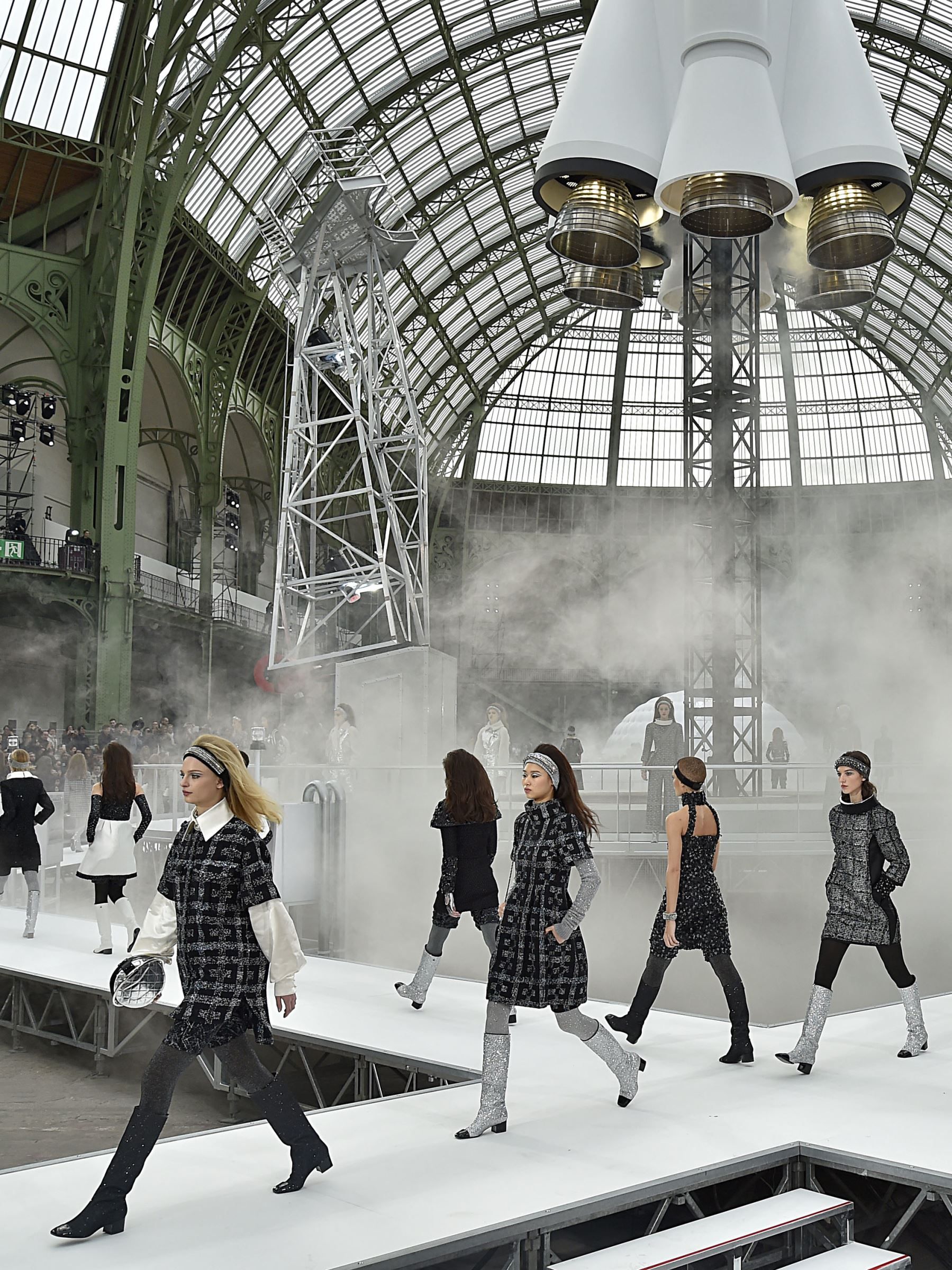
Matthieu Blazy is only the fourth creative director in Chanel's 116-year history. That number carries more weight than almost any other statistic in luxury. How does one of the most recognised brands on earth transition its creative vision — without disrupting what makes it the brand it is?
There is a specific kind of pressure that belongs to the word "fourth." Not the pressure of a debut — every new creative director faces that. Not the pressure of expectation — that is universal. The pressure of the fourth is the pressure of history that is short enough to name: Gabrielle Chanel, Karl Lagerfeld, Virginie Viard. Three people in 116 years, before Matthieu Blazy walked onto a stage beneath a sky of planets at the Grand Palais on October 6, 2025.
When the AP's review described "showmanship returning to Chanel," it was a diplomatic way of acknowledging something the industry had been carefully not saying for years: that the years following Lagerfeld's death in 2019 had left the house creatively diminished. Viard's tenure — loyal, competent, aesthetically coherent — had been widely understood as transitional. The real transition was always the one that came after. That transition is now underway. And its early evidence is more encouraging than most had expected.
01 Who Blazy is — and why it matters for Chanel.
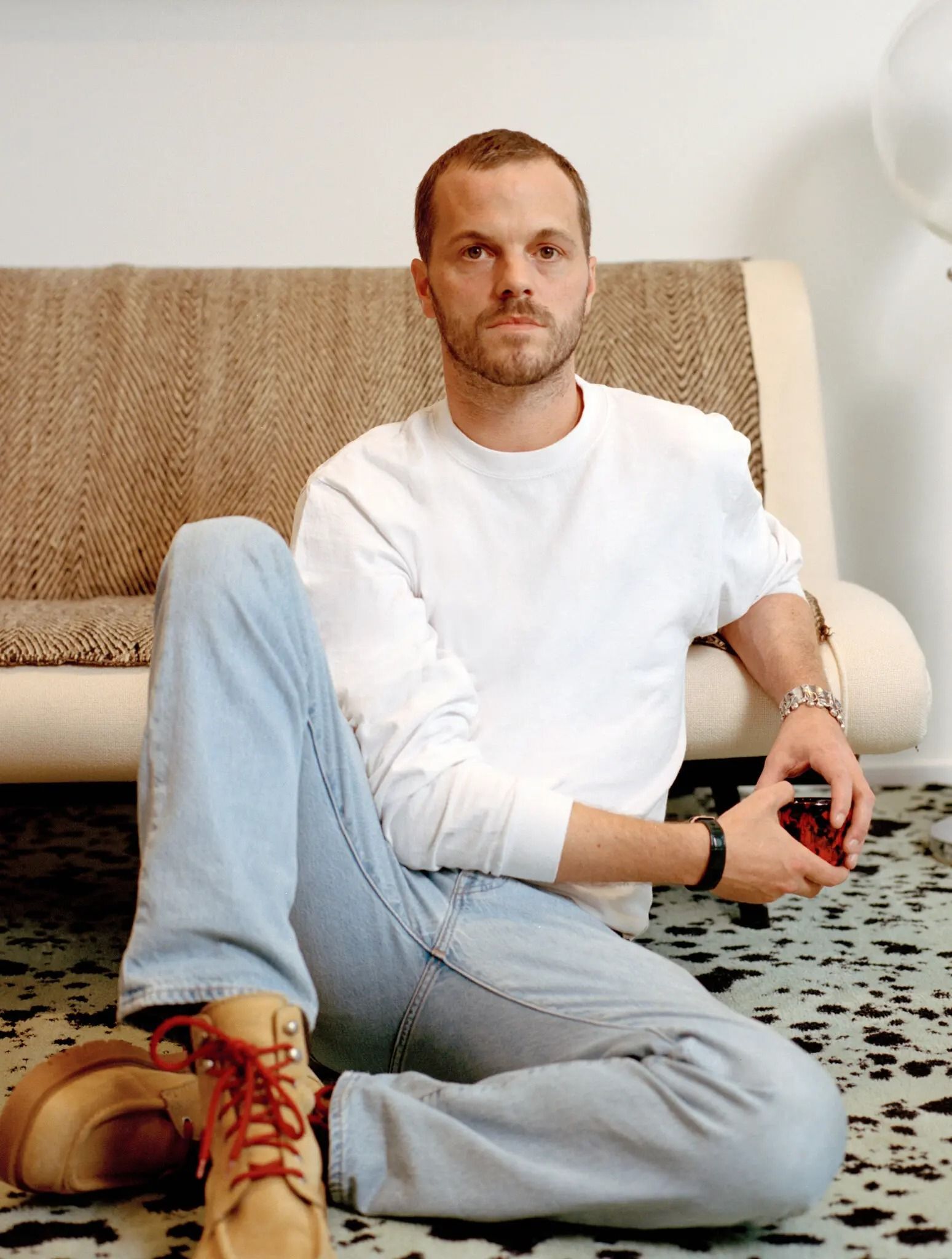
Matthieu Blazy's appointment was announced in early 2025. The fashion world's response combined excitement with caution: excitement because of what he had done at Bottega Veneta, where he had taken a brand already in excellent shape and made it genuinely culturally significant; caution because Chanel is not Bottega Veneta, and nothing in fashion history has prepared anyone for the specific challenge of being the fourth.
At Bottega Veneta, Blazy had demonstrated several capabilities that matter directly for Chanel. He had deep respect for craft — Bottega's intrecciato weave, its material precision, its artisanal identity were not just preserved under Blazy but deepened. He had a gift for making clothes that were intellectually interesting and commercially desirable simultaneously — the gap between concept and sellability that destroys many designer tenures was not a problem Blazy suffered from. And he understood how to reinterpret heritage codes without either ignoring them or being imprisoned by them.
These are precisely the capabilities that Chanel needs. The house has the most recognisable codes in luxury — the tweed, the camellia, the interlocking Cs, the No. 5, the little black dress — and the most demanding archive to navigate. A designer who treats those codes with contempt loses Chanel's identity. A designer who treats them with reverence alone produces a museum. Blazy's task is translation — and his Bottega years showed he knows how to do it.
02 Four collections, four signals.
- Oct 2025
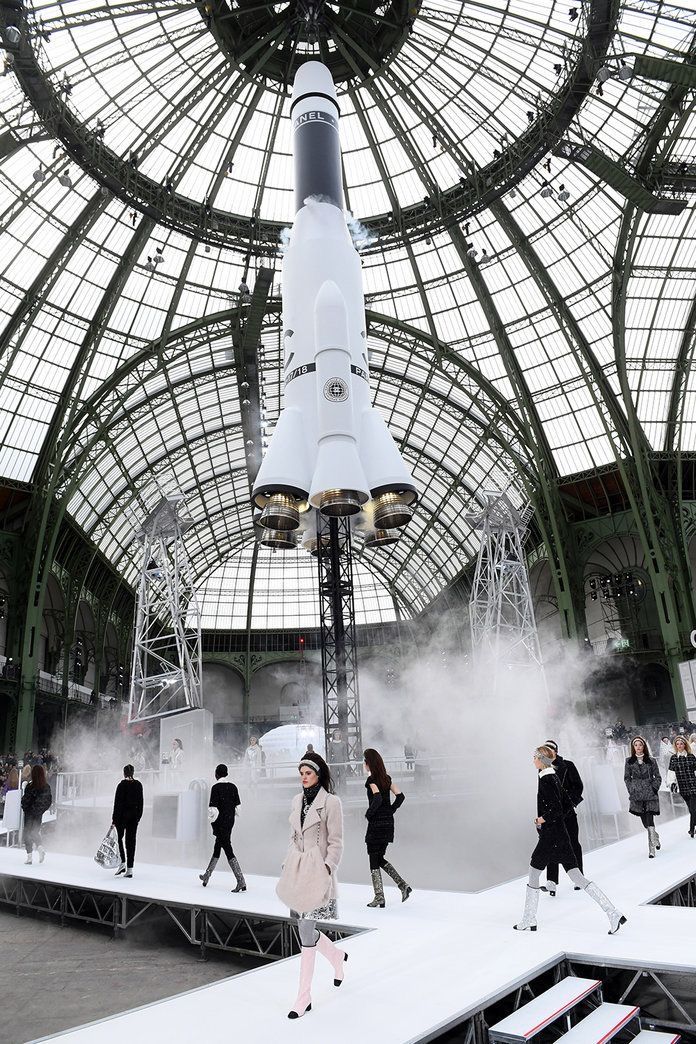
S/S 2026 Ready-to-Wear — Grand Palais, Paris
A planetary set: Saturn with its rings, a full solar system suspended above a mirror-bright runway. Front row: Nicole Kidman, Marion Cotillard, Tilda Swinton, Lauren Sánchez, Jeff Bezos. Standing ovation. Relaxed cuts, slinky evening wear that moved like liquid, drop-waist gowns in exaggerated forms. The AP: "Showmanship returned to Chanel." Anna Wintour: "Fashion needs its showmen." Chanel had one again.
- Dec 2025
Métiers d'Art 2026 — Bowery Subway Station, New York
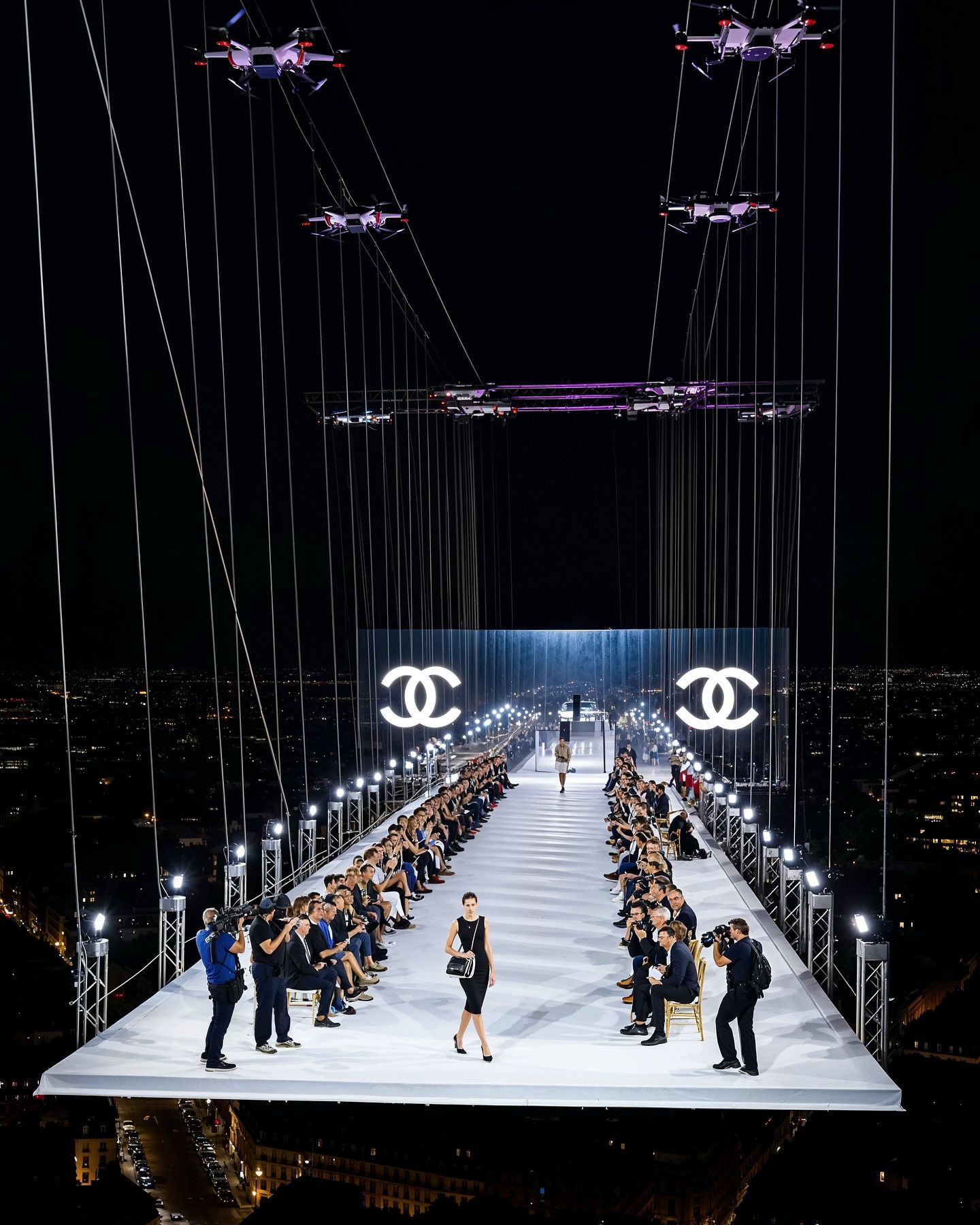
The disused Bowery station on New York's Lower East Side became a Chanel runway — a deliberate collision of the house's Parisian heritage with American urban energy. The choice of venue communicated something about where Blazy intends to take the brand culturally: present in the world, not above it.
- Jan 2026
S/S 2026 Haute Couture — Paris
Pink willow trees and spotted mushrooms. A fairy-tale set. Animated teaser on Instagram of forest creatures helping the petits mains in the atelier — birds, chipmunks, rabbits, like the mice who finish Cinderella's ballgown. Blazy "embraced the moment with playfulness rather than solemnity." W Magazine: a milestone for the oldest continuously operating couture house, handled with "jubilant" confidence.
- Mar 2026
A/W 2026 Ready-to-Wear — Paris
Blazy's sophomore RTW collection. Wallpaper*: "Pure joy." The collection was "made for women to be unapologetically who they are" — Blazy's own framing. The tone is becoming clearer: emotional, optimistic, technically immaculate, and grounded in an understanding of what women actually want to wear. "The more transient fashion is, the more perfect it is. You can't protect what is already dead."— Matthieu Blazy, on his approach to Chanel's heritage
03 What Blazy is doing — and what it means strategically.
Four collections in six months reveal a coherent strategic approach that is already distinguishable from both Lagerfeld and Viard — while remaining unmistakably Chanel.
- Signal 01
Playfulness as authority
The fairy-tale couture, the New York subway, the planetary set — Blazy is communicating that seriousness and lightness are not opposites. Chanel can be historically significant and emotionally joyful simultaneously. This is new.
- Signal 02
Wearability as ambition
Blazy's clothes are consistently described as genuinely wearable — "real clothes," in Highsnobiety's formulation. At Chanel's price points, wearability is not a compromise. It is a statement about what luxury is for.
- Signal 03
Archive as toolkit
Blazy studied the archives — Coco's drop waists reappear in exaggerated evening gowns; the tweed is not abandoned but recontextualised. Heritage is not being preserved; it is being used. There is a difference.
- Signal 04
Cultural presence
From the Bowery subway to forest creature animation, Blazy is pulling Chanel into cultural conversations beyond the fashion calendar. The brand is being positioned as a participant in contemporary culture, not an observer of it.
04 The commercial question.
Critical reception across four collections has been consistently positive — from standing ovations to "pure joy" reviews. The harder question is commercial. Chanel's 2024 revenues declined 4.3% to $18.7 billion, and the brand's 2025 performance has not been publicly disclosed in detail. The price recalibration that followed the aggressive 2020–2023 increases — capex rising 43% to $1.8 billion in 2024 — means the house is investing heavily in the physical infrastructure and brand support that Blazy's vision requires.
The commercial thesis is straightforward: Blazy's Chanel is building toward the consumer who has slightly stepped back from the brand during the price increase years, and toward the younger consumer who had not yet found Chanel relevant to their identity. Four collections in, the creative case for reaching both is being made. The commercial case will be confirmed or challenged by 2026 and 2027 revenue data.
05 What Chanel's transition teaches about heritage management.
- Lesson 01
Transition is a strategy, not a moment
Blazy did not debut for nine months after his appointment. The deliberate patience communicated that the house would not rush creative definition — a signal of institutional confidence that Chanel could afford to give
- Lesson 02
Spectacle serves meaning
The planetary set, the Bowery subway, the fairy-tale couture — each venue was chosen to communicate something specific about Blazy's Chanel. Show design is not decoration; it is the first paragraph of the creative argument
- Lesson 03
The archive is not the brief
Blazy studied the archives and then made his own clothes. The reference is the starting point, not the destination. "You can't protect what is already dead" is not disrespect — it is the only attitude that keeps a house alive
- Lesson 04
Joy is a strategic position
In a luxury market defined by K-shaped anxiety and aspirational retreat, a creative director who consistently produces work described as "joyful" and "wearable" is making a positioning choice — not just an aesthetic one
Matthieu Blazy has not yet had the opportunity to fail at Chanel. Four collections in, the creative foundations are being laid with more skill and more conviction than most had anticipated. The weight of being the fourth will not lift — but it appears, for now, to be held well.
Sources & Further Reading
- 01 AP / AOL. (2025, October 6). Showmanship returns at Chanel as designer Blazy debuts under a sky of planets. — Grand Palais show description, front row, Anna Wintour quote, standing ovation.
- 02 W Magazine. (2026, January 27). At Chanel Couture Spring 2026, Matthieu Blazy Delivers a Fairy-Tale Debut. — fourth designer in 116-year history framing, fairytale set, Disney/Cinderella reference.
- 03 Wallpaper*. (2025, December 3). Chanel Métiers d'Art 2026: Matthieu Blazy takes to NY subway. — Bowery station show, NYC energy positioning.
- 04 Wallpaper*. (2026, March 10). Matthieu Blazy's A/W 2026 Chanel collection was pure joy. — sophomore RTW review, "women to be unapologetically who they are" quote.
- 05 InStyle / AOL. (2025, October). In Chanel's New Era, Matthieu Blazy Unbuttons House Codes for S/S 2026. — collection details, Lagerfeld-era comparisons, design analysis.
- 06 The Pink Lookbook. (2025, October). Matthieu Blazy's Chanel Debut — Review of the S/S 2026 Ready-to-Wear Collection. — archive study, Viard context, critical assessment.
- 07 Highsnobiety. (2026, January). This Is Your First Close-Up With Jonathan Anderson's Dior Debut. — "real clothes" framing used in contrast to Blazy's parallel approach.
- 08 Chanel S.A. (2025). Financial results 2024. — $18.7B revenue (−4.3%), capex $1.8B (+43%), context for commercial pressure.
- 09 Kapferer, J.-N., & Bastien, V. (2012). The Luxury Strategy. Kogan Page. — heritage/innovation paradox; brand codes management.
- 10 Beverland, M. B. (2005). Crafting brand authenticity. Journal of Management Studies, 42(5). — archive as living resource vs. museum.
Cite this case study
The Codes of Luxury. (2026, May 21). Chanel × Matthieu Blazy: The weight of the fourth (Case N°06). https://codeofluxury.cloakify.pro/case-studies/chanel-matthieu-blazy-the-weight-of-the-fourth