
In the year to March 2025, Burberry's comparable retail sales fell 12%. Adjusted operating profit came in at £26 million on revenue of nearly two and a half billion — a margin close to nothing. The house was being written about in the language usually reserved for the terminally distressed: takeover speculation, index relegation, a hundred-and-seventy-year-old name running out of reasons.
One year later the same house reported comparable sales up 2%, adjusted operating profit of £160 million, and a fourth consecutive quarter of growth. The customer group that led the return was the one the industry has spent a decade insisting is the hardest to reach.
01 The turn, in numbers.
−12% → +2%
COMPARABLE RETAIL SALES, FY2025 TO FY2026
Burberry, preliminary results to 28 March 2026
£26M → £160M
ADJUSTED OPERATING PROFIT — REPORTED PROFIT £115M AGAINST A £3M LOSS
Burberry, FY2026
+10%
COMPARABLE GROWTH IN BOTH GREATER CHINA AND THE AMERICAS IN Q4 FY2026
Burberry, FY2026
+5%
Q1 FY2027, THIRTEEN WEEKS TO 27 JUNE 2026 — A FOURTH CONSECUTIVE QUARTER OF GROWTH
Burberry, Q1 FY2027 trading update
Revenue itself barely moved — £2.42 billion, flat at constant exchange rates. The recovery is not yet a growth story in absolute terms. What changed is the direction of the comparable line and the shape of the profit, and both changed in the same four quarters: +3% in the third, +5% in the fourth, +5% again in the first quarter of the following year.
Sequence matters more than size here. A house that has fallen 12% and then posts four consecutive quarters of growth is a different proposition from one that posts a single good quarter, because the first pattern is evidence of a mechanism and the second is evidence of a comparison.
02 What Gen Z actually came back for.
Burberry attributes its customer growth in the most recent quarter to Gen Z — double-digit increases in Greater China and Asia-Pacific, and strengthening reach among younger consumers in every region. That much is consistent with the prevailing industry narrative, in which the under-thirties are the growth engine everyone is chasing.
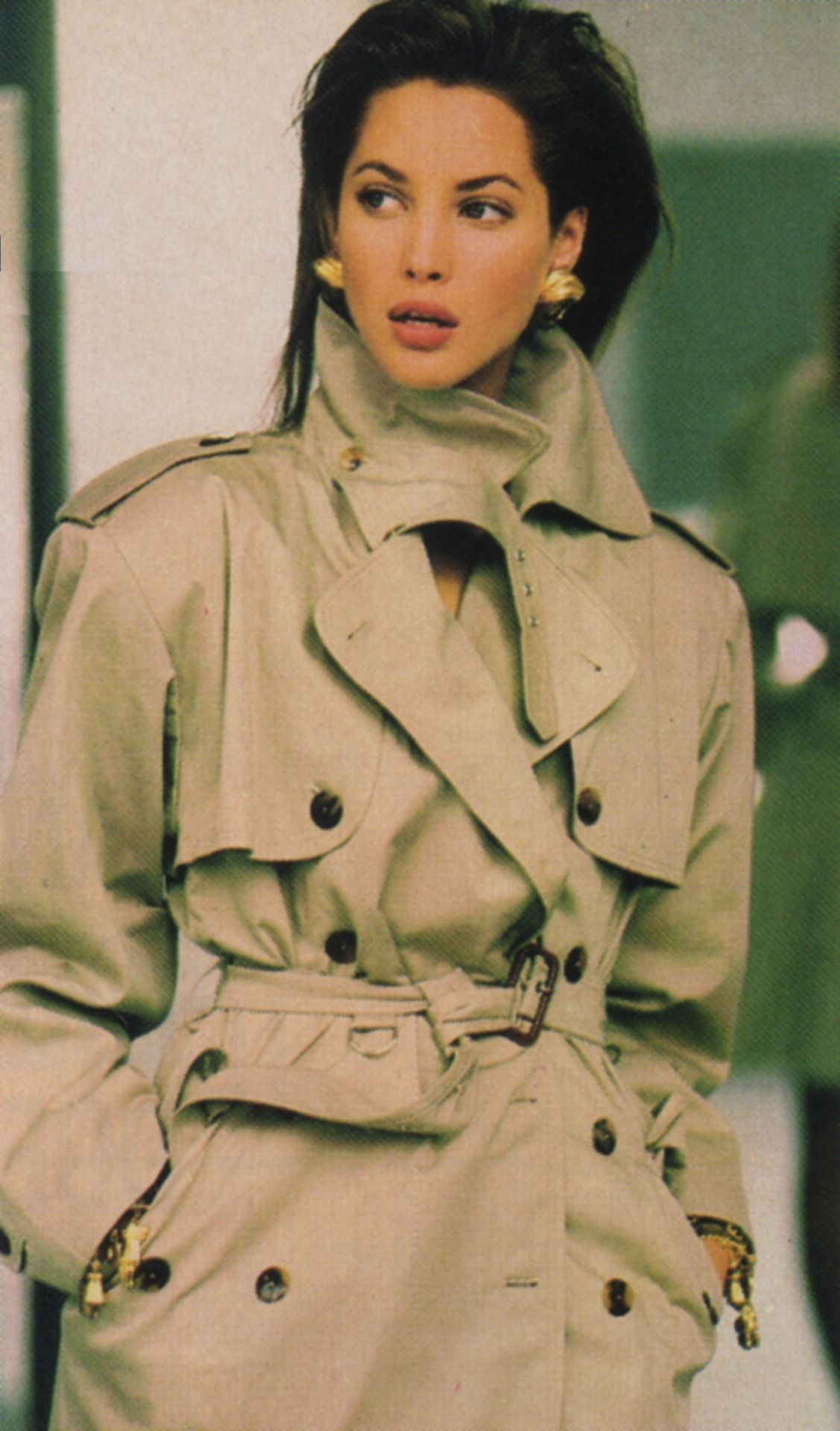
What is not consistent is what they bought. The two categories posting double-digit growth were outerwear and scarves — Burberry's hero categories, and the two most heritage-dense products in the house. The trench coat descends from the gabardine Thomas Burberry patented in 1879. The check was introduced in the 1920s as a lining for that coat. Neither is new. Neither has been meaningfully redesigned. They are, in the most literal sense, the oldest things in the building.
- 1879
Gabardine
Thomas Burberry's breathable weatherproof cloth. The trench coat built on it is now the category driving double-digit growth, 147 years later.
- 1920s
The check
Introduced as a coat lining, not a logo. A century later it is the second hero category, and the reason a Burberry scarf is legible at forty paces.
- 2025–26
Portraits of an Icon
Twenty-three faces including Kate Moss and Kendall Jenner, built around a single product. New buyers of rainwear rose 19%.
The campaign detail is the tell. Portraits of an Icon did not introduce a concept, a season or a mood. It pointed twenty-three famous people at one coat. And the measurable result was a 19% rise in new buyers of that coat.

03 Legibility, not novelty.
The received wisdom about Gen Z in luxury holds that they are won with newness — collaborations, drops, platform-native content, a constant supply of the unfamiliar. Burberry's recovery is a direct counter-example. What the house offered was not new. It was describable: a trench coat, a check, and a specific idea of Britishness that can be stated in one sentence by someone who has never been to Britain.
Gucci lost €4.5 billion a year while nobody could say in one sentence what it currently was. Burberry recovered by making itself sayable again. The variable is the same in both directions — and in neither case is it novelty.— TCL Analysis
This reframes what Gen Z is actually rewarding. Academic work on the cohort has found their relationship with luxury brands to be characterised by like rather than love — high loyalty in attitude and behaviour, without the passionate attachment older cohorts formed. A conditional consumer does not reward mystique. A conditional consumer rewards clarity, because clarity is what makes a purchase defensible to yourself and explicable to other people.
A Burberry trench is easy to defend. It has a date, an inventor, a function and a silhouette that has not changed in living memory. That is not nostalgia marketing. It is risk reduction, offered to a customer who is buying carefully.

04 What changed at the top.
Daniel Lee has been Burberry's creative director since 2022, through both the collapse and the recovery. The creative leadership did not change between the −12% year and the +2% year. What changed was the commercial architecture around it: Joshua Schulman became chief executive in 2024 and set out a strategy, Burberry Forward, built on re-centring the house's hero categories, restoring a coherent price architecture after years of drift, and spending a high single-digit percentage of sales on marketing rather than trimming it.
That last decision deserves attention. Burberry increased brand investment while operating profit stood at £26 million. Most boards in that position cut. The alternative reading — that a house with a weak profit line has an even weaker case for going quiet — is the one Burberry took, and the four consecutive quarters that followed are the argument for it.

05 What Burberry teaches about heritage and youth.
- Lesson 01
Heritage is not the opposite of youth appeal — it is a form of it
The two categories that grew double digits with Gen Z are 147 and 100 years old. Age is not a barrier to a young consumer. Vagueness is.
- Lesson 02
Hero categories are a strategy, not a merchandising tactic
Concentrating on outerwear and scarves narrowed the offer and widened the audience. Breadth had been the problem, not the solution.
- Lesson 03
Spend into the trough
Burberry held marketing at a high single-digit share of sales while profit was near zero. Recovery required visibility, and visibility could not be bought later at a discount.
- Lesson 04
The same creative director, a different result
Daniel Lee designed through both years. Blaming or crediting the creative director is the industry's default explanation and, in this case, demonstrably not the whole one.
Burberry's recovery is not finished. Revenue is flat, not growing; the comparable line has turned but the absolute one has not. Four quarters is a pattern, not a proof. And the categories carrying the house are, by definition, finite — there are only so many ways to sell a coat.
But the mechanism is now visible, and it is the same one operating in reverse across the road at Gucci. A brand does not need to be new to a young customer. It needs to be sayable. Burberry spent two years unable to finish the sentence, and has spent the last four quarters finishing it: a coat, a check, and where both came from.
Sources & Further Reading
- 01 Burberry Group plc. (2026, May). Preliminary results for the 52 weeks ended 28 March 2026.
- 02 Burberry Group plc. (2026, July). First-quarter trading update, 13 weeks ended 27 June 2026.
- 03 WWD. (2026, July). Burberry sales climb 5% in Q1, fuelled by Gen Z and renewed enthusiasm for trench coats.
- 04 WWD. (2026, May). Burberry posts annual profit and revenue gains, names William Jackson chair.
- 05 Marketing Week. (2026). Burberry hails brand desirability in first return to growth for two years.
- 06 Shin, H., Eastman, J., & Li, Y. (2022). Is it love or just like? Generation Z's brand relationship with luxury. Journal of Product & Brand Management, 31(3), 394–414.
- 07 Beverland, M. B. (2005). Crafting brand authenticity: The case of luxury wines. Journal of Management Studies, 42(5), 1003–1029.
Cite this case study
The Codes of Luxury. (2026, August 28). Burberry: How Gen Z Brought a British Icon back (Case N°17). https://codeofluxury.cloakify.pro/case-studies/burberry-how-gen-z-brought-a-british-icon-back