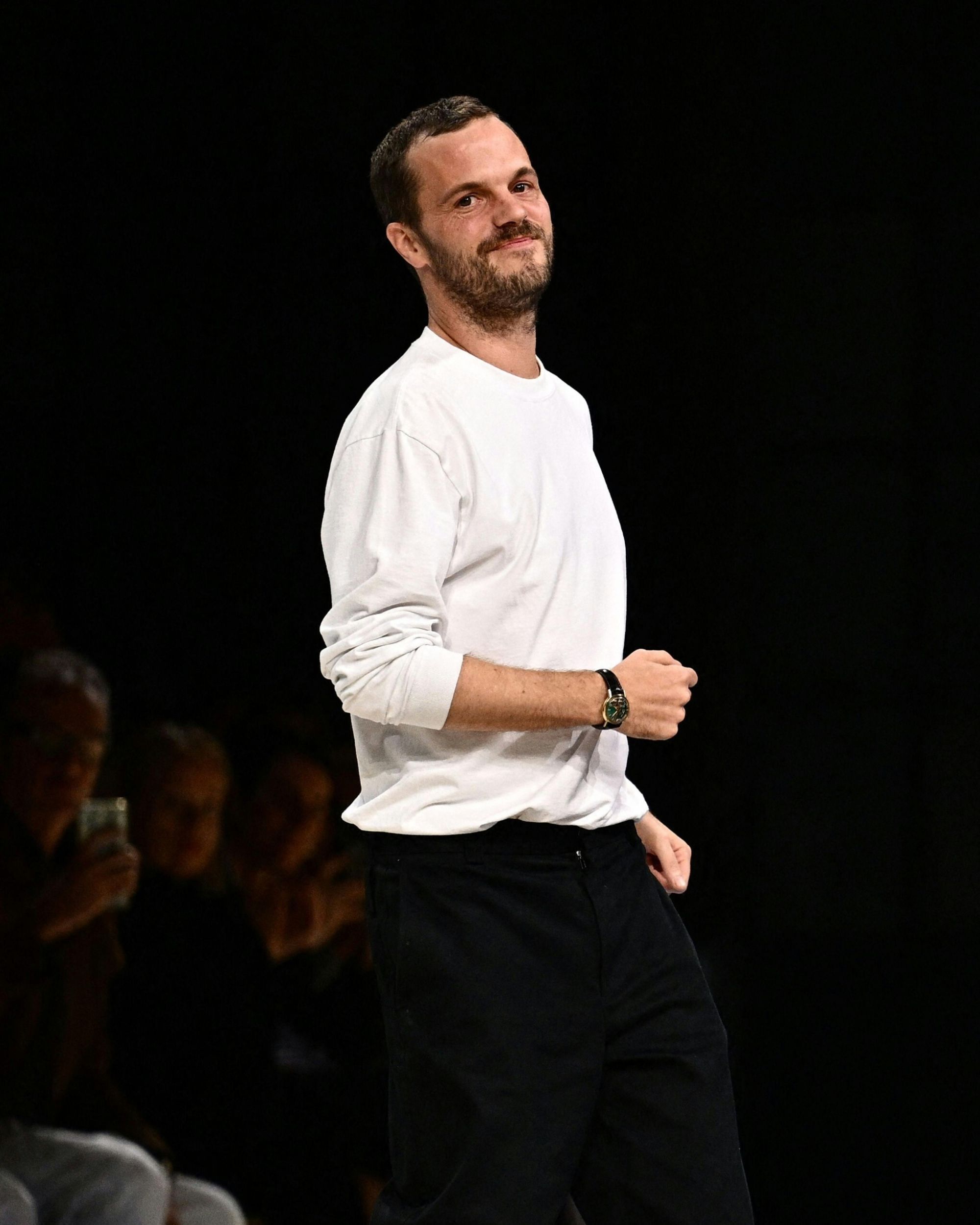
The disappearance was the most discussed marketing decision in luxury for a decade, and it has been misread ever since. It is cited as proof that absence creates desire, that restraint is the new reach, that a brand strong enough can opt out of the platforms entirely.
Some of that is true. But the departure is not the reason Bottega Veneta grew while the rest of its group contracted. The reason is a structural decision made long before 2021, and visible most clearly in a fact that has nothing to do with Instagram: the house has changed creative director three times in seven years and remained entirely recognisable throughout.
01 What actually happened in January 2021.
Under Daniel Lee, creative director since 2018, Bottega Veneta closed its accounts without announcement. There was no campaign explaining it and no farewell post. The Instagram account, with 2.5 million followers, simply stopped existing.
Lee's stated reasoning was not about scarcity or mystique. It was about compression: “My work is the result of a lot of thought and reflection and social media trivialises it.” Kering's chief executive François-Henri Pinault framed it more carefully — the house was not disappearing from social networks, it was using them differently.
What replaced the feed was a digital quarterly, Issue, launched that April with its first edition, and an unusually permissive attitude to fan accounts. Bottega did not stop being posted about. It stopped being the one doing the posting.
2.5M
INSTAGRAM FOLLOWERS DELETED IN JANUARY 2021, WITHOUT ANNOUNCEMENT
Bottega Veneta / Kering
€1.7BN
REVENUE IN 2025, UP 3% COMPARABLE — WHILE KERING FELL 10% AND GUCCI FELL 22%
Kering, FY2025
3
CREATIVE DIRECTORS SINCE 2018 — LEE, BLAZY, TROTTER
Kering
120K / 22.6M
#NEWBOTTEGA POSTS ON INSTAGRAM AND VIEWS ON TIKTOK — FOR A BRAND WITH NO ACCOUNT ON EITHER
Instagram, TikTok

02 The number that matters.
In 2025 Bottega Veneta reported revenue of €1.7 billion, up 3% on a comparable basis. In the same year, Kering's group revenue fell 10% comparable and Gucci's fell 22%. In the first half of 2025 Bottega was the only house in the portfolio to grow at all, at €846 million and up 1%, while every other brand declined.
This is where the standard reading of the case breaks down. If absence from social media were the mechanism, the effect would have been strongest in 2021 and 2022, when the decision was novel and being written about constantly. Instead the outperformance is clearest four and five years later. By the fourth quarter of 2024 the house sat sixth on the Lyst Index of the world's hottest brands — ahead of names with tens of millions of followers — at a point when its absence had long stopped being news.
Something else was doing the work.

03 Three creative directors, one unbroken signature.
Daniel Lee left in November 2021, in a split WWD called a surprise. Matthieu Blazy succeeded him and departed in December 2024 for Chanel. Louise Trotter, previously at Carven and now Kering's only female creative director, was announced in the same cycle and showed her first collection in Milan in September 2025.
- 2018–2021
Daniel Lee
Rebuilt the house around the intrecciato weave at exaggerated scale. Left the platforms. Now creative director of Burberry.
- 2021–2024
Matthieu Blazy
Pushed the same technique toward trompe-l'œil and material illusion. Left for Chanel, where he is now Artistic Director of Fashion Activities.
- 2025–
Louise Trotter
Debut Spring 2026, Milan. Intrecciato throughout — oversized bags, full-length trench coats, feathered bodices, fringe. Continuity, not rupture.
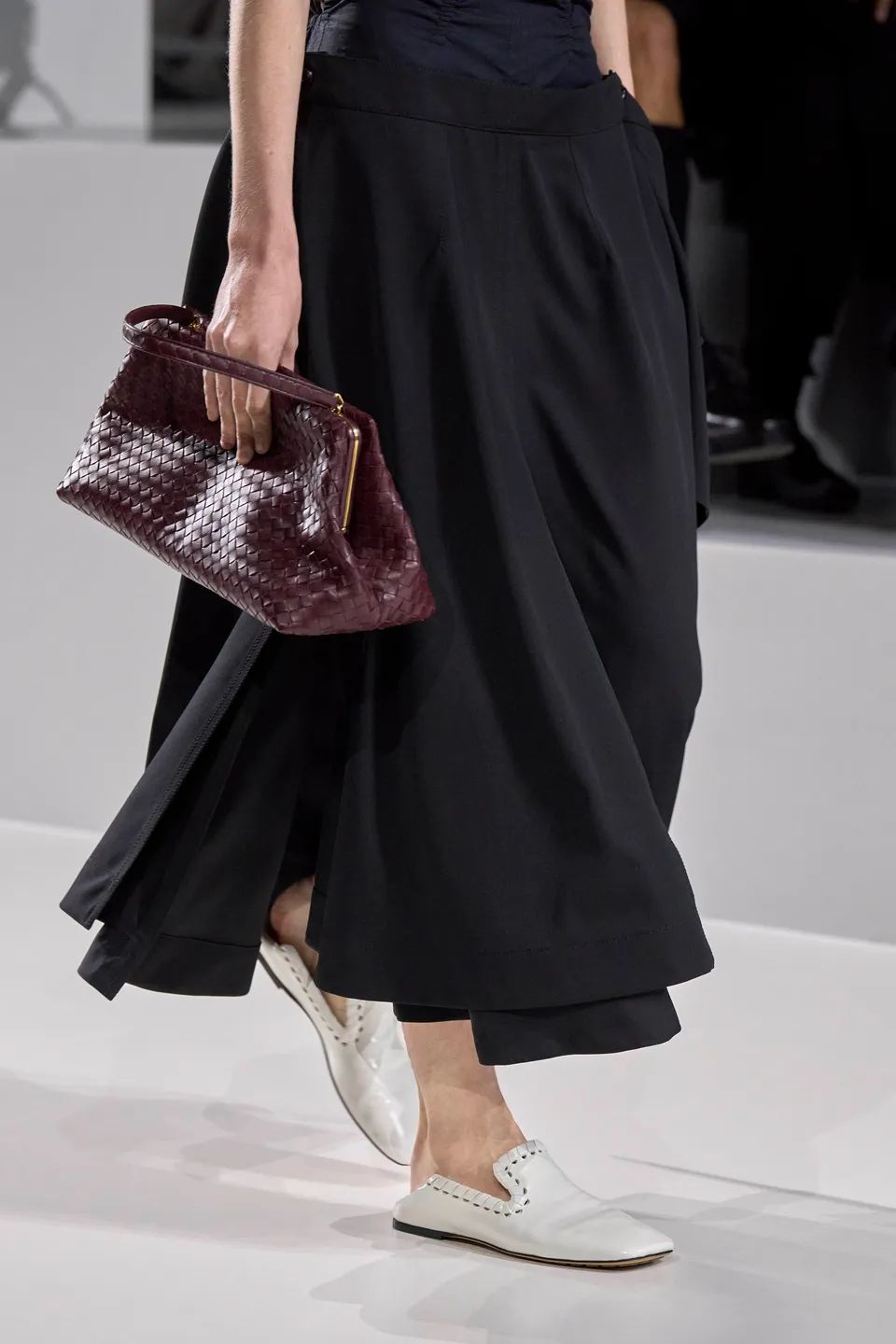
Three designers, three sensibilities, one uninterrupted signature. Every collection since 2018 has been built on the same woven leather technique the house has used since the 1970s. The intrecciato is not a motif that each director reinterprets. It is the thing the house makes, and the director's job is to find what it can do next.
Gucci changed creative director twice and lost €4.5 billion a year, because its legibility lived in a person's vision. Bottega Veneta changed three times and grew, because its legibility lives in a weave. A technique does not resign.— TCL Analysis
This is the actual disappearing act, and it has nothing to do with Instagram. What Bottega Veneta made disappear was the dependency on a single creative author — the exposure that costs fashion houses most, and the one they almost never design out.
04 The disappearance was selective.
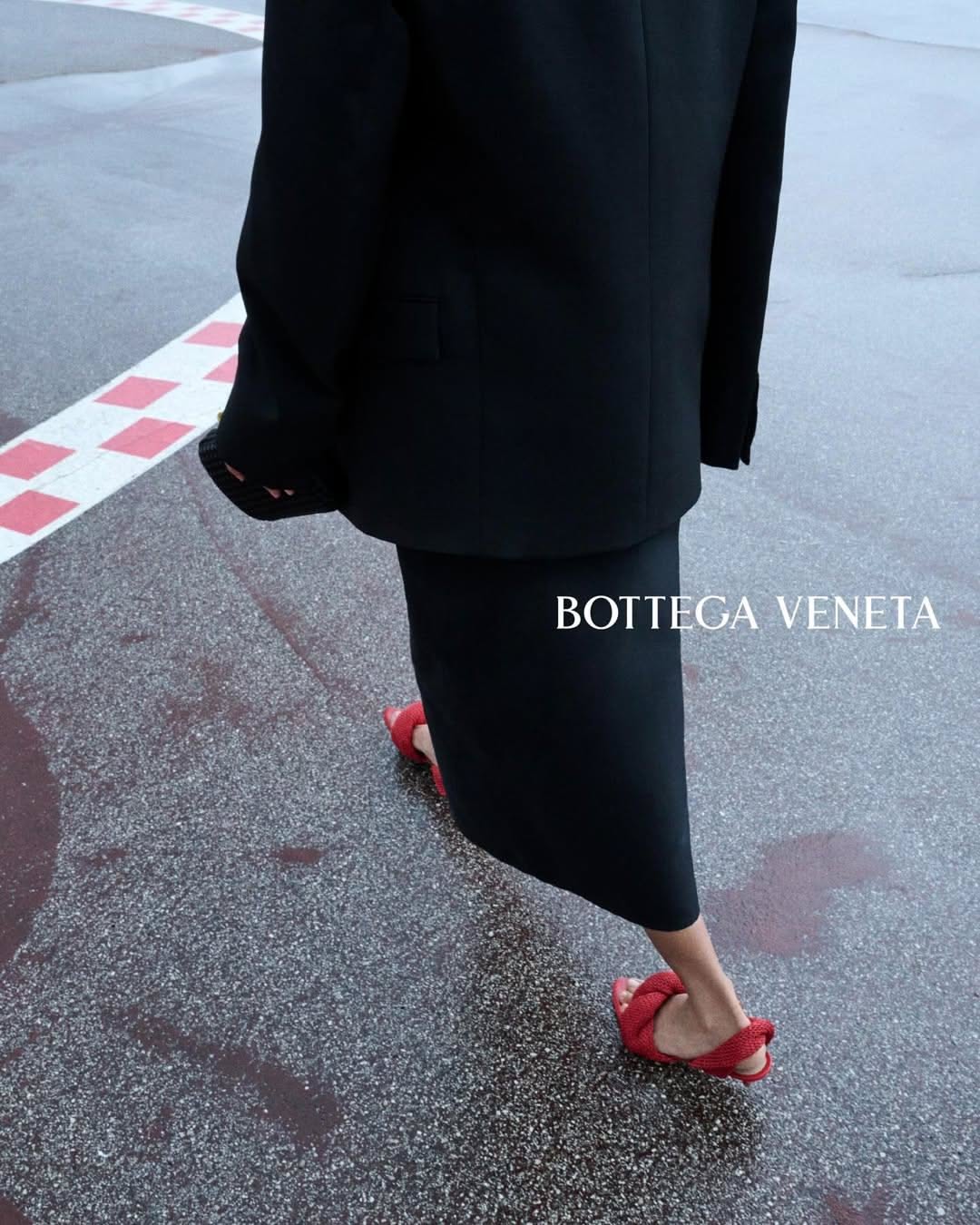
One complication is usually left out of the retelling. Bottega Veneta has never returned to Instagram, Facebook or X. But in February 2023, under Matthieu Blazy, it quietly resumed posting on Sina Weibo, opening with teasers for the Fall/Winter 2023 Milan show — the same material already running on its own website. Those first posts drew 2.5 million views on a platform the house had never formally announced joining.
Two things follow. The decision was never a principled rejection of social media; it was a judgement about which platforms served the brand and which flattened it, made market by market and revisited when the answer changed. And it was revisited by a different creative director from the one who made it.
The policy outlived its author. That is the same property the signature has, and it is not a coincidence — both are held by the house rather than by whoever is currently running it.
05 What Bottega Veneta teaches about where legibility should live.
- Lesson 01
Put the signature in the making, not in the maker
A house organised around a technique survives creative transitions that destroy a house organised around a vision. The intrecciato is the asset; the director is the interpreter.
- Lesson 02
Absence only works if there is something to be absent from
Bottega could leave the platforms because its product was recognisable without a caption. A brand whose legibility depends on explanation cannot make the same move.
- Lesson 03
Ceding the feed is not ceding the narrative
Fan accounts kept posting. #NewBottega has accumulated over 120,000 Instagram posts and 22.6 million TikTok views for a house with no account on either platform. Bottega gave up distribution of its image and kept authorship of it.
- Lesson 04
The famous decision is rarely the decisive one
Five years of coverage went to the Instagram exit. The growth came from a structural choice about where the brand's identity was stored, made years earlier and never publicised.
Louise Trotter's debut was received as a continuation rather than a reset, and the reviews noted this approvingly — with sales rising and the house steady, a dramatic transformation looked both unlikely and unnecessary. That sentence would be an indictment at most fashion houses. Here it is the strategy working exactly as designed.
The disappearing act was never really about vanishing. It was about building a house that could afford to lose anything except the weave.
Sources & Further Reading
- 01 Kering. (2026, February 10). 2025 results — Bottega Veneta revenue €1.7bn, +3% comparable.
- 02 Kering. (2025, July). 2025 first-half results — Bottega Veneta €846m, +1%, the only house in the portfolio to grow.
- 03 WWD. (2021, January). Bottega Veneta's Instagram disappearance explained — sort of.
- 04 Hypebeast. (2021, April). Bottega Veneta debuts star-studded digital publication, 'Issue 01'.
- 05 WWD. (2021, December). Year in review: Bottega Veneta, Daniel Lee surprise split.
- 06 Highsnobiety. (2023, February 24). Bottega Veneta quietly returns to social media — Weibo resumption ahead of the FW23 show.
- 07 Dazed. (2024, December). At Bottega Veneta, Louise Trotter is in and Matthieu Blazy is out.
- 08 Fashionista. (2025, September). Louise Trotter's Bottega Veneta is here — Spring 2026 debut, Milan.
- 09 Lyst. (2024). The Lyst Index, Q4 2024.
- 10 Creevey, D., Coughlan, J., & O'Connor, C. (2022). Social media and luxury: A systematic literature review. International Journal of Management Reviews.
- 11 Beverland, M. B. (2005). Crafting brand authenticity: The case of luxury wines. Journal of Management Studies, 42(5), 1003–1029.
Cite this case study
The Codes of Luxury. (2026, September 18). Bottega Veneta: The disappearing act (Case N°19). https://codeofluxury.cloakify.pro/case-studies/bottega-veneta-the-disappearing-act