
Smart glasses. Preloved luxury. Style advice from AI agents. McKinsey's June 2026 analysis of the global fashion landscape — the Retail Practice podcast whose title this piece borrows — reveals an industry navigating multiple structural shifts at once, and the brands that understand what is really changing are already pulling ahead.1
The fashion industry has survived COVID-19, the decline of the Chinese consumer market, supply chain disruption, and persistent geopolitical tension. According to McKinsey's McKinsey Global Fashion Index — which tracks 400 publicly listed fashion and luxury companies — value creation has remained relatively stable throughout. The industry's resilience is real.
But stability in the aggregate conceals a profound bifurcation underneath. The top 20 companies in the index generate 92 percent of the industry's economic profit2. The vast majority of fashion businesses are, in McKinsey's framing, "battling to barely break even." This is not a market where being good enough is a viable strategy. It is a market where a small number of brands are capturing almost everything — and where the distance between those brands and the rest is widening.
Understanding what those leading brands are doing differently — and what structural shifts are reshaping the consumer landscape they are operating in — is the central question of McKinsey's June 2026 analysis. The answers touch on value, resale, well-being, AI, and the future of brand loyalty itself.
01 Value has been redefined.
The most important shift in consumer behaviour, according to McKinsey Senior Partner Gemma D'Auria, is not that consumers are spending less — it is that they are demanding more evidence that what they spend is worth it. "What we mean by value," D'Auria notes, "is less a 'cheap product' and more, 'show me that what I'm paying for is worth its value.'"
This reframing has significant consequences for luxury. The post-COVID inflation period has made consumers — including luxury consumers — more price-conscious. But price-consciousness at the luxury level does not mean trading down to mass market. It means trading across: substituting categories within luxury, seeking more from what they spend, and gravitating toward segments that offer a more legible value proposition.
92%
of fashion industry economic profit is generated by the top 20 companies
McKinsey Global Fashion Index, 2026
4×
Jewelry growing 4%+ annually — four times the rate of clothing
McKinsey / State of Fashion 2026
~80%
Luxury consumer AI adoption as a share of general consumer adoption
McKinsey, June 2026
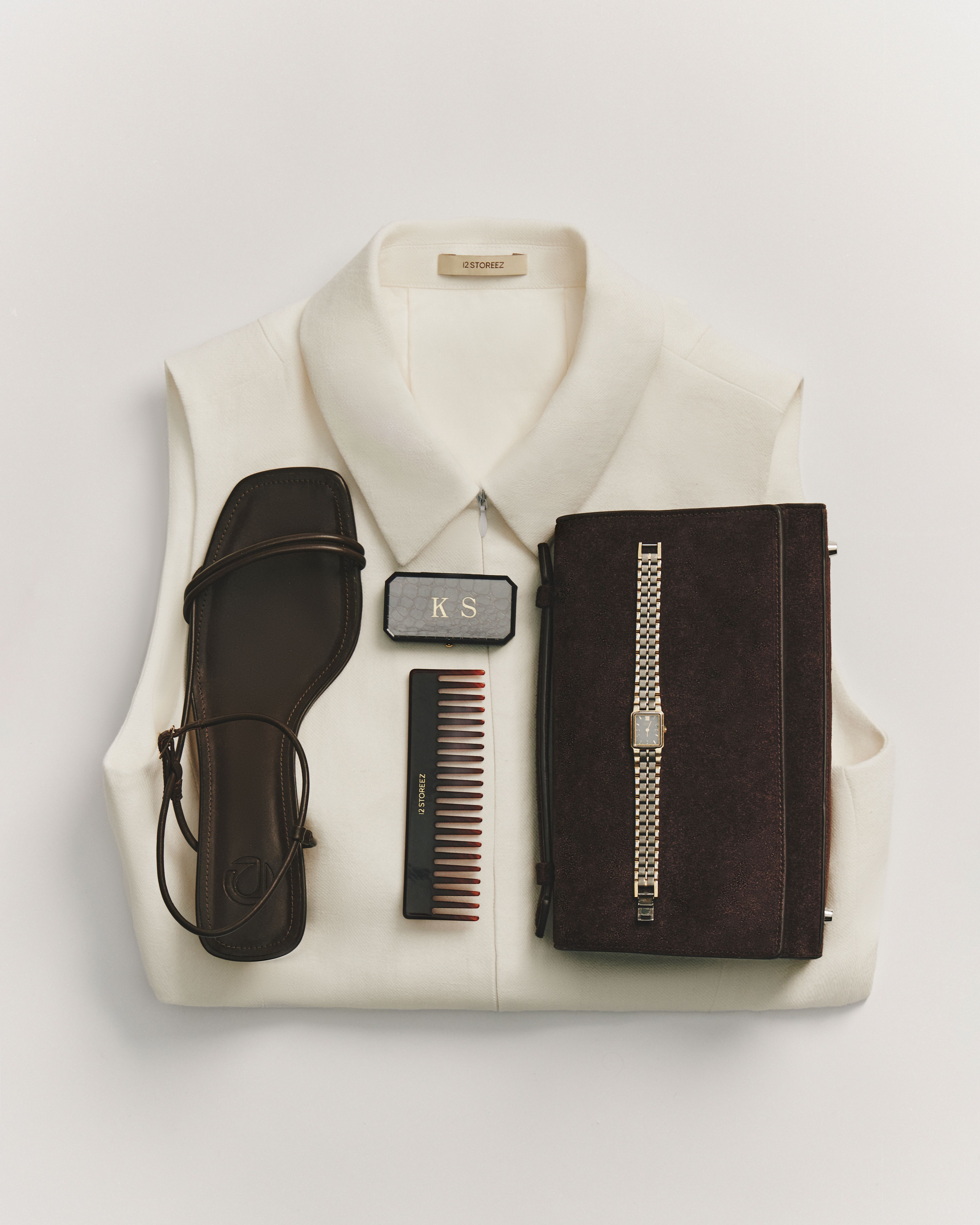
The fastest-growing category within luxury illustrates this precisely. Jewelry is growing at more than 4 percent annually — approximately four times the rate of clothing2. D'Auria identifies two reasons: first, jewelry is perceived as a better store of value than ready-to-wear or leather goods as prices rise; second, it offers individuality and the ability to "authentically stack and layer pieces that represent uniquely who you are." The category delivers both financial legibility and personal expression — a combination that the current consumer moment rewards.
02 Resale has become strategic.
For years, luxury brands maintained a wary distance from the secondhand market — concerned about brand dilution, authentication challenges, and loss of control over the customer experience. That position is changing, and McKinsey's analysis suggests the change is structural rather than cyclical.
Resale has provided consumers with a platform to look for items at lower prices. But we've also underestimated factors such as the thrill of the hunt: finally finding something you would only find in a boutique.— Gemma D'Auria, McKinsey Senior Partner
Two forces are driving this shift. On the consumer side, resale satisfies the growing demand for both value and uniqueness simultaneously — rare items at accessible prices, combined with the emotional reward of discovery. On the platform side, AI-enabled authentication has dramatically reduced the cost and friction of guaranteeing product integrity, making partnership between brands and resale platforms increasingly viable.
The strategic implication is clear: resale is no longer a channel luxury brands can afford to ignore. The brands that engage proactively — curating their presence on these platforms, thinking about which items perform best in the secondhand market, and designing the resale experience with the same care as the primary purchase — will capture both the customer acquisition and the brand equity benefits. Those that do not will cede that territory to the platforms themselves.
03 Well-being is the new luxury category.
Perhaps the most structurally significant finding in McKinsey's 2026 analysis is the extent to which well-being has become a global consumer priority — and the speed at which that priority is reshaping spending patterns across fashion and luxury.
Wearable technology
Smart glasses (Ray-Ban Meta, Oakley × Meta), Oura Ring, Whoop — wearables are merging health monitoring with fashion objects, creating a new product category at the intersection of identity and well-being
Identity alignment
Well-being is becoming part of brand DNA, not a product extension. Brands that align with consumers' health and well-being identities build deeper loyalty than those that treat it as a trend to capitalise on
Global phenomenon
Health span as a priority is not confined to the US or Europe — it is equally significant in China, making it a structural global shift rather than a Western cultural moment
Becoming a better self
"Luxury is going to be about becoming a better version of yourself" — D'Auria's formulation reframes luxury from object to outcome, from possession to transformation

04 AI is the most consequential structural shift — and most brands are not ready.
McKinsey Senior Partner Holger Harreis is direct: the emergence of agentic AI in fashion is "probably as profound as the advent of online commerce."1 The shift is not primarily about generative AI tools for design or marketing — though those are significant. It is about the consumer relationship itself.
Consumers are already using AI agents to discover fashion — asking LLMs what to wear, receiving personalised suggestions, conducting virtual try-ons. McKinsey's surveys put luxury-consumer adoption at roughly 80% of the rate recorded among consumers generally — behind the mainstream, not ahead of it.1 The fundamental strategic question this creates is not "how do we use AI?" but "will the customer relationship migrate entirely to AI agents — and if so, where does that leave us?"
The risk Harreis identifies is stark: a consumer who makes purchase decisions through a multipurpose AI agent may never interact with a brand's own channels. The brand is effectively cut out of the discovery and consideration journey. The brands that respond by building their own conversational agents — capable of syncing with a customer's calendar, knowing their wardrobe, and proactively suggesting outfits — can turn this threat into a deeper relationship tool. But this requires treating AI not as a technology rollout but as a business transformation: "rewiring the enterprise," in Harreis's phrase, across supply chain, marketing, and creative functions simultaneously.
The gap McKinsey identifies between ambition and execution is significant. Across the industry, there are many AI pilots and experiments — but very few examples of true enterprise-grade adoption that delivers return on investment at scale3. The reason, consistently: success with AI is about business transformation, not technology transformation. Leaders need to invest three to five times what they spend on technology in adoption and change management.
05 2026 is a year of strategic reset — and that is an opportunity.
D'Auria describes 2026 as "a year of strategic reset for many brands, with a lot of new management teams and new creative directors in place." The disruption is real — but so is the opportunity it creates. A strategic reset moment is precisely when clarity of positioning, consumer understanding, and brand values become most valuable. Brands that use this moment to ask hard questions — where are we playing, how are we playing, and who are we playing for — will emerge with sharper positioning than those that simply wait for conditions to stabilise.
For luxury specifically, the priority D'Auria identifies is recapturing the consumer who is trading down toward affordable luxury, prioritising well-being, and re-evaluating their relationship with traditional luxury categories. This consumer has not left luxury permanently — they have shifted their expectations of what luxury should provide. The brands that understand this, and respond to it honestly, are the ones likely to win them back.
The world is changing faster than most fashion organisations are built to respond. The question McKinsey poses is not rhetorical. But the brands paying close attention to these structural shifts — in value, resale, well-being, and AI — are already beginning to answer it.
Sources & Further Reading
- 01 D'Auria, G., & Harreis, H. (2026, June 11). The world is changing. Can fashion keep up? [Audio podcast episode]. McKinsey & Company, Retail Practice — primary source for all data and direct quotations in this article.
- 02 McKinsey & Company / Business of Fashion. (2025). The State of Fashion 2026: When the rules change. — referenced within the McKinsey source above.
- 03 McKinsey & Company. (2025). The state of AI in 2025: Agents, innovation, and transformation — referenced within the McKinsey source; background on enterprise AI adoption rates.
- 04 McKinsey & Company. (2025). The agentic commerce opportunity: How AI agents are ushering in a new era for consumers and merchants — referenced within the McKinsey source; data on luxury AI adoption relative to general consumers (roughly 80% of the general-consumer rate)
Cite this insight
The Codes of Luxury. (2026, July 2). The world is changing. Can fashion keep up? https://codeofluxury.cloakify.pro/insights/the-world-is-changing-can-fashion-keep-up