For twenty years, the luxury handbag was the dominant aspirational object — the Birkin, the Chanel flap, the Neverfull. In 2025–2026, something is shifting. Jewelry is growing four times faster than clothing. Consumers are substituting bags for rings and bracelets. Richemont is outperforming LVMH. This is not a trend. It is a structural reorientation of where luxury desire is concentrating — and it has consequences for every brand in the industry.
There is a number in McKinsey's June 2026 analysis that deserves more attention than it has received: jewelry is expected to grow more than 4% annually over the next three years — approximately four times the rate of clothing. The gap between these two figures is not small. It is the difference between a category that is winning and a category that is struggling to hold its position.
This divergence is not random. It reflects a coherent set of consumer shifts that have been building since 2022 and have accelerated through the luxury slowdown of 2024–2025. Understanding what is driving them, which brands are positioned to benefit, and what it means for the broader luxury industry is the purpose of this analysis.
01 The numbers that establish the shift.
4×
Jewelry growing ~4% annually — 4× the rate of clothing
McKinsey / D'Auria, June 2026
+5%
Richemont H1 2025 growth — driven by jewelry maisons while fashion houses fell
Richemont H1 2025 Results
64.3%
Rolex's secondary market share in the €10–20K watch tier — jewellery adjacent
Chrono24 Analysis, 2025
Richemont's 2025 performance is the most direct proof point2. While LVMH's fashion and leather goods segment declined and Kering's Gucci contracted sharply, Richemont — whose portfolio is anchored by Cartier and Van Cleef & Arpels — delivered 5% growth in the first half to September 2025, with a fourfold increase in operating profit. The Americas grew 16%. Japan grew 25%. Even as China remained challenging, Richemont's jewelry maisons maintained demand from consumers who were pulling back from other luxury categories.
In China specifically, Bain's 2025 Chinese Luxury Report documents a meaningful substitution effect3: as consumers became more price-sensitive and value-conscious, gold jewelry demand rose as they redirected discretionary spending toward purchases perceived as value-preserving. The luxury consumer did not stop spending — they reallocated.
02 Two reasons jewelry is structurally winning.
McKinsey's Gemma D'Auria identifies two specific drivers of jewelry's outperformance — both of which point to structural demand rather than cyclical momentum.
Perceived store of value
For the first time, as prices of personal luxury goods have risen sharply across categories, consumers are substituting luxury jewelry for ready-to-wear clothing and leather goods — particularly handbags. Jewelry is perceived as a better financial decision: it does not go out of fashion, it does not depreciate the moment you carry it out of the boutique, and it has a meaningful secondary market. In an uncertain economy, this matters.
Individuality through stacking
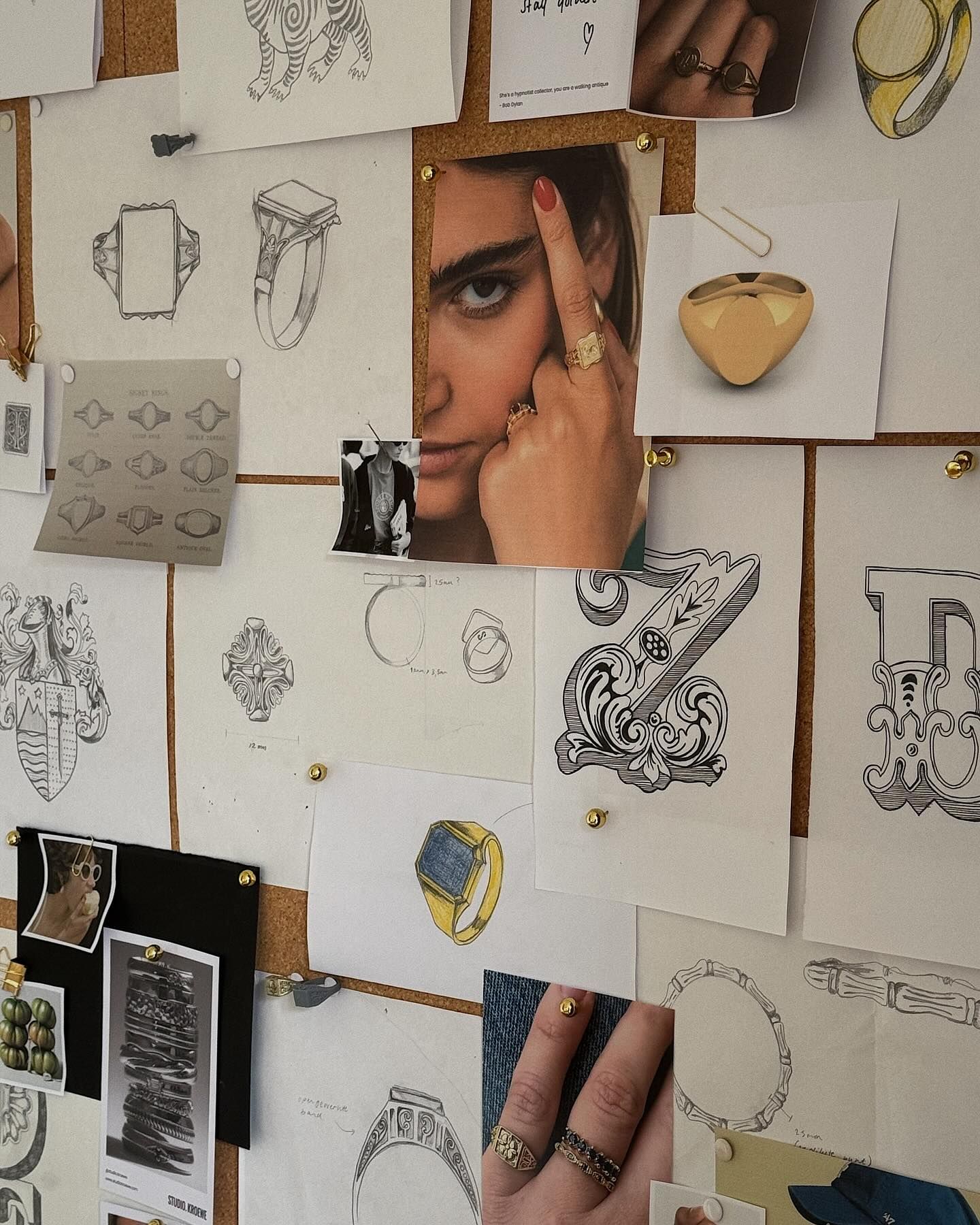
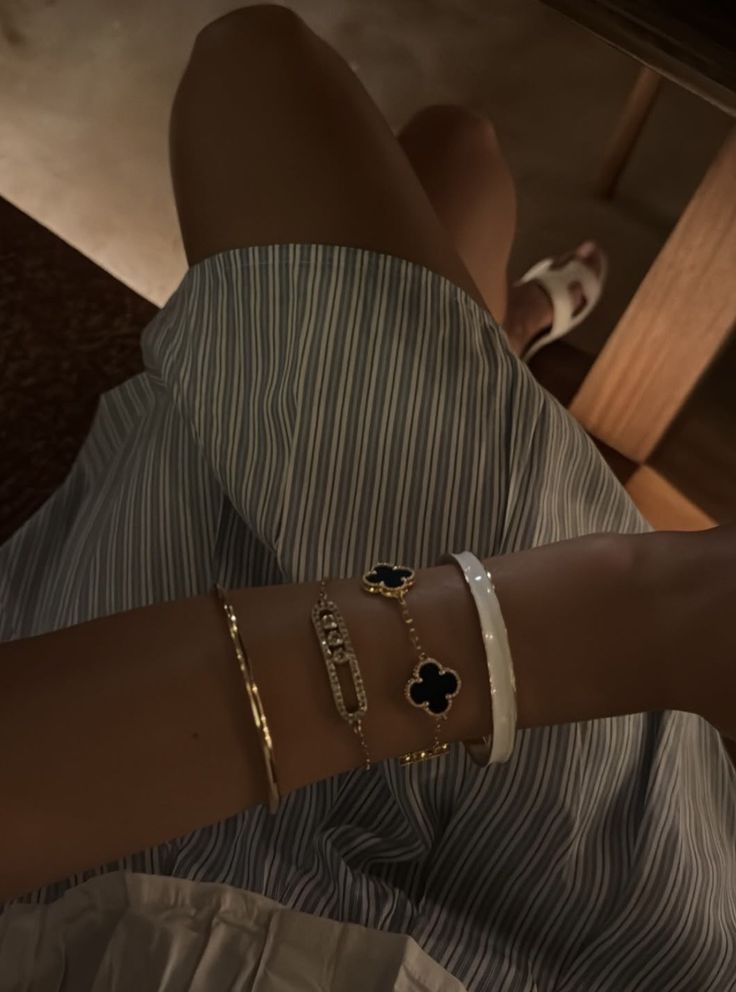
Jewelry offers a form of self-expression that other luxury categories cannot replicate at the same granularity: the ability to authentically stack and layer pieces that represent uniquely who you are. A Cartier Love bracelet, a Mejuri chain, a vintage signet ring, a Van Cleef alhambra — the combination is specific to the individual. This personalisation logic is especially resonant with younger consumers for whom identity expression is a primary luxury motivation.
It is perceived as a better value than other purchases. For the first time, as prices of personal luxury goods rise, people are substituting luxury jewelry for ready-to-wear clothing and leather goods, particularly handbags.— Gemma D'Auria, McKinsey Senior Partner, June 2026
Both drivers point to something deeper than preference. They point to a shift in the logic of luxury spending itself — from conspicuous display of a recognisable object toward personal accumulation of meaningful objects. The handbag was the dominant aspirational object of the logo era. Jewelry — stackable, personal, value-preserving — is better suited to what the current era of luxury is asking for.
03 The brands positioned to win.
Cartier
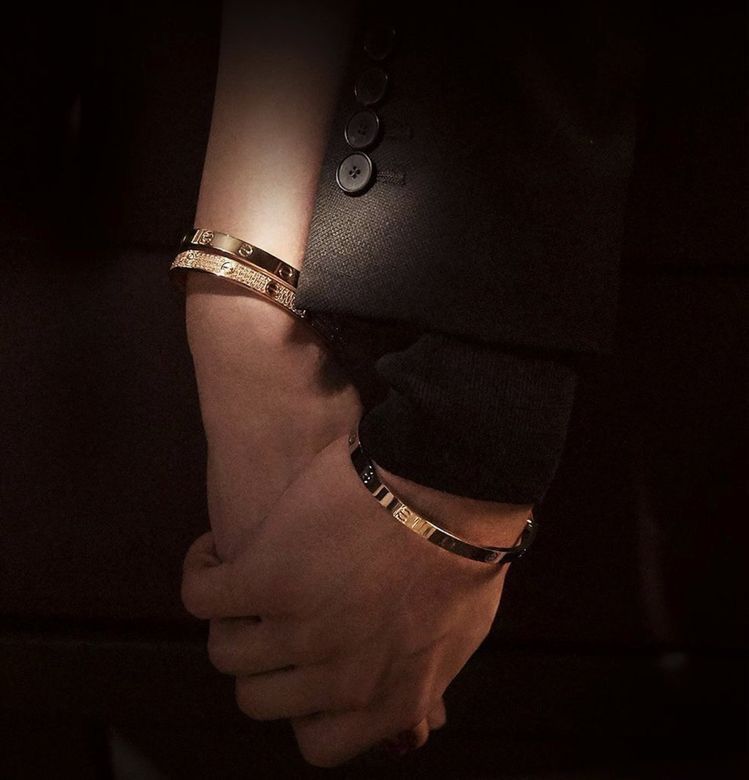
The dominant luxury jewelry brand globally, with category-defining pieces (Love bracelet, Panthère, Trinity) that function as both personal objects and cultural signifiers. The Love bracelet — with its screwdriver-fastened closure, its design that signals commitment — is one of the most successfully ritualised luxury objects ever created. In 2025, Cartier continued to outperform the broader market.
Van Cleef & Arpels
The Alhambra collection has achieved a cultural permanence that rivals the most iconic luxury objects in any category. In China specifically, where jade and floral motifs carry deep cultural resonance, Van Cleef's design language connects to local aesthetic traditions in ways that French fashion houses often cannot. Resilient demand throughout 2024–2025 confirmed the brand's positioning at the intersection of jewelry and cultural meaning.
Tiffany & Co.
LVMH's most explicit bet on jewelry's structural future. Since the $15.8B acquisition in 2021, Tiffany has been relaunched — new creative direction, new price architecture, new flagship in New York. Arnault naming Tiffany alongside Vuitton and Dior as the group's focus brands signals the conviction that jewelry is not a tactical addition to the portfolio but a strategic pillar.
Rolex / Patek Philippe
The watch category straddles jewelry and precision objects — and the watch secondary market functions as one of the most liquid luxury resale markets in the world. The Rolex Datejust showed significant secondary market appreciation in 2024. Patek Philippe's waitlists are, in some markets, longer than Hermès's. Both brands benefit from exactly the store-of-value logic that is driving jewelry's outperformance.
While technically distinct from fine jewelry, luxury watches share the same store-of-value logic and benefit from the same structural consumer shift.
04 What this means for brands without strong jewelry.
The structural shift toward jewelry has an uncomfortable implication for fashion houses without meaningful jewelry presence. If consumers are substituting handbags for bracelets — choosing a Van Cleef Alhambra over a Chanel flap as their considered luxury purchase — then the brands that have historically dominated the aspirational luxury goods market face a structural headwind that creative direction alone cannot address.
Positioned for the shift
Chanel (Fine Jewellery), Dior (jewellery line), Hermès (high jewellery), Louis Vuitton (jewellery collections). The jewellery is not always the headline, but it captures the consumer at the moment they are allocating.
Facing structural exposure
Brands built almost entirely on ready-to-wear, leather goods, or accessories categories face direct substitution from jewelry without an equivalent in-category response. The category mix matters as much as the brand strength.
The strategic response for fashion houses is not necessarily to build jewelry businesses — that requires heritage, expertise, and institutional credibility that cannot be assembled quickly. It is to understand the underlying consumer logic — value-preservation, personalisation, permanence — and find ways to deliver it through their existing categories. The leather goods house that can make its core product feel more like an investment and less like a purchase is competing more effectively with jewelry than the one that doesn't.
The rise of jewelry is not a threat to luxury. It is a clarification of what the luxury consumer — in 2025 and 2026, under real economic pressure and with evolving values — is actually asking for. Not the most recognisable object. The most meaningful one. Jewelry, at its best, is exactly that.
See the dataTop Auction Houses by Jewellery SalesOpen the dashboardSources & Further Reading
- 01 D'Auria, G., & Harreis, H. (2026). The world is changing. Can fashion keep up? McKinsey & Company, Retail Practice. — jewelry +4% annually, 4× clothing; two drivers (store of value, individuality/stacking); D'Auria direct quote.
- 02 Richemont. (2025). H1 2025 / Q4 2025 Financial Results. — +5% growth, fourfold operating profit increase, Americas +16%, Japan +25%.
- 03 Bain & Company. (2026, January). The 2025 Chinese Personal Luxury Goods Market — gold jewelry demand rise, value-preserving luxury reallocation in China.
- 04 Chrono24. (2025). Luxury Watch Analysis: Rolex's Dominance on the Secondary Market. — 64.3% Rolex share in €10–20K tier; Datejust appreciation 2024; secondary market as store-of-value metric.
- 05 Han, Y. J., Nunes, J. C., & Drèze, X. (2010). Signaling status with luxury goods. Journal of Marketing, 74(4), 15–30. — theoretical framework for shift from conspicuous signalling to insider/connoisseur codes.
- 06 Shin, H., Eastman, J., & Li, Y. (2022). Is it love or just like? Generation Z's brand relationship with luxury. Journal of Product & Brand Management, 31(3). — Gen Z individuality and personalisation as primary luxury motivation.
- 07 D'Arpizio, C., Levato, F., Steiner, A., Babbini, G., de Montgolfier, J., & Glaser, H. — Bain-Altagamma Luxury Goods Worldwide Market Study — Spring 2026 Update
- 08 Secondary Watch Market Report H1 2025
Cite this insight
The Codes of Luxury. (2026, June 23). Jewelry is the new handbag: Why the category is winning the decade. https://codeofluxury.cloakify.pro/insights/jewelry-is-the-new-handbag-why-the-category-is-winning-the-decade