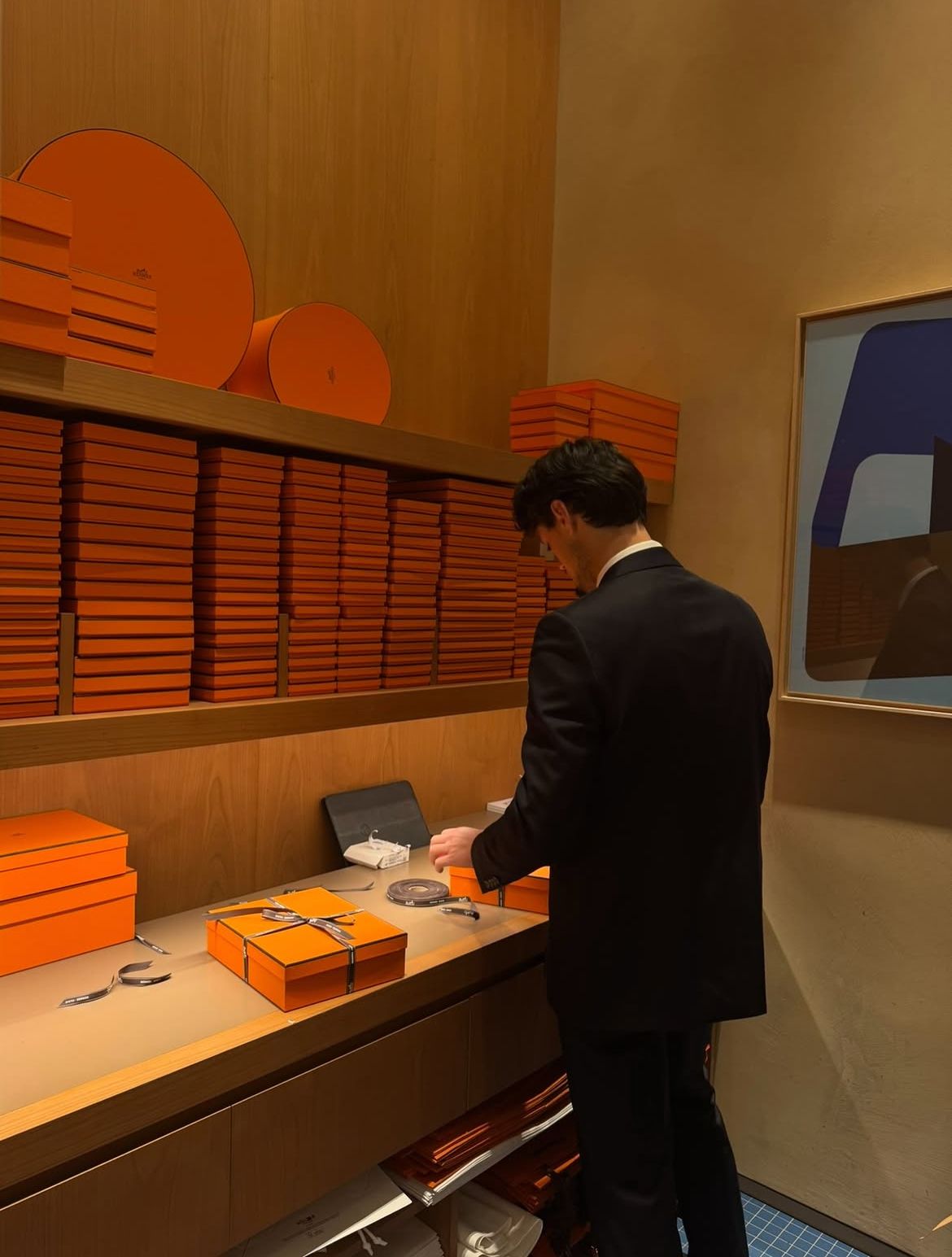
In luxury, the product begins before you see it. The weight of the box. The resistance of the lid. The rustle of tissue paper. These are not incidental — they are designed, researched, and understood to shape everything that comes after.
Consider the Hermès orange box. It is, by any functional measure, unnecessary. It costs more to produce than most brands spend on entire packaging budgets. It does nothing to protect the product that a simpler solution could not achieve. And yet it is, arguably, one of the most powerful brand assets in luxury — recognised globally, coveted independently of its contents, and understood immediately as a signal of what is inside.
The box is not packaging. It is a ritual object. And the ritual it initiates is, in the language of consumer research, one of the most carefully engineered sequences of sensory cues in commercial design.
Understanding why this matters — and how the research explains it — is essential for anyone building in luxury.
01 Brand experience begins before the product.
Brakus, Schmitt and Zarantonello's landmark 2009 paper in the Journal of Marketing defined brand experience as the sensations, feelings, cognitions, and behavioural responses evoked by brand-related stimuli — and explicitly included packaging, identity design, and physical environment within that definition. Their scale identified four dimensions of brand experience, all of which are activated sequentially in a well-designed luxury unboxing.
Sensory
Visual, tactile, olfactory, and auditory stimulation from packaging materials, colour, texture, and sound
Affective
The feelings and emotions triggered — anticipation, pleasure, excitement, the sense of being treated well
Intellectual
Cognitive engagement with the brand story — the craft notes, the provenance card, the handwritten detail
Behavioural
The physical actions the ritual invites — unwrapping slowly, photographing, preserving the box itself
The unboxing ritual, when designed well, activates all four dimensions before the product is even visible. This is not a by-product of good packaging design — it is its purpose.
02 What touch does to perceived value.
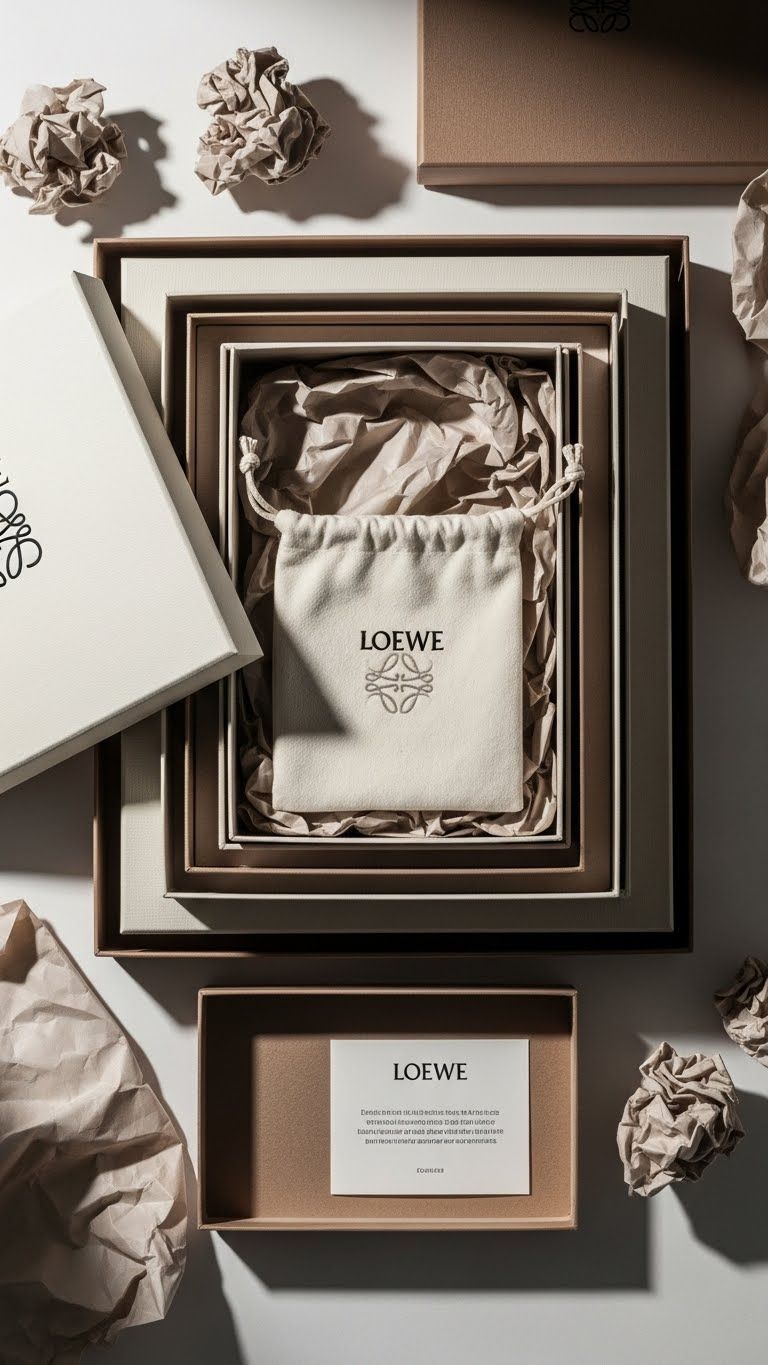
The haptic dimension of luxury packaging has received significant research attention in recent years — and the findings consistently point in the same direction: tactile cues shape product evaluations and willingness to pay in ways that are disproportionate to their cost.
Weight
Heavier packaging increases perceived quality, flavour intensity, and willingness to pay — across multiple product categories
Texture
Rougher, embossed surfaces signal uniqueness and craftsmanship; congruence between texture and product increases satisfaction
Resistance
The effort required to open — the friction of a lid, the weight of a drawer — signals that what is inside is worth protecting
Research on multisensory packaging published in Nature's Scientific Reports (2025) found that haptic qualities including roughness and weight modulate perceived quality and willingness to pay — particularly when packaging and product cues are perceived as congruent. The sensory experience is not separable from the product experience. It is part of it.
The weight of the package, the resistance of the lid, the texture of the paper — these are not decorative choices. They are sensory arguments for the value of what is inside. Touch communicates what price alone cannot.— TCL Analysis
03 The unboxing as designed anticipation.
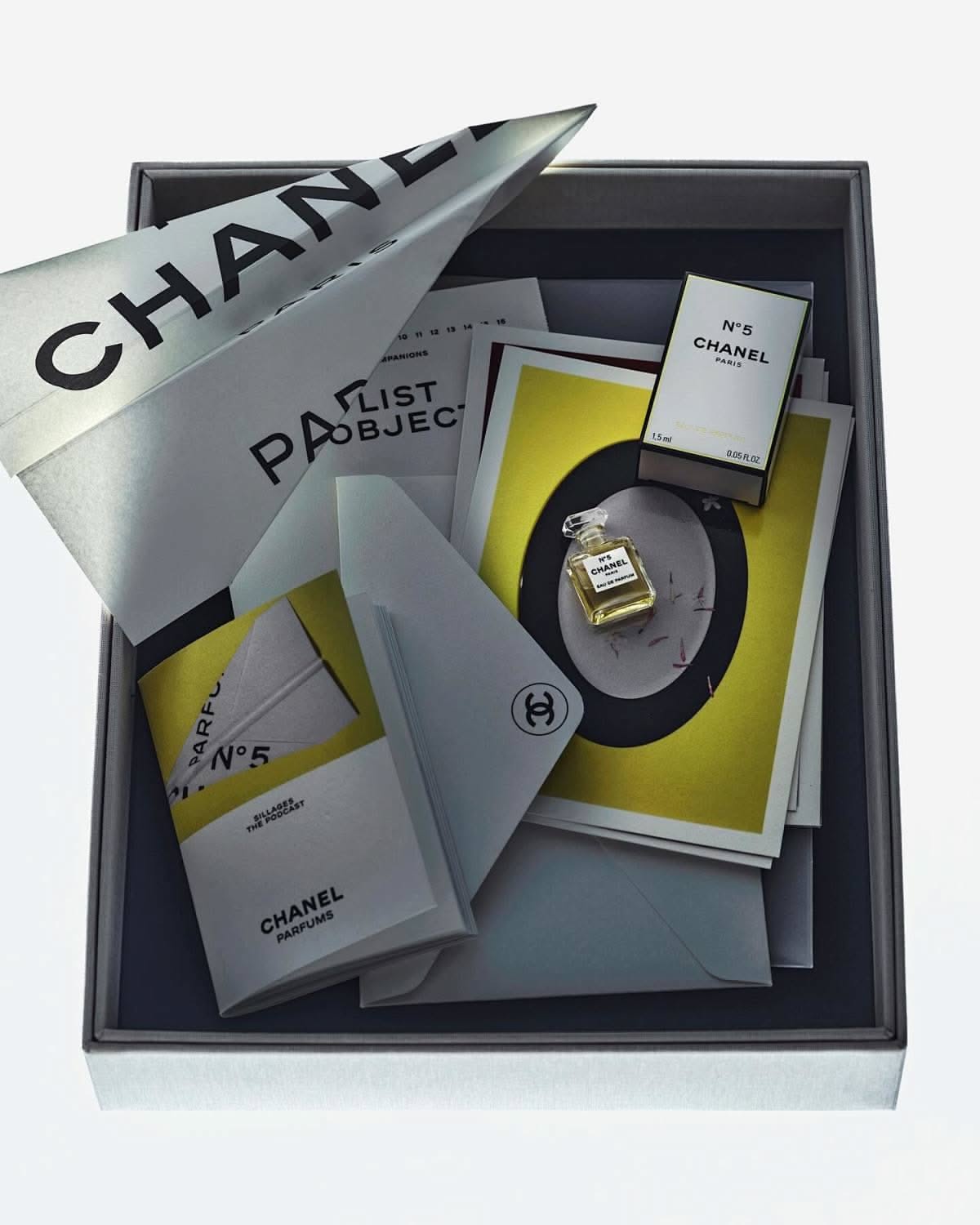
The psychology of anticipation is well-established: the brain's dopamine system activates more intensely during the anticipation of a reward than during the reward itself. Luxury packaging — with its layers, its sequencing, its deliberate slowing of the reveal — is a designed anticipation system. The ritual extends and intensifies the experience of receiving before the product is even seen.
This is why the unboxing phenomenon — first documented as a niche online behaviour among tech enthusiasts in the mid-2000s, now a global content genre across beauty, fashion, and lifestyle — emerged specifically from luxury adjacency. The ritual was already there. Social media gave it a stage.
What brands have learned from this — and the smarter ones have learned it quickly — is that the unboxing is not a bonus. For e-commerce luxury, where the physical store experience is absent, it is often the primary sensory encounter with the brand. It is the first moment the customer is physically alone with what they have purchased. And that moment is either designed or abandoned.
04 What this requires from brand builders.
Shahid, Paul et al. (2022) found across three studies that sensory marketing cues in luxury retail directly build emotional attachment — with effects stronger in luxury than non-luxury contexts. The implication extends beyond the in-store setting: anywhere a luxury brand creates a physical encounter, the sensory dimension of that encounter is doing active work on the relationship.
For brand builders, this reframes packaging as strategy rather than logistics. The questions are not "what does this cost?" but "what does this communicate?", "what does this feel like?", and "what does this ritual invite the customer to do?" A brand that spends thirty minutes sourcing the right paper weight is not being precious — it is being precise about what experience it is building.
The most effective luxury packaging design works like a good opening chapter: it establishes tone, creates anticipation, signals quality, and makes the reader — or the customer — want to continue. It is the first chapter of the product. And the first chapters matter.
The ritual economy of luxury is not about excess. It is about the understanding that experience is the product — and that experience begins the moment the package arrives.
Sources & Further Reading
- 01 Brakus, J. J., Schmitt, B. H., & Zarantonello, L. (2009). Brand experience: What is it? How do we measure it? And does it affect loyalty? Journal of Marketing, 73(3), 52–68.
- 02 Shahid, S., Paul, J., Gul Gilal, F., & Ansari, S. (2022). The role of sensory marketing and brand experience in building emotional attachment and brand loyalty in luxury retail stores. Psychology & Marketing, 39(7), 1398–1412.
- 03 Xiao, S., Yu, L., Meng, Y., Raisamo, R., & Ziat, M. (2025). Effects of multisensory packaging on taste perception, emotional responses, and willingness to pay for chocolate. Scientific Reports, 15, 39085.
- 04 Peck, J., & Shu, S. B. (2009). The effect of mere touch on perceived ownership and product evaluations. Journal of Consumer Research, 36(3), 434–447. — foundational research on haptic engagement and perceived product value.
- 05 Kahneman, D. (2011). Thinking, Fast and Slow. Farrar, Straus and Giroux. — peak-end rule and the psychology of experience sequencing.
Cite this insight
The Codes of Luxury. (2026, June 2). The ritual economy: Why packaging is the first chapter of the product. https://codeofluxury.cloakify.pro/insights/the-ritual-economy-why-packaging-is-the-first-chapter-of-the-product