In luxury, the most valuable thing a brand can build is not recognition — it is attachment. Emotional connection drives loyalty, word-of-mouth, and willingness to pay at a scale that no campaign budget can replicate. Here is what the research says about why.
Every luxury brand knows it needs to be desired. Fewer understand the precise mechanism through which desire becomes loyalty — and loyalty becomes long-term value. The answer, consistently supported by consumer research, is emotion.
Not emotion as a vague atmospheric quality, but emotion as a measurable driver of behaviour: repeat purchase, price tolerance, advocacy, and resilience when things go wrong. Emotional branding in luxury is not a soft strategy. It is, arguably, the hardest-edged ROI lever available.
01 What emotional attachment actually produces.
The relationship between emotional attachment and commercial outcomes in luxury has been studied extensively. The findings are consistent across markets, product categories, and consumer segments.
Carroll and Ahuvia's foundational research on brand love — now one of the most cited constructs in consumer psychology — established that emotional attachment to a brand directly predicts two outcomes above all others: brand loyalty and positive word-of-mouth. The effect is especially strong in hedonic and self-expressive product categories — which describes luxury almost perfectly.
↑ WTP
Willingness to pay a premium is significantly higher among emotionally attached consumers
Thomson, MacInnis & Park (2005); Shimul (2022)
↑ WOM
Emotionally invested consumers are more likely to advocate — online and offline
Carroll & Ahuvia (2006); Batra, Ahuvia & Bagozzi (2012)
↑ LTV
Emotional attachment predicts repeat purchase and sustained brand relationship over time
Shahid, Paul et al. (2022, Psychology & Marketing)
What makes these findings particularly relevant for luxury brands is the amplification effect: the more hedonic and self-expressive the product category, the stronger the link between emotional attachment and behavioural outcomes. Luxury sits at the extreme end of both dimensions.

02 The three mechanisms that build it.
Emotional attachment does not emerge from a single touchpoint. Research identifies three primary mechanisms through which luxury brands build it — and all three operate simultaneously in the best-performing houses.
Sensory experience
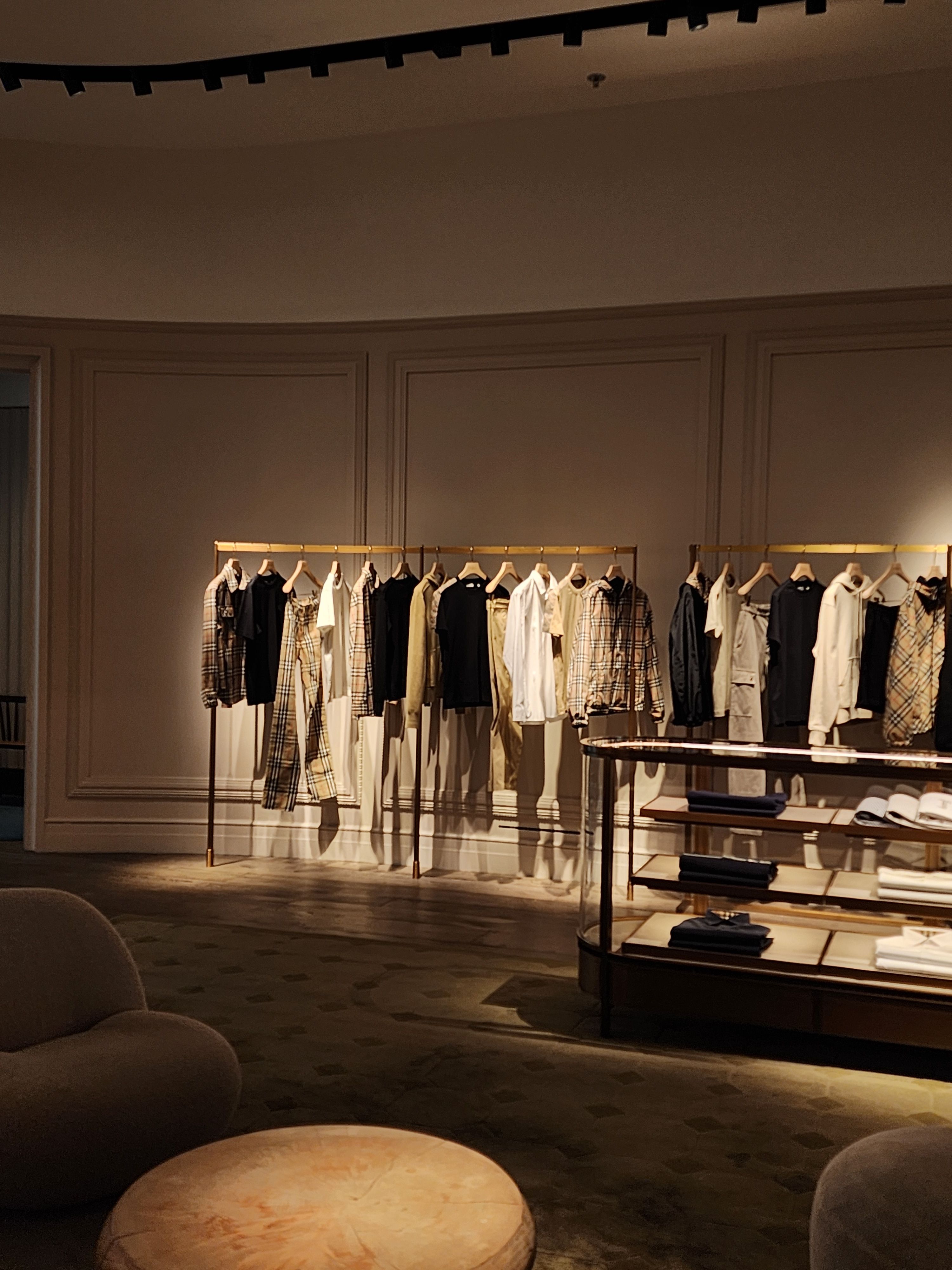
Shahid, Paul et al. (2022) found across three studies with 800+ participants that sensory marketing cues — scent, texture, sound, visual environment — directly build emotional attachment in luxury retail, with effects stronger in luxury than non-luxury contexts. The physical store is not a distribution channel. It is an emotion-delivery system.
Narrative and symbolic value
Consumers attach emotionally to what a brand means, not only to what it makes. Research on self-congruity consistently shows that when brand identity aligns with a consumer's actual or ideal self-concept, emotional attachment deepens — and loyalty follows. This is why brand storytelling, heritage, and founder narratives are not decorative. They are architecturally structural.
Relational consistency
Emotional attachment builds over time through repeated, consistent positive experience. Thomson, MacInnis and Park (2005) showed that affection, connection, and passion — the three dimensions of brand attachment — develop cumulatively. A single campaign cannot create them. A sustained relationship can.
03 The resilience dividend.
One of the less-discussed outcomes of emotional attachment is brand forgiveness. Consumers who are emotionally attached to a brand are significantly more likely to forgive product failures, service missteps, and reputational challenges — a finding documented by Bauer, Heinrich and Albrecht (2009)6 and replicated in subsequent luxury-specific research.
Emotional attachment is not just the engine of loyalty. It is the buffer that protects the brand when things go wrong — and in luxury, where the stakes of a single misstep are high, that buffer has real financial value.— TCL Analysis
This is the resilience dividend: the premium that emotional brands earn not just in good times, but in their capacity to absorb shocks without losing the customer relationship. For luxury houses operating in volatile markets — navigating economic downturns, creative director transitions, cultural controversy — this dividend is not marginal. It is strategic.

04 What this means for brand building.
The practical implication is straightforward, though not easy: emotional ROI is earned through consistency across every touchpoint, not optimised through any single one.
A fragrance campaign that moves someone is valuable. But it is the cumulative architecture of touchpoints — the store environment, the packaging ritual, the customer service interaction, the brand's public positions and silences — that builds the kind of attachment the research describes. Each element either deposits into or withdraws from the emotional account.
For brand builders, this reframes the measurement question. The relevant metric is not campaign recall or even purchase intent. It is the depth and durability of the emotional relationship — and that requires longitudinal thinking in an industry often oriented toward seasonal results.
The brands that last in luxury are not always the loudest. They are the ones that have earned a place in their customers' emotional lives — and understood that this is the most defensible position in any market.
Sources & Further Reading
- 01 Carroll, B. A., & Ahuvia, A. C. (2006). Some antecedents and outcomes of brand love. Marketing Letters, 17(2), 79–89.
- 02 Batra, R., Ahuvia, A., & Bagozzi, R. P. (2012). Brand love. Journal of Marketing, 76(2), 1–16. — foundational framework on brand love dimensions and outcomes.
- 03 Shahid, S., Paul, J., Gul Gilal, F., & Ansari, S. (2022). The role of sensory marketing and brand experience in building emotional attachment and brand loyalty in luxury retail stores. Psychology & Marketing, 39(7), 1398–1412.
- 04 Shimul, A. S. (2022). Luxury brand attachment: Predictors, moderators and consequences. International Journal of Consumer Studies (Wiley).
- 05 Thomson, M., MacInnis, D. J., & Park, C. W. (2005). The ties that bind: Measuring the strength of consumers' emotional attachments to brands. Journal of Consumer Psychology, 15(1), 77–91.
- 06 Bauer, H. H., Heinrich, D., & Albrecht, C.-M. (2009). All you need is love: Assessing consumers' brand love. Proceedings of the American Marketing Association, 252–253.
Cite this insight
The Codes of Luxury. (2026, June 17). The emotional ROI of luxury: Why feeling matters more than owning. https://codeofluxury.cloakify.pro/insights/the-emotional-roi-of-luxury-why-feeling-matters-more-than-owning