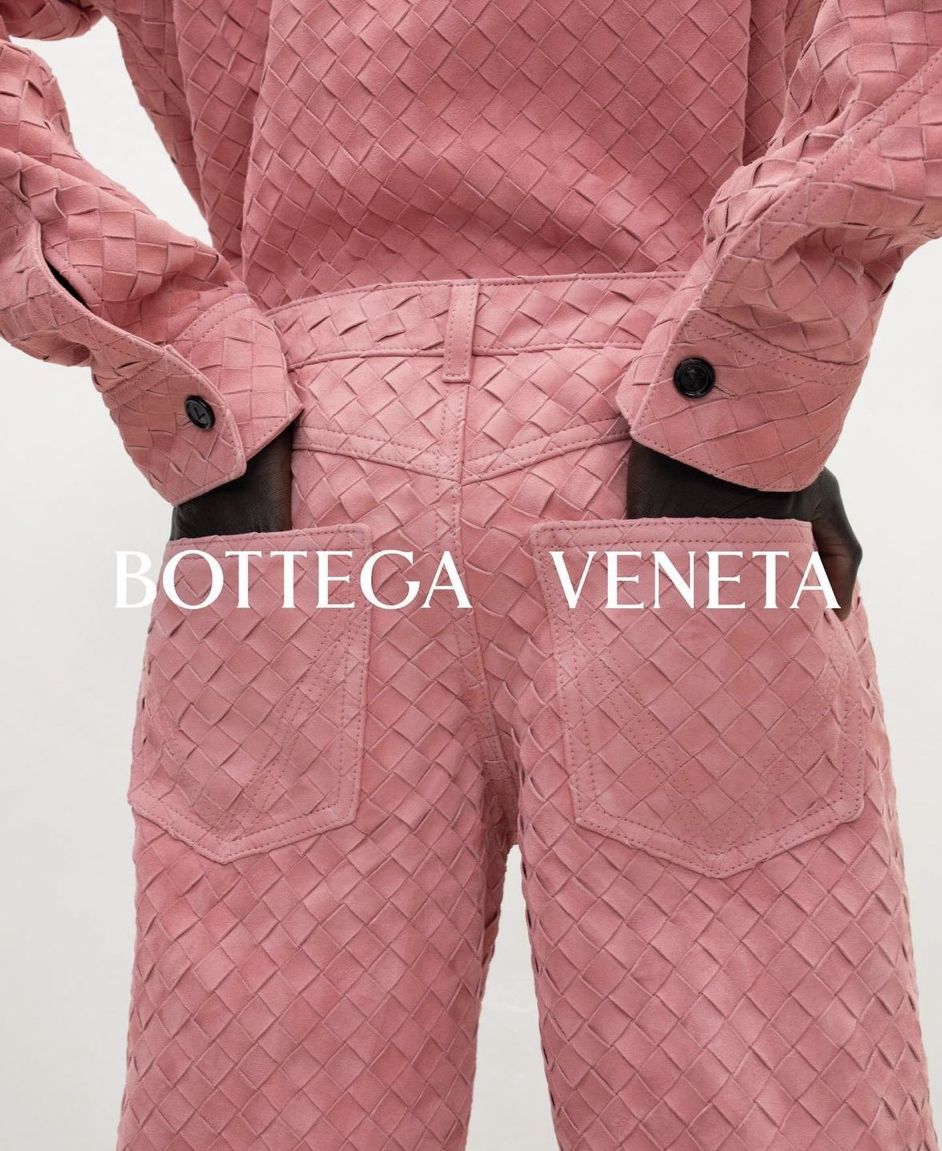
Desire is not accidental. In the luxury industry, it is constructed — with the same precision as a watch movement or a hand-stitched seam. Understanding how that construction works is the first step to understanding why luxury brands hold such power over us.
There is a question that anyone who has ever stood outside a boutique — or refreshed a waitlist page — has probably asked themselves: why do I want this so badly? The rational answer is rarely satisfying. The object is expensive, sometimes impractical, and almost certainly available in a less costly form. And yet the want persists. It intensifies, even.
This is not a weakness. It is architecture.
Luxury brands are, at their core, desire management systems. They do not simply make beautiful things. They engineer the psychological conditions under which those things become necessary — emotionally, socially, symbolically. The mechanisms they use are well-documented in consumer psychology and behavioural economics. They are also, once you see them, impossible to unsee.
01 Scarcity is the product.
The most fundamental tool in the luxury playbook is artificial scarcity. When supply is genuinely limited, demand is a given. But luxury brands have discovered something more powerful: perceived scarcity — the feeling of limitation, whether or not the object is truly rare — produces the same psychological effect.
The scarcity heuristic, documented extensively in behavioural research1, tells us that we assign greater value to things that are harder to obtain. This is not a cognitive error — it is an evolved shortcut. Rare things, historically, were rare for good reasons. Luxury brands exploit this deeply ingrained signal by restricting access, limiting editions, and managing waitlists with careful theatrics.
The waitlist is not a logistics problem. It is a narrative device — a way of making the customer feel that what they want is worth waiting for.— TCL Analysis
Hermès has built an entire business model around this principle. The Birkin bag is not simply expensive because it is well-made. It is coveted because it is deliberately withheld — offered only to clients who have demonstrated loyalty through prior purchases, creating a hierarchy of access that functions as its own status signal.
Scarcity bias
We assign higher value to what is harder to obtain — real or perceived limitation works equally well.
Identity signalling
Luxury objects communicate who we are — or who we want to be — to others and to ourselves.
The endowment effect
Once we imagine owning something, its perceived value increases — making the gap between wanting and having feel unbearable.
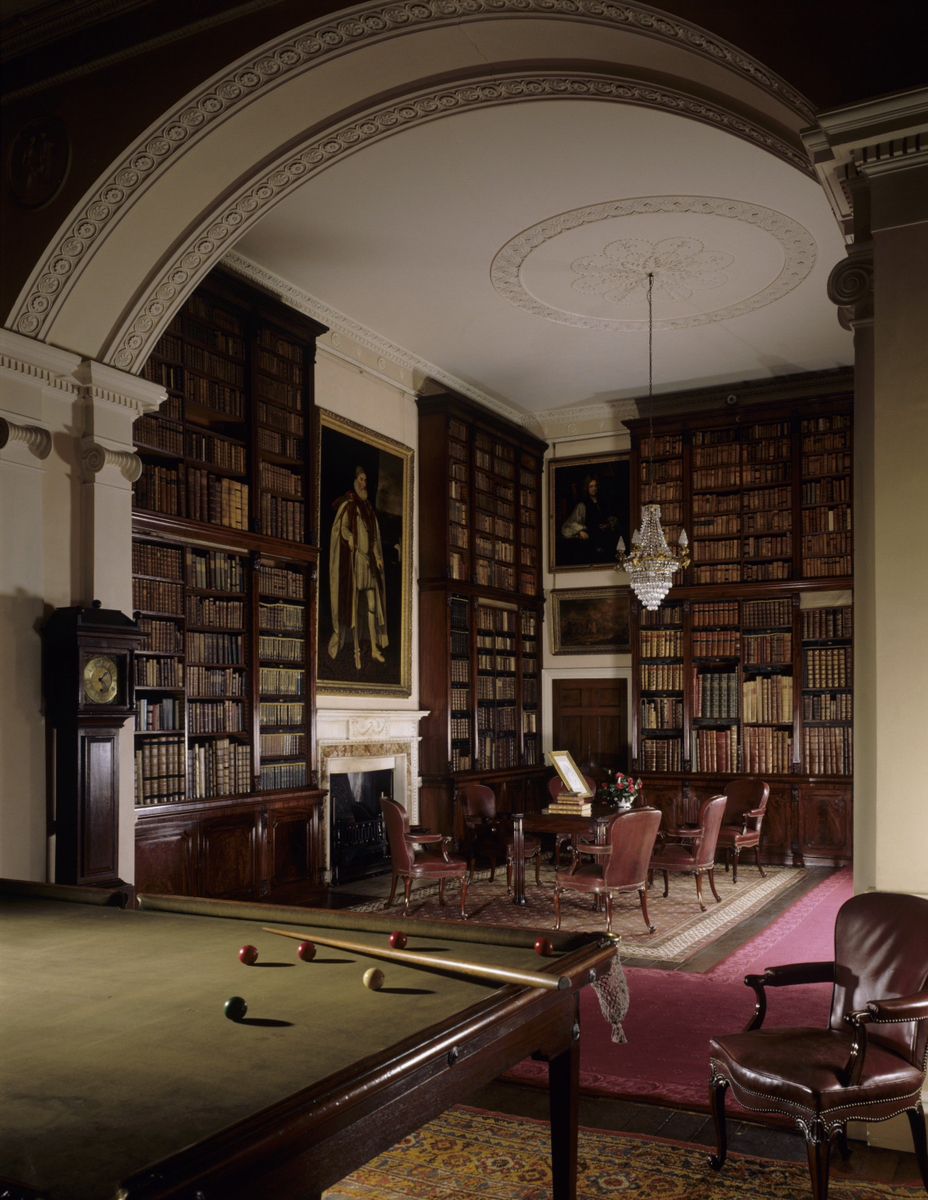
02 Identity as the real purchase.
When someone buys a luxury object, they are rarely buying the object alone. They are buying a version of themselves — a projected identity that the brand has carefully constructed and made available for purchase.
Consumer research on self-concept and brand attachment consistently shows that luxury purchases are deeply tied to self-signalling5: the way we communicate our values, status, and aspirations — both to others and to ourselves. This is why luxury brands invest so heavily in narrative. The story of a house, a founder, a craft tradition — these are not decorative details. They are the product.
Wearing a Bottega Veneta bag is a statement about restraint and taste. Carrying a Louis Vuitton monogram is a statement about confidence and access. Owning a Patek Philippe is a statement about legacy and time. Each brand has engineered a specific identity proposition, and each purchase is, in part, a vote for who the buyer believes themselves to be.

03 The endowment effect and the imagination gap.
There is a third mechanism at work — subtler than scarcity, more personal than identity. It is the endowment effect: the well-established7 finding that we value things more once we imagine owning them.
Luxury brands are masters of inducing imagined ownership before the purchase. The website that lets you "explore" a watch from every angle. The boutique is designed so that every surface invites you to touch. The campaign imagery that places the object not in a showroom but in a life — your life, or a version of it you might aspire to. All of these create the psychological sensation of partial ownership, which increases perceived value and makes the gap between wanting and having feel almost unbearable.
Desire is the distance between where you are and where the brand has made you imagine you could be. Luxury brands are architects of that distance.— TCL Analysis

04 Why understanding this matters.
None of this is presented as critique. The mechanisms of luxury desire are not manipulation in any simple sense — they operate on genuine human psychology, and the objects themselves often possess real quality and craft. What shifts when you understand these mechanisms is not cynicism, but clarity.
For brand builders, this clarity is strategic. Knowing that desire is constructed means it can be constructed deliberately — and that means every touchpoint, every restriction, every story told about a product is a design decision with psychological consequences.
For consumers, it is simply useful. Understanding why you want something does not necessarily diminish the wanting. But it does change the relationship to it. And in a market built on emotion, that kind of self-awareness has its own value.
Sources & Further Reading
- 01 Roux, C., Goldsmith, K., & Bonezzi, A. (2015). On the Psychology of Scarcity: When Reminders of Resource Scarcity Promote Selfish (and Generous) Behavior. Journal of Consumer Research, 42(4), 615–631.
- 02 Ladeira, W. J., et al. (2023). A meta-analysis on the effects of product scarcity. Psychology & Marketing (Wiley).
- 03 Cialdini, R. B. (2009). Influence: The Psychology of Persuasion. Harper Business.
- 04 Sharma, E., & Alter, A. L. (2012). Financial Deprivation Prompts Consumers to Seek Scarce Goods. Journal of Consumer Research, 39(3), 545–560.
- 05 Shimul, A. S. (2022). Luxury brand attachment: Predictors, moderators and consequences. International Journal of Consumer Studies (Wiley).
- 06 Veblen, T. (1899). The Theory of the Leisure Class. Macmillan.
- 07 Kahneman, D. (2011). Thinking, Fast and Slow. Farrar, Straus and Giroux. [Ch. 27].
- 08 Heyman, J., Orhun, Y., & Ariely, D. (2004). Auction fever: The effect of opponents and quasi-endowment on product valuations. Journal of Interactive Marketing, 18(4), 7–21.
- 09 Bain & Company / Altagamma. (2025). Luxury Goods Worldwide Market Study.
- 10 Kapferer, J.-N., & Bastien, V. — The Luxury Strategy: Break the Rules of Marketing to Build Luxury Brands (2nd ed.)
Cite this insight
The Codes of Luxury. (2026, June 20). The architecture of desire: How luxury brands engineer want. https://codeofluxury.cloakify.pro/insights/the-architecture-of-desire-how-luxury-brands-engineer-want