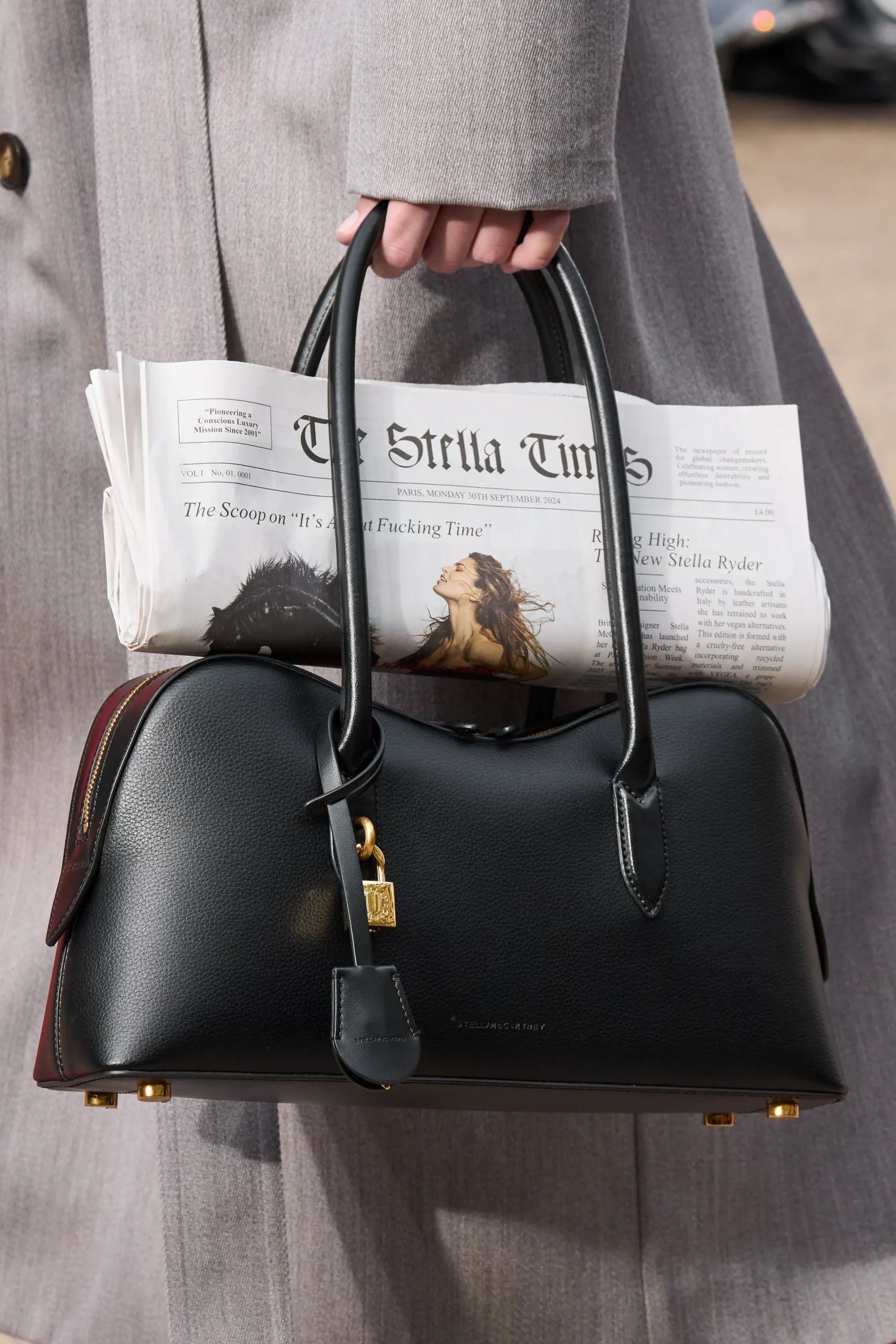
Luxury and sustainability seem, on the surface, to want opposite things. One is built on excess; the other on restraint. But the relationship between them is more complex — and more instructive — than the contradiction suggests.
The word "sustainable" appears in the communications of almost every major luxury house today. Hermès publishes circularity reports. LVMH has a LIFE 360 environmental programme. Kering tracks the environmental profit and loss of its entire value chain. Chanel has pledged to cut emissions across its supply chain. The language of sustainability has become, in a remarkably short time, standard vocabulary for luxury brand communication.
And yet the industry's fundamental business model — built on desirability, aspiration, and the production of objects whose primary value is not utility — has not structurally changed. Which raises a question that researchers, critics, and consumers are increasingly asking: when luxury brands talk about sustainability, what are they actually doing?
01 The paradox is structural.
The tension between luxury and sustainability is not simply a communications challenge. It is, as researchers have documented, a genuine structural paradox — rooted in the opposing value systems that define each concept.
Luxury values
Excess, exclusivity, aspiration, indulgence, rarity, desire, conspicuous or inconspicuous display of status and taste
Sustainability values
Restraint, moderation, ethics, longevity, sufficiency, collective responsibility, environmental accountability
Amatulli et al. (2021), writing in Psychology & Marketing1, describe this as the "sustainable luxury paradox": consumers are often sceptical of sustainability claims from luxury brands precisely because the association feels incongruous. And yet — in a finding that is both counterintuitive and strategically important — the same research showed that sustainability-focused communication from luxury brands can actually increase willingness to buy, because it reads as unexpected and therefore distinctive. The paradox creates an opportunity, if handled with care.
Kong, Witmaier and Ko (2021), in the Journal of Business Research2, found that sustainable communication is more effective for non-luxury brands than luxury ones — particularly in cultural contexts with high sustainability awareness. The implication: luxury brands face a credibility gap when claiming sustainability that mass-market brands do not. The association between luxury and excess is so deeply ingrained that sustainability claims require more substantiation, not less.

02 The greenwashing trap.
The risk for luxury brands is not merely reputational. Research on consumer perceptions of greenwashing — misleading or unsubstantiated environmental claims — shows that perceived greenwashing actively damages brand trust and purchase intention, with effects that extend beyond the accused brand to the category as a whole.
Perceived greenwashing by fashion brands reduces purchases of sustainable clothing — not just from that brand, but from the category.— Apaolaza et al., 2023
Apaolaza et al. (2023), in Business Strategy and the Environment (Wiley)3, found that perceived greenwashing is one of the most significant barriers to sustainable fashion consumption — and that trust in sustainable brands acts as a moderating variable. When consumers trust the brand, greenwashing perceptions are buffered. When they do not, the damage compounds.
For luxury brands, this creates a specific danger: the brand equity built over decades on authenticity, craft, and integrity is precisely what makes greenwashing accusations particularly damaging. A brand that has positioned itself as honest and uncompromising in its standards cannot afford to be seen as evasive about its environmental impact.
03 Who is doing it honestly.
The brands that have navigated the sustainability paradox most credibly tend to share a common approach: they anchor sustainability claims in the values that already define their brand, rather than grafting environmental messaging onto a separate track.
Brunello Cucinelli
Frames sustainability through the lens of humanistic capitalism — a philosophy that predates the sustainability trend and runs through every aspect of the business, from artisan wages to village restoration. The environmental commitment is legible because it is consistent with everything else the brand communicates.
Stella McCartney
Has made environmental ethics the founding logic of the brand, not a supplementary claim. The sustainability position precedes and shapes the product, rather than being applied after the fact. Credibility comes from the alignment between positioning and practice — and from a willingness to be specific about where the brand falls short.
Patagonia (adjacent case)
Not a traditional luxury brand, but instructive for the luxury sector: sustainability as a founding myth, consistently acted upon, with a willingness to tell customers not to buy their products if they do not need them. The credibility of the claim comes from the cost at which it is made.
04 What honest sustainability communication requires.
Research on consumer scepticism toward sustainable fashion brands points to one variable above others as the key moderator: trust. And trust, in this context, is not built through aspirational language — it is built through specificity, consistency, and a willingness to acknowledge the limits of current practice.
The luxury brands that communicate sustainability most credibly tend to do three things differently from those that do not. They are specific — naming the materials, processes, and supply chain partners involved rather than making category-level claims. They are consistent — sustaining the narrative across years and collections rather than as seasonal campaigns. And they are honest about the gap — acknowledging that a luxury business built on desire and production cannot resolve the sustainability paradox entirely, and that the work is ongoing.
This last point is, perhaps, the most counterintuitive. In an industry trained to project confidence and completeness, admitting the limits of one's sustainability practice might feel like a vulnerability. The research — and the examples of brands that have done it — suggests the opposite. The admission of imperfection, when credible, is more trust-building than the claim of achievement.
The sustainability paradox in luxury is real. But it is not unnavigable. The brands that will emerge with credibility are not those that claim to have resolved it — but those that are honest about living inside it, and show, specifically, what they are doing about that.
Sources & Further Reading
- 01 Amatulli, C., De Angelis, M., & Donato, C. (2021). The atypicality of sustainable luxury products. Psychology & Marketing, 38(11), 1990–2005.
- 02 Kong, H. M., Witmaier, A., & Ko, E. (2021). Sustainability and social media communication: How consumers respond to marketing efforts of luxury and non-luxury fashion brands. Journal of Business Research, 131, 640–651.
- 03 Apaolaza, V., Policarpo, M. C., Hartmann, P., Paredes, M. R., & D'Souza, C. (2023). Sustainable clothing: Why conspicuous consumption and greenwashing matter. Business Strategy and the Environment, 32(6), 3766–3782.
- 04 ShabbirHusain, R. V., et al. (2025). Navigating the sustainability–luxury paradox: Bibliometric insights and research directions. Journal of Consumer Behaviour (Wiley).
- 05 Eckhardt, G. M., Belk, R. W., & Wilson, J. A. J. (2015). The rise of inconspicuous consumption. Journal of Marketing Management, 31(7–8), 807–826. — background on how luxury consumers frame sustainability through quality and longevity.
- 06 McKinsey & Company / Business of Fashion. (2025). The State of Fashion 2026: When the rules change. — industry data on sustainability deprioritisation and executive attitudes.
Cite this insight
The Codes of Luxury. (2026, June 11). Sustainability in luxury: Paradox, promise, or PR? https://codeofluxury.cloakify.pro/insights/sustainability-in-luxury-paradox-promise-or-pr